They are called the 60s, a single ten year lump to praise or blame. But those of us who lived through them know that each year of that decade was different, had its own shapes and smells, and each was filled with momentous events sufficient for a decade, so the 60s were as crammed and as various as a century.
Those of us who were young then were a big part of those events--as participants, victims and instigators as well as observers and receivers. Those events--those arcs and moods, revelations and confusions--marked us, influenced the flow of our lives in the crucial decades of our teens and twenties, and to one degree or another determined our fates.
And as this decade of fiftieth anniversaries for various events of the 1960s, it is well to look at the context of an entire year--like 1965. There's a book about that year that centers on the music but includes other elements, called 1965: The Most Revolutionary Year in Music by Andrew Grant Jackson. The possibly inflated claim of the title notwithstanding, it suggests how much was happening.
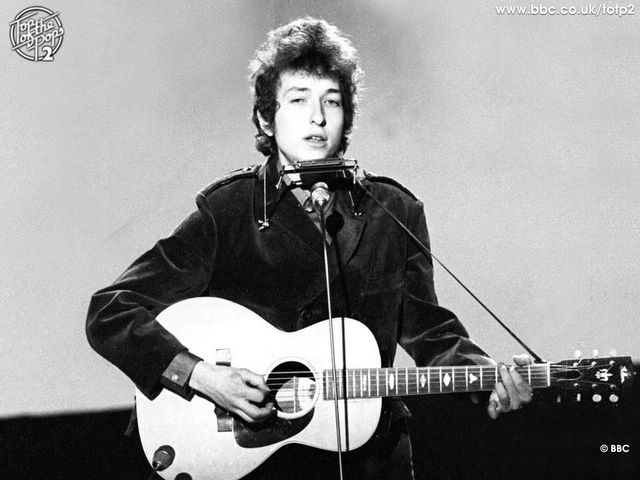
Slate further emphasized this recently by selecting a single week from 1965, that included the recently commemorated Selma march, but also the release of Bob Dylan's Bringing It All Back Home (almost every song was great, but one side of the albums also had Dylan singing his songs backed by a rock band--and that much was revolutionary.)
It was also the beginning of a less well remembered but vital at the time phenomenon, the first "teach-in" on the Vietnam war. The teach-ins set a certain standard for debates on college campuses, and an anti-war movement grew out of factual information and reason as well as principle and emotion. That kind of nuance is missing from the three-word, three-note push button references to elements of the 60s.
There's even more about this year at the blog The '60s at 50.
This Slate article and probably the book also bring to light another aspect of remembering the 60s, which is the 60s weren't and aren't the same for everyone. Some events may unite us in a single year, but the flavor of a year for each us depended on when we got "turned on" to a particular record or musicians, book or author, etc. and what our particular enthusiasms were, as well as those of our friends.
The author's contention that "technology was the root cause underlying all the changes" may pander to today's worship of new technologies, but seems to me to be way overstated. Yes, technologies like television and some invented drugs (The Pill, LSD) played big roles, but they were not the root cause of much of anything about 1965. (It's also a stretch to call pharmacology "technology." If it is, almost everything is.) I will stipulate however that without electricity for microphones and electric guitars it certainly would have been a different year.
Showing posts with label Vietnam. Show all posts
Sunday, March 29, 2015
Friday, November 22, 2013
The Day Everything Changed
When President John F. Kennedy was murdered on November 23, 1963, the course of the future changed in the U.S. and around the world. Fifty years later, that's clearer than ever. On that day I felt that the course of my life would change, and fifty years later, with that course nearly run, it is a certainty. It was the day that everything changed for me. My life would perhaps not even resemble what it is today had President Kennedy lived and completed his second term. Not just because of him but because of what he would have done and not done, as opposed to what others did and did not do.
I've avoided nearly everything on the Internet about this anniversary, and absolutely everything on TV (since I don't have it to watch.) I have video from that past, but I haven't watched that either. I've confined myself to two new books--two of the many published this year, and the tens of thousands published over the years about JFK.
JFK's Last Hundred Days by Thurston Clarke ( Penguin Press) is a day by day review of those 100 days in 1963, with lots of background from earlier years. Clarke makes good and careful use of what's been published over the years, by historians, journalists and a lot of participants in the Kennedy administration. He's used the archival material that's been gradually released by the Kennedy Library. He integrates the most credible of the revelations about JFK's dalliances and his medical history. So for someone who hasn't trusted much or read much about JFK since the first generation of biographies, this book turned out to be the right book to read.
The second book is If Kennedy Lived by Jeff Greenfield (Putnam), an alternate history built on the premise that President Kennedy did not die on this day fifty years ago. However it is basically built on historical fact, and much of it is about pre-11/22/63. These parts of the book match Clarke's book almost exactly. There are a few pages based on recorded conversations that are nearly identical.
Clarke's premises is that,even though JFK's own excesses always threatened to catch up with him, 1963 was the height of Kennedy's presidency, and probably the best year of his marriage and fatherhood. He was looked forward to running for his second term, and had found his main themes. On a speaking tour in the west ostensibly about conservation, he found that whenever he mentioned the nuclear test ban treaty and the need to end the arms race, he got a huge response. The pursuit of peace was going to be one major theme.
The second was a national effort to address the problem of poverty. He'd proposed a tax cut and other measures to help the middle class and the economy in general, he was committed to civil rights (especially the voting rights act) but poverty was going to be a new focus.
Clarke chronicles the painful dance that Vietnam policy had become, but he is certain--as most in the position to know were certain--that in his second term Kennedy intended to end American military involvement in Vietnam.
None of this surprises me, nor would any of it had surprised me on November 23, 1963. I learned that he'd been shot by a p.a. announcement from our high school principal. Then I had gym class outside. I learned that he was dead from a boy coming down the stairs to the locker room as I walked up. Hours later I was walking home with three friends, two of whom remain just about my only friends from high school. Clayton and I usually walked across the fields from Central to Carbon Road, where he would go down towards his grandmother's house and I would go up and across to my house. Johnny V. was with us that day--he lived on the street above mine. And as it happened, my debate partner Mike and I had previously arranged to work on our debate case, so he was coming home with me rather than taking a school bus to Latrobe where he lived.
As we walked and talked we could not believe it was even possible that Lyndon Johnson could be President of the United States. That turns out to be the Kennedys' view as well. JFK is quoted in both of these books as believing LBJ would be a disaster. In our shock, and forgetting all constitutional provisions, we speculated on how Bobby Kennedy could take over for his brother. Surely that's what voters wanted.
Everything changed in America because of the assassination itself. For me, it was the first significant death I had experienced. There hadn't yet been one in my family. But beyond the losses that arguably changed the psyche of the country, I saw a major focus of my life begin to fade.
In my own very small way I had organized classmates and worked on the Kennedy campaign in the 1960 election. I got myself to Washington for the Inaugural and through luck and pluck managed to be one of the first ordinary citizens to shake President Kennedy's hand, two days after he became President. By 1963 I had already participated in another campaign and had very interested contacts in the local Democratic party and the still powerful unions. I was writing on world affairs (and from a very Kennedy perspective) for the school newspaper. I followed every scrap of news in print and on TV I could about the administration, wrote letters to officials and generally felt I was practically part of the Kennedy administration.
Though I tried to continue the Kennedy legacy and remain involved in politics, even working for LBJ's campaign against Goldwater in 1964, that first impulse on November 22, 1963 gradually came true. Without JFK's judgment, without his ability to communicate, without his style, things fell apart. And everything else began to change.
On the morning of November 22, 1963 in Dallas, it rained. But by the time President Kennedy got in his car for his motorcade, the sun was shining.
Greenfield's story begins with one small change: the rain continues. Because of the rain, the plexiglass bubble top is attached to the presidential limo, so it is no longer an open car. So when the motorcade slows down to make a turn off Dealy Plaza, a gunshot shatters the plexiglass and wounds the President. But he survives.
In this story, President Kennedy is re-elected, and much of what Clarke's book suggests would happen does happen. The voting rights act, medical care for the aged (Medicare) pass, JFK makes further agreements on nuclear arms with the Soviets as well as selling grain to them (and in the process keeps Khrushchev in power), he begins the process of resuming relations with Cuba, and relations with (Red) China. And above all, he does not commit ground troops to Vietnam. There is no Vietnam war.
But where Greenfield's book is best is in suggesting the ramifications of these policies, and of the difference it would have made with Kennedy in office when various cultural changes occur (as represented by the Beatles, Tom Hayden, Gloria Steinem, etc.) There would be an Students for a Democratic Society, campus protests, etc. But they would not be so violent in any sense. Young people would join SDS and go South for Freedom Summer. But they would also join JFK's domestic Peace Corps, in droves. Politics and government as public service was a Kennedy tenet, and one he wanted to emphasize in his second term. But LBJ destroyed that, temporarily for some, pretty much permanently for me.
The Vietnam war, more than any single factor, deformed my life and in various ways and to various extents changed the lives of my friends and contemporaries. Vietnam plus LBJ plus the draft gave the 60s the edge of anger, desperation, despair.
There were right wing crazies in the early 60s, saying about JFK pretty much what they say about Obama. But they were marginal. There were dangerous currents in the U.S. reacting to racial issues, but JFK was a quick study, and in 1963 he was aware of the new realities of the inner cities and suburbia. There was press horseshit then as now, but despite political dangers (JFK knew the South was lost for a long time because of his support of Civil Rights) the arc of history was strongly progressive. With a different 60s, there very well might have been a very different 70s, 80s and 90s. And a quite different 21st century so far.
There's so much about why JFK could have been especially effective in a second term (while neither Clarke nor Greenfield expect he would have piled up the electoral votes that LBJ did against Goldwater in 1964, they agree that JFK would have won comfortably against Goldwater, and brought with him a Democratic congressional majority) that is hard to explain without knowing how different a time it was (though Clarke's book does a pretty good job of this.) But that's precisely the point: he was right for the times.
As things turn out, I find myself in no position to be heard even if I tried to explain this. But I was there, and I know it. It was the turning point of my times and of my life.
Monday, October 22, 2012
R.I. P. George McGovern
George McGovern died Sunday at the age of 90. I remain proud that my first vote for a presidential candidate was for him in 1972. I covered aspects of his campaign for the Boston Phoenix, and met him briefly. I've never seen as devastated an election night headquarters as I did in Boston that November, even though Massachusetts was the only state he won.
During that campaign I wrote about what reporters were digging up about Watergate, and about the Nixon administration which McGovern rightly called "the most corrupt in history." Not that anybody listened, until later when everyone was forced to listen. And so for years I proudly carried on my guitar case the bumper sticker, "Don't Blame Me, I'm From Massachusetts."
In his remembrance of George McGovern at Daily Kos, Meteor Blades (who is one of my touchstones for my generation) quoted this passage from McGovern's last book, which he published when nearing that age of 90:
"During my years in Congress and for the four decades since, I've been labeled a 'bleeding-heart liberal.' It was not meant as a compliment, but I gladly accept it. My heart does sometimes bleed for those who are hurting in my own country and abroad. A bleeding-heart liberal, by definition, is someone who shows enormous sympathy towards others, especially the least fortunate. Well, we ought to be stirred, even to tears, by society's ills. And sympathy is the first step toward action. Empathy is born out of the old biblical injunction "Love the neighbor as thyself." —George S. McGovern, What It Means to Be a Democrat (2011)
This was his faith, the faith of a liberal. It's always seemed more than ironic to me that the original bleeding-heart liberal was Christ. That's the source of the phrase--it's the bleeding heart of Christ. George McGovern, a World War II bomber pilot from South Dakota, ran for president in 1972 to end the war in Vietnam. Because of the extent of his electoral loss, he became something of a disgraced figure. Yet he served honorably in the Senate--a stalwart public servant--for decades more. He continued to represent a flinty goodness--a faith in the better aspects of our nature, which don't really need or depend on the religious imagery. "You'd do the same for me" is a human faith, regardless of any injunction to love thy neighbor as thyself, which is psychologically dubious anyway.
The other side of that leads to a vital sternness of principle. There is nothing mamby-pamby about this 1970 McGovern statement in support of his Senate amendment to end the war, which MB also quotes:
"Every senator in this chamber is partly responsible for sending 50,000 young Americans to an early grave. This chamber reeks of blood. Every Senator here is partly responsible for that human wreckage at Walter Reed and Bethesda Naval and all across our land—young men without legs, or arms, or genitals, or faces or hopes. There are not very many of these blasted and broken boys who think this war is a glorious adventure. It does not take any courage at all for a congressman, or a senator, or a president to wrap himself in the flag and say we are staying in Vietnam, because it is not our blood that is being shed. But we are responsible for those young men and their lives and their hopes. And if we do not end this damnable war those young men will some day curse us for our pitiful willingness to let the Executive carry the burden that the Constitution places on us."
Only Bobby Kennedy could have been so forthright and eloquent, and McGovern had been forced by his assassination to take up his banner. It was a terrible time. But his brave voice spoke for many in my generation, including me. And for that especially I remember him. (Here's another summation of his career.)
Rest in peace, George McGovern.You led an honorable, thoughtful, courageous public life, and this country is better for your service.
During that campaign I wrote about what reporters were digging up about Watergate, and about the Nixon administration which McGovern rightly called "the most corrupt in history." Not that anybody listened, until later when everyone was forced to listen. And so for years I proudly carried on my guitar case the bumper sticker, "Don't Blame Me, I'm From Massachusetts."
In his remembrance of George McGovern at Daily Kos, Meteor Blades (who is one of my touchstones for my generation) quoted this passage from McGovern's last book, which he published when nearing that age of 90:
"During my years in Congress and for the four decades since, I've been labeled a 'bleeding-heart liberal.' It was not meant as a compliment, but I gladly accept it. My heart does sometimes bleed for those who are hurting in my own country and abroad. A bleeding-heart liberal, by definition, is someone who shows enormous sympathy towards others, especially the least fortunate. Well, we ought to be stirred, even to tears, by society's ills. And sympathy is the first step toward action. Empathy is born out of the old biblical injunction "Love the neighbor as thyself." —George S. McGovern, What It Means to Be a Democrat (2011)
This was his faith, the faith of a liberal. It's always seemed more than ironic to me that the original bleeding-heart liberal was Christ. That's the source of the phrase--it's the bleeding heart of Christ. George McGovern, a World War II bomber pilot from South Dakota, ran for president in 1972 to end the war in Vietnam. Because of the extent of his electoral loss, he became something of a disgraced figure. Yet he served honorably in the Senate--a stalwart public servant--for decades more. He continued to represent a flinty goodness--a faith in the better aspects of our nature, which don't really need or depend on the religious imagery. "You'd do the same for me" is a human faith, regardless of any injunction to love thy neighbor as thyself, which is psychologically dubious anyway.
The other side of that leads to a vital sternness of principle. There is nothing mamby-pamby about this 1970 McGovern statement in support of his Senate amendment to end the war, which MB also quotes:
"Every senator in this chamber is partly responsible for sending 50,000 young Americans to an early grave. This chamber reeks of blood. Every Senator here is partly responsible for that human wreckage at Walter Reed and Bethesda Naval and all across our land—young men without legs, or arms, or genitals, or faces or hopes. There are not very many of these blasted and broken boys who think this war is a glorious adventure. It does not take any courage at all for a congressman, or a senator, or a president to wrap himself in the flag and say we are staying in Vietnam, because it is not our blood that is being shed. But we are responsible for those young men and their lives and their hopes. And if we do not end this damnable war those young men will some day curse us for our pitiful willingness to let the Executive carry the burden that the Constitution places on us."
Only Bobby Kennedy could have been so forthright and eloquent, and McGovern had been forced by his assassination to take up his banner. It was a terrible time. But his brave voice spoke for many in my generation, including me. And for that especially I remember him. (Here's another summation of his career.)
Rest in peace, George McGovern.You led an honorable, thoughtful, courageous public life, and this country is better for your service.
Friday, September 28, 2012
Among the Forgotten
It's not often that the decisions young men had to make in the 1960s about Vietnam and the draft come up, and almost never is the decision to oppose both and refuse to participate in either given any respect. But Lawrence O'Donnell does it here, in the context of highlighting the amorality of Mitt Romney in actively supporting the war and the draft, and taking a deferement that apparently only Mormons got, so he was not drafted and did not risk participating in the war he advocated.
It is all still a very sore subject. Soldiers returning from that war felt disrespected. Perhaps for that reason alone, although probably for others as well, it has been harder for many Vietnam vets to make peace with protestors of that war than it has been for them to make peace with North Vietnamese and Viet Cong soldiers they fought against.
It has been decades now since anyone has experienced anything like what we experienced, being subject to the draft at the height of the Vietnam war. Once again there are the naive proponents of a new draft as a way to solve the very real problems of those who serve in the military today. They don't know what they're talking about.
How America treats its military veterans is criminal. But First Lady Michelle Obama and Jill Biden, wife of the Vice President, have persistently highlighted their plight, and advocated for them. O'Donnell is right to point the finger at Mitt Romney, who sees the military, and the horrors of war, only in terms of money. All he can say is that he wants to increase military spending. It is money that largely fuels war--money that people like Romney make in huge quantities, while poor young men and women suffer and die so those "builders" can become richer. That's the brutal truth of it.
In the meantime, there remains another set of young men who made moral decisions in the 1960s who have been disrespected ever since. O'Donnell's words are rare, and welcome.
Tuesday, May 25, 2010
Not So Over


A New York Times article points out that two current politicians are in trouble for statements they've made concerning two of the dominant issues of the 1960s, a half century later. The Times offers some opinions on why, but the short and obvious answer would be that these issues are unresolved.
Rand Paul tried to dodge from his previously stated position that, contrary to the Civil Rights Act, private businesses should have the right to discriminate because of race-- such as a restaurant refusing service to blacks, one of the flashpoints of the Civil Rights movement. Breaking legal segregation was the purpose of the lunch counter sit-ins, in the photo above.
Paul's view not only reflects a current nostalgia for libertarian ideals and simplicities, it plays to the resurgent racism brought to the surface by, among other things, the daily sight of a black U.S. President. Rand Paul may not be an overt racist himself, but his Tea Party supporters undoubtedly include racists, who would perhaps also deny the charge. Their rhetoric is about liberty, which they seem happy to reserve for themselves and for their businesses, but not for minorities. The true meaning of freedom and a democratic society must be learned and relearned.
Richard Blumenthal in Connecticut at the very least allowed others to retain the impression that he was a soldier in Vietnam, when he was in the Marine reserves, and may have been an opponent of the war. Whether it is political opportunism or the kind of emotional identification that led Hillary Clinton to believe she'd been under fire in Eastern Europe, it speaks in part to a new alignment of the honored veteran versus the protestors. Blumenthal apparently even repeated the discredited lie that returning veterans were routinely spit upon as they returned, when in fact it was protestors who literally were spit upon and worse, with documentary footage to prove it.
Without odious comparison of the injuries, those of us who were young men then were all victims of that war, and while I have come to appreciate more the positive aspects of character that soldiering requires, I am not revising my moral judgment of the Vietnam war itself. During media discussions of the Blumenthal story I also heard a Vietnam veteran say that vets didn't bear grudges against protestors, but that isn't what Maxine Hong Kingston found in her Bay Area group, where men who served as U.S. soldiers in Vietnam met and reconciled with their Vietnamese adversaries, but would not reconcile with American protestors. It seems that particular aspect of the war will never be over until we're all dead.
Saturday, July 18, 2009
That's the Way It Was
Cable news is eulogizing Walter Cronkite, who died Friday at the age of 92. Cable news is seldom anything Cronkite would have recognized as news, and in hearing Dan Rather and others talk about him as "an honest broker of information," a surrogate for the public who felt his responsibility was to educate the audience, I realize how many of my ideas about journalism came as much from Cronkite (and Huntley-Brinkley) as any newspaper or certainly any class in school.
Show biz was always the temptation of TV, and even in his early heyday, while Cronkite was doing hard news series like See It Now, he was also hosting the supremely silly You Are There, where he pretended to interview historical figures like Joan of Arc on her way to the stake. (Although, to be truthful, I was thrilled by those shows as a child. With this strange medium of television, it seemed possible he was actually there.) But Cronkite resisted the incursion of tabloid journalism and infotainment that dominates television now. He set a standard of fact and knowledge. His background in print reporting was typical for his era, and sadly missing now.
Yes, Cronkite was so influential partly because there were only three networks then, and news came on a couple of times a day at the same time every day, so one anchor could command the simultaneous attention of 25 million viewers. But the standards were the same across major journalism, and and many others could have upheld them no matter how many competitors. The current state of news is as much a failure of intelligence and character as any of the excuses, legitimate or not.
For my set of early boomers, Cronkite was a little late in concluding the Vietnam War was a waste, or in exposing Watergate, but as an establishment figure, he shook the establishment when he did so. He did steer small town, working class, Middle America and his own generation through the tumultuous 60s and 70s, as well as providing some parental or grandparental solidity to my generation.
I didn't see the celebrated moment when he announced that President Kennedy was dead--I was in school at the time--but I do remember that his presence and those of other trusted news figures were essential in getting through that weekend, when the news seemed literally unbelievable, and news that we did not want to accept.
Cronkite was himself one year older than JFK. He didn't quite live to see the 40th anniversary of the first moon landing, with which he remained identified as the most enthusiastic and apparently knowledgeable reporter covering it. I remember when he was more or less forced out of his anchor chair at CBS, which marked for me as the end of legitimate television news. Not that it was always truthful, but it was always serious, and it always paid attention to important matters in detail. I suppose some of my sadness at his passing, which I would not have expected, is that with his death, that era and that kind of news is definitely and definitively over.
Show biz was always the temptation of TV, and even in his early heyday, while Cronkite was doing hard news series like See It Now, he was also hosting the supremely silly You Are There, where he pretended to interview historical figures like Joan of Arc on her way to the stake. (Although, to be truthful, I was thrilled by those shows as a child. With this strange medium of television, it seemed possible he was actually there.) But Cronkite resisted the incursion of tabloid journalism and infotainment that dominates television now. He set a standard of fact and knowledge. His background in print reporting was typical for his era, and sadly missing now.
Yes, Cronkite was so influential partly because there were only three networks then, and news came on a couple of times a day at the same time every day, so one anchor could command the simultaneous attention of 25 million viewers. But the standards were the same across major journalism, and and many others could have upheld them no matter how many competitors. The current state of news is as much a failure of intelligence and character as any of the excuses, legitimate or not.
For my set of early boomers, Cronkite was a little late in concluding the Vietnam War was a waste, or in exposing Watergate, but as an establishment figure, he shook the establishment when he did so. He did steer small town, working class, Middle America and his own generation through the tumultuous 60s and 70s, as well as providing some parental or grandparental solidity to my generation.
I didn't see the celebrated moment when he announced that President Kennedy was dead--I was in school at the time--but I do remember that his presence and those of other trusted news figures were essential in getting through that weekend, when the news seemed literally unbelievable, and news that we did not want to accept.
Cronkite was himself one year older than JFK. He didn't quite live to see the 40th anniversary of the first moon landing, with which he remained identified as the most enthusiastic and apparently knowledgeable reporter covering it. I remember when he was more or less forced out of his anchor chair at CBS, which marked for me as the end of legitimate television news. Not that it was always truthful, but it was always serious, and it always paid attention to important matters in detail. I suppose some of my sadness at his passing, which I would not have expected, is that with his death, that era and that kind of news is definitely and definitively over.
Labels:
Apollo space program,
JFK,
TV news,
Vietnam,
Walter Cronkite
Tuesday, April 01, 2008
The Cruelty of Hope
In 1968, this was a happy day. There weren't many that year. But the night before, on March 31, President Johnson ended a TV address with the words we thought we would never hear, "I will not seek, and I will not accept" the Democratic nomination for reelection to the presidency.
I watched it on the nearest TV set, which was several doors down First Street in Galesburg, Illinois, at the home of my writing professor (who was married, with two young daughters, and not more than 5 years older than me.) It was literally shocking, the kind of statement that displaces time: you feel you started to hear the words before he said them, and then afterwards you can't believe that you actually heard them.
LBJ was stubbornly expanding and prosecuting the Vietnam War, and the demonstrations that were growing in size and emotion routinely included the chant, "LBJ, LBJ, how many kids did you kill today?" But now, in an instant, he was not going to be there, and the only two declared Democratic candidates were running to end the war: Senators Eugene McCarthy and Robert Kennedy. We were really going to end the war!
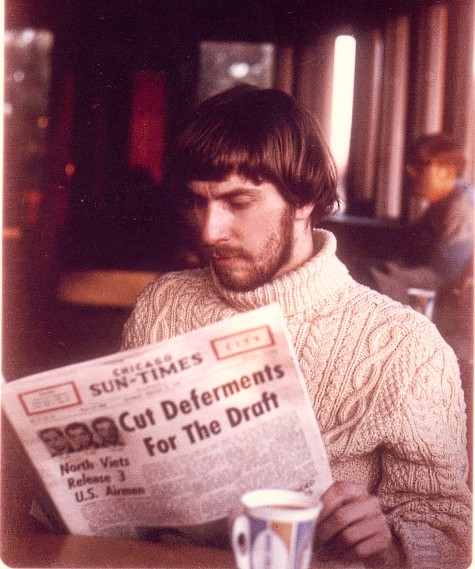
Of course, I knew that in some ways it wasn't going to be soon enough for me. I'd already had my pre-induction draft physical, and despite total deafness in one ear, and to the complete shock of several sets of draft counsellors I saw in Chicago, I'd passed. (They were already telling me about how to appeal.) I was a senior in college, and in a few months, my student deferment would end, and with draft calls still very high, I'd probably be drafted. I still hadn't decided what to do, except I knew what I wasn't going to do--I wasn't going to kill any Vietnamese. There was a lot of talk about options, but in the end no one else could really understand this decision--not parents or teachers, friends or certainly girlfriends. You were alone on this one.
But that was a couple of months away at least. I was about to direct a play I'd written, with its own statement about all this, and after that I could probably tie up the draft process long enough to somehow work for Robert Kennedy's campaign. And it was April--spring was short but intensely beautiful in Galesburg--and the barrier of LBJ was gone.
There'd been dancing in the streets on campuses across America the night before. There hadn't been anything that public on our small campus, but we'd probably celebrated enough to be seeing the first April morning through a slight fuzz. There was hope now-- the war might end, and that immense burden on every single hour of every day.
April 1--April Fool's Day. Before the month was out, Martin Luther King would be assassinated, and hardly more than a month after that, I would spend my graduation day watching Robert Kennedy's funeral. Then would come the shambles of the Chicago convention, Humphrey, Nixon and more war--much more war. "April is the cruelest month," T.S. Eliot wrote, as we students of literature well knew.
Tuesday, August 07, 2007
When Will We Ever Learn?
Those of us who experienced the 60s, though we may bore younger generations with reminicences, also tend to forget that these generations didn't go through them, especially emotionally. This was brought home to me recently by a diary at Daily Kos called "Where Have All the Flowers Gone"by Whiskey Sam.
I'm going to reproduce much of that diary here, though if you follow the link you'll get the full version as well as video renditions of the song. But of course the diary is only partly about the song--it's about what we learned, and what has not quite been passed on.
There was a comment to the diary I responded to which I'll also include here--on the matter of reviving the draft as a kind of antiwar tactic. It's ironic to me that in a diary about learning one lesson--to smell out an unjust and immoral war--there's added a proposal for something else we should have learned is pernicious: the draft.
Here are large excerpts from the diary itself:
"
I found myself thinking back about this war in Iraq and about how much things have changed. Back in 2002/03, the conventional wisdom was that Saddam had WMD's and he would sell them to the first Tom, Dick, or Harry who wanted them. We heard it all around, and the majority of the country believed it. I didn't, many of us on this forum smelled out the bullshit when it was being presented for us.
This diary is about how right the liberal community was on this issue, and how damn disgusting it is that we were. But it's also about how right, how MUCH MORE right, the older Vietnam generation was about this war and how some of the Gen X / Y liberals failed to realize the gravity of their warning.
In early 2003, when war became the obvious conclusion to Bush's 6 months of rhetoric, I was sitting at my UU Church in Raleigh North Carolina. The minister at the church was simply a hero in leading her congregation against the coming war. Every single sermon included talk about the distruction and the needlessness of the actions that would be taken in our names.
I remember it well. I remember also thinking it was a bit over dramatic. I found myself feeling that way often about the "Vietnam era" anti-war people. After all, it couldn't be nearly as bad as those old timers were making sound like it would be.
I was wrong, they were very much right.
One Sunday our minister began by passing out lyrics to an old Pete Seeger song, "Where Have All the Flowers Gone". Being young and dumb, I hadn't ever heard of the song. The "Vietnam People" in the room all instantly teared up. God this was all so overly draamtic!!! Even if Bush gets his war, I thought, there's NO WAY it'll last for years. How could it?
Still, I mumbled through the lyrics
Where have all the flowers gone?
Long time passing Where have all the flowers gone?
Long time ago Where have all the flowers gone?
Girls have picked them every one
When will they ever learn? When will they ever learn?
OK OK, I get the point... Vietnam was bad, and your friends got drafted and died, but that's not what's going to happen here. JESUS people, if we overplay our hand, if we over dramatize this situation then we look like a bunch of kooks!!!! Pass the tin foil!
Where have all the young men gone?
Long time passing Where have all the young men gone?
Long time ago Where have all the young men gone?
Gone for soldiers every one When will they ever learn?
When will they ever learn?
nice song, by this point the "Vietnam people" were flat out crying. This is before a single American was wounded in Iraq. Come ON folks, less than 200 American soldiers died in the first Gulf War -- we're going to hit our targets and the country will roll over!!!
Where have all the soldiers gone?
Long time passing
Where have all the soldiers gone? Long time ago
Where have all the soldiers gone?
Gone to graveyards every one When will they ever learn?
When will they ever learn?
Where have all the graveyards gone?
Long time passing
Where have all the graveyards gone? Long time ago
Where have all the graveyards gone?
Covered with flowers every one
When will we ever learn? When will we ever learn?
Almost five years later I know now why the "Vietnam people" were so moved by this song. I know now what I need to know for the next time a group of warmongers deceive our country into a war that destroys generations of our finest men and women. I know now what the "Vietnam people" knew when they used to sing this song.
They were right. My god they were right. They weren't being overly dramatic, they saw what was going to happen and they were doing everything in their power to warn people like me about the gathering storm. "
The comments included this one:
"with the hippies (4+ / 0-)
this time things are gloomy, the right has won by depressing us all. The old peace movement was filled with college kids who were against not just war but the lottery that could make them fight in one. That touched everyone, and it's why we need the draft back, so that everyone will be watching, if not for everyone's kids, for their own. If we as a nation claim the right to 'protect' ourselves with soldiers, we need to shoulder the responsibility. Our nation is so powerful that citizens need to be involved personally in the decisions our leaders make in our name. "
This is my reply to the comment:
two evils don't make a right (2+ / 0-)
unless they make it a rabid right--because the draft is as evil as the war. I am one of those "Vietnam people" who knew how bad this was going to be, and I can tell you from experience that a draft will not help, it will only ruin the lives of even more young people. First of all, the highest draft calls of the war were before the lottery was instituted, so when you turned 18 or lost your college deferement, you were facing being drafted, and basically, you were on your own. Nobody but you understood what it meant. Parents, family, women, friends were all conflicted, because the choice was to go and possibly die and/or kill, or bring shame to your family, ruin your life, flee to Canada, go to jail, etc. to resist it. Unless your family had the money and connections to buy you out of it with pull or doctors, and that believe me would not change if the draft began again. Trying to force people to go kill other people or die trying is immoral. Even slaves weren't forced to do that, and slavery is unconstitutional as well as immoral.
I'm sure you, like many others making this proposal, are well-meaning, but that's what's most upsetting to me. At least some of the people who got us into this war were well-meaning. Just wrong. They didn't see the Bushite lies and how they were going to use this war for their own ends. Those are exactly the same people who would be running the draft. If there's a war that has to be fought, Americans will fight it, without being forced. "
And another poster added:
"No draft--ever
I absolutely agree about the draft. We will institute a new draft over the dead bodies of many of the Vietnam generation who experienced it. Since I'm female, I didn't have to worry, but my brother did. So we all worried. I hate to tell you what happened to the kids I knew who were drafted. They were scarred for life though some were killed and some are still MIA. One is insane and has been since he was in Vietnam. All of them were forced to serve in the military. I will never support a draft. I agree that if we really need to fight a war, people will volunteer. We didn't really need to fight in Iraq or Vietnam. War is horrible beyond description. We should avoid war if possible and never be the aggressors."
Those of us who experienced the 60s, though we may bore younger generations with reminicences, also tend to forget that these generations didn't go through them, especially emotionally. This was brought home to me recently by a diary at Daily Kos called "Where Have All the Flowers Gone"by Whiskey Sam.
I'm going to reproduce much of that diary here, though if you follow the link you'll get the full version as well as video renditions of the song. But of course the diary is only partly about the song--it's about what we learned, and what has not quite been passed on.
There was a comment to the diary I responded to which I'll also include here--on the matter of reviving the draft as a kind of antiwar tactic. It's ironic to me that in a diary about learning one lesson--to smell out an unjust and immoral war--there's added a proposal for something else we should have learned is pernicious: the draft.
Here are large excerpts from the diary itself:
"
I found myself thinking back about this war in Iraq and about how much things have changed. Back in 2002/03, the conventional wisdom was that Saddam had WMD's and he would sell them to the first Tom, Dick, or Harry who wanted them. We heard it all around, and the majority of the country believed it. I didn't, many of us on this forum smelled out the bullshit when it was being presented for us.
This diary is about how right the liberal community was on this issue, and how damn disgusting it is that we were. But it's also about how right, how MUCH MORE right, the older Vietnam generation was about this war and how some of the Gen X / Y liberals failed to realize the gravity of their warning.
In early 2003, when war became the obvious conclusion to Bush's 6 months of rhetoric, I was sitting at my UU Church in Raleigh North Carolina. The minister at the church was simply a hero in leading her congregation against the coming war. Every single sermon included talk about the distruction and the needlessness of the actions that would be taken in our names.
I remember it well. I remember also thinking it was a bit over dramatic. I found myself feeling that way often about the "Vietnam era" anti-war people. After all, it couldn't be nearly as bad as those old timers were making sound like it would be.
I was wrong, they were very much right.
One Sunday our minister began by passing out lyrics to an old Pete Seeger song, "Where Have All the Flowers Gone". Being young and dumb, I hadn't ever heard of the song. The "Vietnam People" in the room all instantly teared up. God this was all so overly draamtic!!! Even if Bush gets his war, I thought, there's NO WAY it'll last for years. How could it?
Still, I mumbled through the lyrics
Where have all the flowers gone?
Long time passing Where have all the flowers gone?
Long time ago Where have all the flowers gone?
Girls have picked them every one
When will they ever learn? When will they ever learn?
OK OK, I get the point... Vietnam was bad, and your friends got drafted and died, but that's not what's going to happen here. JESUS people, if we overplay our hand, if we over dramatize this situation then we look like a bunch of kooks!!!! Pass the tin foil!
Where have all the young men gone?
Long time passing Where have all the young men gone?
Long time ago Where have all the young men gone?
Gone for soldiers every one When will they ever learn?
When will they ever learn?
nice song, by this point the "Vietnam people" were flat out crying. This is before a single American was wounded in Iraq. Come ON folks, less than 200 American soldiers died in the first Gulf War -- we're going to hit our targets and the country will roll over!!!
Where have all the soldiers gone?
Long time passing
Where have all the soldiers gone? Long time ago
Where have all the soldiers gone?
Gone to graveyards every one When will they ever learn?
When will they ever learn?
Where have all the graveyards gone?
Long time passing
Where have all the graveyards gone? Long time ago
Where have all the graveyards gone?
Covered with flowers every one
When will we ever learn? When will we ever learn?
Almost five years later I know now why the "Vietnam people" were so moved by this song. I know now what I need to know for the next time a group of warmongers deceive our country into a war that destroys generations of our finest men and women. I know now what the "Vietnam people" knew when they used to sing this song.
They were right. My god they were right. They weren't being overly dramatic, they saw what was going to happen and they were doing everything in their power to warn people like me about the gathering storm. "
The comments included this one:
"with the hippies (4+ / 0-)
this time things are gloomy, the right has won by depressing us all. The old peace movement was filled with college kids who were against not just war but the lottery that could make them fight in one. That touched everyone, and it's why we need the draft back, so that everyone will be watching, if not for everyone's kids, for their own. If we as a nation claim the right to 'protect' ourselves with soldiers, we need to shoulder the responsibility. Our nation is so powerful that citizens need to be involved personally in the decisions our leaders make in our name. "
This is my reply to the comment:
two evils don't make a right (2+ / 0-)
unless they make it a rabid right--because the draft is as evil as the war. I am one of those "Vietnam people" who knew how bad this was going to be, and I can tell you from experience that a draft will not help, it will only ruin the lives of even more young people. First of all, the highest draft calls of the war were before the lottery was instituted, so when you turned 18 or lost your college deferement, you were facing being drafted, and basically, you were on your own. Nobody but you understood what it meant. Parents, family, women, friends were all conflicted, because the choice was to go and possibly die and/or kill, or bring shame to your family, ruin your life, flee to Canada, go to jail, etc. to resist it. Unless your family had the money and connections to buy you out of it with pull or doctors, and that believe me would not change if the draft began again. Trying to force people to go kill other people or die trying is immoral. Even slaves weren't forced to do that, and slavery is unconstitutional as well as immoral.
I'm sure you, like many others making this proposal, are well-meaning, but that's what's most upsetting to me. At least some of the people who got us into this war were well-meaning. Just wrong. They didn't see the Bushite lies and how they were going to use this war for their own ends. Those are exactly the same people who would be running the draft. If there's a war that has to be fought, Americans will fight it, without being forced. "
And another poster added:
"No draft--ever
I absolutely agree about the draft. We will institute a new draft over the dead bodies of many of the Vietnam generation who experienced it. Since I'm female, I didn't have to worry, but my brother did. So we all worried. I hate to tell you what happened to the kids I knew who were drafted. They were scarred for life though some were killed and some are still MIA. One is insane and has been since he was in Vietnam. All of them were forced to serve in the military. I will never support a draft. I agree that if we really need to fight a war, people will volunteer. We didn't really need to fight in Iraq or Vietnam. War is horrible beyond description. We should avoid war if possible and never be the aggressors."
Labels:
Iraqnam,
Peter Paul and Mary,
the draft,
Vietnam
Monday, February 05, 2007
Vietnam and the 60s: Phantoms and Realities
Dailykos the other day had prominent threads on two new books that concern the 1960s and Vietnam. One by devilstower was about The Spitting Image by Jerry Lembke, which debunks the media legend that protestors spit on returning Vietnam veterans. I have to confess that even I was taken in by this right wing smear. Emotions did run high, and I guess I could picture protests getting out of hand. Now I'm not sure what I remember versus what I saw in the movies about this. I know that there were protests at recruitment centers and draft boards. We protested ROTC and recruiters on campus (on our campus we did so by singing "Alice's Restaurant" at top volume.) But the image of protestors lined up at airports to dis returning soldiers comes not from history or reality but pernicious fiction.
I do clearly remember finding common cause with returning vets, and obviously many of them eventually became active, and became leaders, in the antiwar movement, just as Iraq vets are doing now. Even the young officer in charge of my group at my (first) draft physical closed the door at the end of it and told us that Vietnam was a crock and to stay out of it in any way we could. I also remember that protestors were spit on, as well as clubbed, gassed and punched.
As devilstower points out, the spitting on veterans lie was part of the attempt to spin the history to say that the U.S. lost Vietnam because of protestors, lack of support at home and the resulting lack of will by spineless politicians. It appears to be the argument that George Bush buys, and that informs his prosecution of Iraqnam.
The other frontpage post was by SusanG, about Jeff Kisseloff's Generation on Fire, an oral history told by 1960s activists. She also provided a link to Jeff's website , which will soon be a permanent link from this site. Susan (as usual) provides a thoughtful analysis of what she learned from these interviews (there are some on Jeff's site that aren't in the book) that pertains to progressives and activism today. I'm looking forward to exploring Jeff's site in detail and his book, but one thing is already clear: the "spitting" protestor is a phony phantam of the 60s, so it's about time to hear a little more of the reality.
Dailykos the other day had prominent threads on two new books that concern the 1960s and Vietnam. One by devilstower was about The Spitting Image by Jerry Lembke, which debunks the media legend that protestors spit on returning Vietnam veterans. I have to confess that even I was taken in by this right wing smear. Emotions did run high, and I guess I could picture protests getting out of hand. Now I'm not sure what I remember versus what I saw in the movies about this. I know that there were protests at recruitment centers and draft boards. We protested ROTC and recruiters on campus (on our campus we did so by singing "Alice's Restaurant" at top volume.) But the image of protestors lined up at airports to dis returning soldiers comes not from history or reality but pernicious fiction.
I do clearly remember finding common cause with returning vets, and obviously many of them eventually became active, and became leaders, in the antiwar movement, just as Iraq vets are doing now. Even the young officer in charge of my group at my (first) draft physical closed the door at the end of it and told us that Vietnam was a crock and to stay out of it in any way we could. I also remember that protestors were spit on, as well as clubbed, gassed and punched.
As devilstower points out, the spitting on veterans lie was part of the attempt to spin the history to say that the U.S. lost Vietnam because of protestors, lack of support at home and the resulting lack of will by spineless politicians. It appears to be the argument that George Bush buys, and that informs his prosecution of Iraqnam.
The other frontpage post was by SusanG, about Jeff Kisseloff's Generation on Fire, an oral history told by 1960s activists. She also provided a link to Jeff's website , which will soon be a permanent link from this site. Susan (as usual) provides a thoughtful analysis of what she learned from these interviews (there are some on Jeff's site that aren't in the book) that pertains to progressives and activism today. I'm looking forward to exploring Jeff's site in detail and his book, but one thing is already clear: the "spitting" protestor is a phony phantam of the 60s, so it's about time to hear a little more of the reality.
Friday, January 12, 2007
Thursday, January 11, 2007
Rebellion (and Why This is not the 1970s)
I'm not going to present a lot of tidbits with sources concerning the Bush plan for Iraq and the subsequent nearly unanimous disapproval, but some overall impressions. Even before antiwar protestors could begin mobilizing--and there are reports of demonstrations planned or accomplished in all fifty states--the reception given to the Bush plan, especially in the hearings featuring the new Defense Secretary and the old Sec. of State, Condi Rice, was nothing short of eviscerating.
Particularly striking were the Republicans and past Bush supporters, one of whom added that he not only was parting company with the Bushwar but was tired of being lied to. And he said this to Rice. While Senate GOP leader Mitch McConnell talked with the confidence of old about using a fillibuster to stop the attempt to pass a resolution of (essentially) no confidence in the President's plan, it soon appeared that there were already the 60+ votes to stop that, and vote on the resolution, which at the moment seems all but certain to pass.In other words, the Congress was in open rebellion. Tom Ricks of the Washington Post said on Charlie Rose that of all the armed forces officers who are either in Iraq or were, and who emailed him after the speech, not one thought the plan would work. The polls show overwhelming public skepticism if not outright opposition. And on and on.
There seem to be two main schools of thought about the why of this policy. The first is that Bush is sincerely messianic, and his reference to aggressive moves against Syria and Iran (which other administration figures minimized today) show a very dangerous intention to widen the conflict, perhaps to divert attention from Iraq, or simply to carry out a general attempt to impose American power in that part of the world.
The second possibility is that this is cover, a face-saving measure, for troop withdrawal by the end of the year, when the Iraqis and particularly the current government don't make good on their part of the bargain in the "pacification" of Baghdad.The closest historical precedent for both of these possibilities is ironically the same event: Nixon's invasion of Cambodia in 1970. Nixon both widened the war (as he would several more times) and claimed it was in order to facilitate the withdrawal of American troops.
The 1970s also offer the precedent of Congress cutting off funds for a war that the President wouldn't end, though it took another five years after Cambodia. This and more led Republican Senator Chuck Hagel to say that the President's speech represents the worst foreign policy catastrophe since Vietnam.There are plenty of other similarities, and we're likely to see more, like large scale protests. Keith Olbermann's charge in his special comment Thursday that Bush's approach is insane recalls the feeling that Nixon was nuts, and this was pre-Watergate. Firesign Theatre ran a fake candidate for president in 1972 (George Papoon) whose campaign slogan was "Not Insane."
But there are differences. One is the speed. Everything is accelerated--especially the response of establishment politicians. Only a handful of "radicals" in Congress were talking about Nixon the same way that virtually all members of the Senate Foreign Relations Committee talked about Bush today. No one in the news media was so openly, relentlessly and vociferously against the president's war as Keith Olbermann has been, or that Chris Matthews has become.This speed may be reflected in the likelihood that Congress is going to search for and perhaps find a way to cut off money to conduct this war.
There are other differences on policy that reflect the experience of Vietnam, and not only on the part of Vietnam vets like Chuck Hagel. But there is yet another difference that I find striking. That's the often repeated reason for opposition to this temporary surge or anything short of taking troops out of Iraq: it's not worth the lives of American soldiers. The idea that troops would be committed as a face-saving gesture leading to withdrawal that didn't damage American power or prestige as much as a "retreat" would have been perfectly acceptable to most Washington officials, media and academics.
It is not acceptable now, and that I believe is a consequence of antiwar activity in the Vietnam era, especially by those of my generation. This was something we stressed from the beginning, even though it would be John Kerry's testimony in 1971 or so that remains the most memorable formulation of that belief--how do you ask a soldier to be the last one to die for a mistake?
This is some progress, though not yet to the level of another of our contentions--that the war was immoral because of the death and destruction it brought to Vietnam and the Vietnamese people. There are very few voices these days outside the peace movement that make this point about Iraq and Iraqis.But these differences are not nothing. They are differences from the 1970s, caused in part by what we went through, and what we did, in the 1960s and 1970s.
I'm not going to present a lot of tidbits with sources concerning the Bush plan for Iraq and the subsequent nearly unanimous disapproval, but some overall impressions. Even before antiwar protestors could begin mobilizing--and there are reports of demonstrations planned or accomplished in all fifty states--the reception given to the Bush plan, especially in the hearings featuring the new Defense Secretary and the old Sec. of State, Condi Rice, was nothing short of eviscerating.
Particularly striking were the Republicans and past Bush supporters, one of whom added that he not only was parting company with the Bushwar but was tired of being lied to. And he said this to Rice. While Senate GOP leader Mitch McConnell talked with the confidence of old about using a fillibuster to stop the attempt to pass a resolution of (essentially) no confidence in the President's plan, it soon appeared that there were already the 60+ votes to stop that, and vote on the resolution, which at the moment seems all but certain to pass.In other words, the Congress was in open rebellion. Tom Ricks of the Washington Post said on Charlie Rose that of all the armed forces officers who are either in Iraq or were, and who emailed him after the speech, not one thought the plan would work. The polls show overwhelming public skepticism if not outright opposition. And on and on.
There seem to be two main schools of thought about the why of this policy. The first is that Bush is sincerely messianic, and his reference to aggressive moves against Syria and Iran (which other administration figures minimized today) show a very dangerous intention to widen the conflict, perhaps to divert attention from Iraq, or simply to carry out a general attempt to impose American power in that part of the world.
The second possibility is that this is cover, a face-saving measure, for troop withdrawal by the end of the year, when the Iraqis and particularly the current government don't make good on their part of the bargain in the "pacification" of Baghdad.The closest historical precedent for both of these possibilities is ironically the same event: Nixon's invasion of Cambodia in 1970. Nixon both widened the war (as he would several more times) and claimed it was in order to facilitate the withdrawal of American troops.
The 1970s also offer the precedent of Congress cutting off funds for a war that the President wouldn't end, though it took another five years after Cambodia. This and more led Republican Senator Chuck Hagel to say that the President's speech represents the worst foreign policy catastrophe since Vietnam.There are plenty of other similarities, and we're likely to see more, like large scale protests. Keith Olbermann's charge in his special comment Thursday that Bush's approach is insane recalls the feeling that Nixon was nuts, and this was pre-Watergate. Firesign Theatre ran a fake candidate for president in 1972 (George Papoon) whose campaign slogan was "Not Insane."
But there are differences. One is the speed. Everything is accelerated--especially the response of establishment politicians. Only a handful of "radicals" in Congress were talking about Nixon the same way that virtually all members of the Senate Foreign Relations Committee talked about Bush today. No one in the news media was so openly, relentlessly and vociferously against the president's war as Keith Olbermann has been, or that Chris Matthews has become.This speed may be reflected in the likelihood that Congress is going to search for and perhaps find a way to cut off money to conduct this war.
There are other differences on policy that reflect the experience of Vietnam, and not only on the part of Vietnam vets like Chuck Hagel. But there is yet another difference that I find striking. That's the often repeated reason for opposition to this temporary surge or anything short of taking troops out of Iraq: it's not worth the lives of American soldiers. The idea that troops would be committed as a face-saving gesture leading to withdrawal that didn't damage American power or prestige as much as a "retreat" would have been perfectly acceptable to most Washington officials, media and academics.
It is not acceptable now, and that I believe is a consequence of antiwar activity in the Vietnam era, especially by those of my generation. This was something we stressed from the beginning, even though it would be John Kerry's testimony in 1971 or so that remains the most memorable formulation of that belief--how do you ask a soldier to be the last one to die for a mistake?
This is some progress, though not yet to the level of another of our contentions--that the war was immoral because of the death and destruction it brought to Vietnam and the Vietnamese people. There are very few voices these days outside the peace movement that make this point about Iraq and Iraqis.But these differences are not nothing. They are differences from the 1970s, caused in part by what we went through, and what we did, in the 1960s and 1970s.
Labels:
Firesign Theatre,
Iraqnam,
Nixon,
protest,
Vietnam
Thursday, October 26, 2006
Consensus Now
According to opinon polls, Republicans are losing voting groups like white men and Catholics which were keys to their success. They are falling further behind with women, and even losing 10% of the previously rock solid Christian right. But it is the older voter that politicos believed would swing this election.
Now Reuters in the New York Times says that older citizens are likely to vote based not on age-specific issues like Medicare drug benefits, but on the same issue that dominates this election for all other age groups: the war in Iraq.
Pollsters haven't seen such cross-generational agreement since 1992, when pocketbook issues dominated in all age groups and helped put Democrat Bill Clinton in the White House and his party in control of both houses of Congress.
For the sixties generation in particular, statements like Donald Rumfeld's today will sound familiar. Under reporters' questioning over the apparent discrepancy of statements made by the Iraq prime minister saying his country hadn't agreed to benchmarks, and the Administrations contention that it had, Rumsfeld said, You ought to just back off, take a look at it, relax, understand that it's complicated."
How many times were we told by the Lyndon Johnson administration and then the Nixon administration that only they had the information and ability to judge how things were going in Vietnam and what U.S. policy should be. Yet it was clear then and it became clearer later, that they had ignored the information and perspectives available to them from experts in the region, in the history of colonial wars and so on, as well as the observations of what was happening in Vietnam made by reporters and researchers.
This is even more clearly the case in Iraq. Every major mistake the Bush administration has made was predicted and those predictions appeared on television and in newspapers and magazines, most of them before the war was launched. Yet their arrogance continues.
Americans aren't buying it anymore. Including the 60s generation, and older.
According to opinon polls, Republicans are losing voting groups like white men and Catholics which were keys to their success. They are falling further behind with women, and even losing 10% of the previously rock solid Christian right. But it is the older voter that politicos believed would swing this election.
Now Reuters in the New York Times says that older citizens are likely to vote based not on age-specific issues like Medicare drug benefits, but on the same issue that dominates this election for all other age groups: the war in Iraq.
Pollsters haven't seen such cross-generational agreement since 1992, when pocketbook issues dominated in all age groups and helped put Democrat Bill Clinton in the White House and his party in control of both houses of Congress.
For the sixties generation in particular, statements like Donald Rumfeld's today will sound familiar. Under reporters' questioning over the apparent discrepancy of statements made by the Iraq prime minister saying his country hadn't agreed to benchmarks, and the Administrations contention that it had, Rumsfeld said, You ought to just back off, take a look at it, relax, understand that it's complicated."
How many times were we told by the Lyndon Johnson administration and then the Nixon administration that only they had the information and ability to judge how things were going in Vietnam and what U.S. policy should be. Yet it was clear then and it became clearer later, that they had ignored the information and perspectives available to them from experts in the region, in the history of colonial wars and so on, as well as the observations of what was happening in Vietnam made by reporters and researchers.
This is even more clearly the case in Iraq. Every major mistake the Bush administration has made was predicted and those predictions appeared on television and in newspapers and magazines, most of them before the war was launched. Yet their arrogance continues.
Americans aren't buying it anymore. Including the 60s generation, and older.
Sunday, August 06, 2006
After Hiroshima, Terrorism Is What Bombing Is For
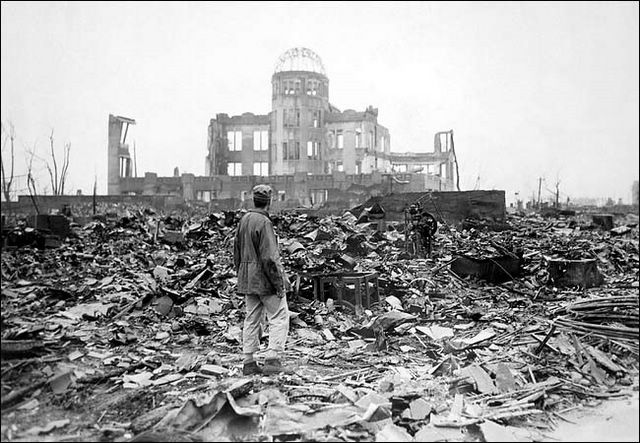
On August 6, 1945, Hiroshima was destroyed by the first atomic bomb used in warfare. Three days later, President Truman began a pattern of lies that characterized the nuclear age.
But another lie also emerged from World War II, when the kind of bombing we see today--from the air, on urban centers and civilian populations--was first done regularly, on a large scale. The lie is that bombing is an effective, reasonable and legitimate method of waging war, whereas there are other despicable and illegitimate acts committed by uncivilized and ruthless enemies, called terrorism.
The truth is that bombing is terrorism, no matter who does it, and it always has been.
As Norman Solomon recently reminds us, the immense explosion at Hiroshima was followed by an immense lie. On August 9th, President Truman told the Amercan people: "The world will note that the first atomic bomb was dropped on Hiroshima, a military base. That was because we wished in this first attack to avoid, in so far as possible, the killing of civilians."
Solomon continues:
Actually, the U.S. government went out of its way to select Japanese cities of sufficient size to showcase the extent of the A-bomb's deadly power -- in Hiroshima on Aug. 6 and in Nagasaki on Aug. 9. As a result of those two bombings, hundreds of thousands of civilians died, immediately or eventually. If Truman's conscience had been clear, it's doubtful he would have felt compelled to engage in such a basic distortion at the dawn of the nuclear era.
In fact, Hiroshima had no military significance, and had not been bombed before--one of the principal reasons it was chosen for the A-bomb, so its destructive power would be more obvious to the Japanese and clearer for Americans studying those effects. It was considered a "safe city" to the extent that some parents in California who were forced into internment camps, sent their children to the safety of Hiroshima. So the victims of the U.S. atomic bomb likely included American children.
Truman's was the first of many lies of the nuclear era, including the initial lies about the effects of radiation. Some 75,000 people died in Hiroshima from the blast and fire of the Bomb. Five years later, radiation effects more than doubled the dead, to some 200,000. The vast majority of those who died from the Nagasaki bomb were from radiation, months and years later.
But the biggest lie is not about the atomic bomb, but the very practice of bombing. The facts show (as described in Sven Lindqvist's A History of Bombing and Gerard DeGroot's The Bomb: A Life, among other works) that the effect of bombing cities is not a strategy of war but a strategy of terror, and that it doesn't work.
The idea of this kind of bombing is not to kill enemy combatants or destroy military bases, but to destroy the population's will by terrorizing them with the threat of random death and destruction. Although the idea of this kind of bombing is now apparently acceptable, it is relatively new in the history of warfare.
While many nations experimented with it, especially imperial powers who bombed restless colonies, it was first used as a policy by the British in World War II in Germany. It did not result in a revolt of the German people against its government. The U.S. followed in its bombing campaign against Japan, at first aimed at military and industrial support targets, but eventually using saturation bombing against cities. It was the failure of this campaign to terrorize the Japanese population into submission that led to the decision to use the atomic bomb.
As Gerard DeGroot points out, when We (whoever We are) drop bombs, it is to destroy the enemy's capability to fight--the logic that says if you are going to destroy the enemy's tanks, then destroy the factories that build the tanks, and kill the people who work in those factories. But when They bomb Us, using the same logic, it is brutal, indiscriminate killing. "The difference is contrived--a matter of perspective. Indiscriminate bombing means killing civilians for the sake of attrition--the killing is the object."
But it isn't only attrition, and in less than the kind of total war that World War II was, it is more obviously aimed at terrorizing the enemy population. Hezbollah fires bombs into Israel to terrorize the population, hoping to eventually win concessions or ultimately to destroy the state of Israel. Israel fires bombs into Lebanon to destroy rocket implacements but also to terrorize the population into not supporting Hezbollah, either by allowing them to operate out of their neighborhoods or by supporting them politically. The strategy in both cases is the attrition of terror.
Argument on the morality of targeting civilians in war go back hundreds of years. All too ironically, the first known code that forbade the killing of non-combatants was promulgated by Abu Hanifa, a legal scholar in Baghdad. Western powers adopted a double standard: war between "civilized" European nations would be conducted in this civilized manner. But war against lesser peoples was total war, against the population as well as combatants. Primitive people were not only lesser, but more easily frightened by western technology's advances in explosives and methods of delivering them. World War II ended even these distinctions.
Now bombing is normal, and far from being the last resort, it is often the first option. Nations use it now because it is cheaper, and since no troops are endangered, there is no grumbling at home about the loss of life. Bombs of all kinds constitute a thriving business. In use, they have a very brief productive life before it's time to buy more. And there's plenty to chose from. Small groups can plant various kinds of bombs along roads or in parked vehicles, or use suicide bombers. Larger organizations can use bombs attached to small rockets. Nations can use bombs with sophisticated targetting capabilities, launched on rockets or fired from ships or dropped from airplanes. Long range missiles with thermonuclear weapons are still pointed at the U.S. and Russia.
From the smallest to the largest-yield weapons, bombs are instruments of terror. They sever the limbs of children, burn babies alive, destroy homes that send families into a tailspin of poverty, wreck the urban infrastructure that makes daily life possible, and send millions of traumatized people wandering into nightmare through the piles of broken homes and schools and hospitals, shards of bone, crushed bodies, smoldering flesh, hot twisted metal and clouds of toxic smoke, because they are supposed to. This is what bombs are for.
On August 6, 1945, Hiroshima was destroyed by the first atomic bomb used in warfare. Three days later, President Truman began a pattern of lies that characterized the nuclear age.
But another lie also emerged from World War II, when the kind of bombing we see today--from the air, on urban centers and civilian populations--was first done regularly, on a large scale. The lie is that bombing is an effective, reasonable and legitimate method of waging war, whereas there are other despicable and illegitimate acts committed by uncivilized and ruthless enemies, called terrorism.
The truth is that bombing is terrorism, no matter who does it, and it always has been.
As Norman Solomon recently reminds us, the immense explosion at Hiroshima was followed by an immense lie. On August 9th, President Truman told the Amercan people: "The world will note that the first atomic bomb was dropped on Hiroshima, a military base. That was because we wished in this first attack to avoid, in so far as possible, the killing of civilians."
Solomon continues:
Actually, the U.S. government went out of its way to select Japanese cities of sufficient size to showcase the extent of the A-bomb's deadly power -- in Hiroshima on Aug. 6 and in Nagasaki on Aug. 9. As a result of those two bombings, hundreds of thousands of civilians died, immediately or eventually. If Truman's conscience had been clear, it's doubtful he would have felt compelled to engage in such a basic distortion at the dawn of the nuclear era.
In fact, Hiroshima had no military significance, and had not been bombed before--one of the principal reasons it was chosen for the A-bomb, so its destructive power would be more obvious to the Japanese and clearer for Americans studying those effects. It was considered a "safe city" to the extent that some parents in California who were forced into internment camps, sent their children to the safety of Hiroshima. So the victims of the U.S. atomic bomb likely included American children.
Truman's was the first of many lies of the nuclear era, including the initial lies about the effects of radiation. Some 75,000 people died in Hiroshima from the blast and fire of the Bomb. Five years later, radiation effects more than doubled the dead, to some 200,000. The vast majority of those who died from the Nagasaki bomb were from radiation, months and years later.
But the biggest lie is not about the atomic bomb, but the very practice of bombing. The facts show (as described in Sven Lindqvist's A History of Bombing and Gerard DeGroot's The Bomb: A Life, among other works) that the effect of bombing cities is not a strategy of war but a strategy of terror, and that it doesn't work.
The idea of this kind of bombing is not to kill enemy combatants or destroy military bases, but to destroy the population's will by terrorizing them with the threat of random death and destruction. Although the idea of this kind of bombing is now apparently acceptable, it is relatively new in the history of warfare.
While many nations experimented with it, especially imperial powers who bombed restless colonies, it was first used as a policy by the British in World War II in Germany. It did not result in a revolt of the German people against its government. The U.S. followed in its bombing campaign against Japan, at first aimed at military and industrial support targets, but eventually using saturation bombing against cities. It was the failure of this campaign to terrorize the Japanese population into submission that led to the decision to use the atomic bomb.
As Gerard DeGroot points out, when We (whoever We are) drop bombs, it is to destroy the enemy's capability to fight--the logic that says if you are going to destroy the enemy's tanks, then destroy the factories that build the tanks, and kill the people who work in those factories. But when They bomb Us, using the same logic, it is brutal, indiscriminate killing. "The difference is contrived--a matter of perspective. Indiscriminate bombing means killing civilians for the sake of attrition--the killing is the object."
But it isn't only attrition, and in less than the kind of total war that World War II was, it is more obviously aimed at terrorizing the enemy population. Hezbollah fires bombs into Israel to terrorize the population, hoping to eventually win concessions or ultimately to destroy the state of Israel. Israel fires bombs into Lebanon to destroy rocket implacements but also to terrorize the population into not supporting Hezbollah, either by allowing them to operate out of their neighborhoods or by supporting them politically. The strategy in both cases is the attrition of terror.
Argument on the morality of targeting civilians in war go back hundreds of years. All too ironically, the first known code that forbade the killing of non-combatants was promulgated by Abu Hanifa, a legal scholar in Baghdad. Western powers adopted a double standard: war between "civilized" European nations would be conducted in this civilized manner. But war against lesser peoples was total war, against the population as well as combatants. Primitive people were not only lesser, but more easily frightened by western technology's advances in explosives and methods of delivering them. World War II ended even these distinctions.
Now bombing is normal, and far from being the last resort, it is often the first option. Nations use it now because it is cheaper, and since no troops are endangered, there is no grumbling at home about the loss of life. Bombs of all kinds constitute a thriving business. In use, they have a very brief productive life before it's time to buy more. And there's plenty to chose from. Small groups can plant various kinds of bombs along roads or in parked vehicles, or use suicide bombers. Larger organizations can use bombs attached to small rockets. Nations can use bombs with sophisticated targetting capabilities, launched on rockets or fired from ships or dropped from airplanes. Long range missiles with thermonuclear weapons are still pointed at the U.S. and Russia.
From the smallest to the largest-yield weapons, bombs are instruments of terror. They sever the limbs of children, burn babies alive, destroy homes that send families into a tailspin of poverty, wreck the urban infrastructure that makes daily life possible, and send millions of traumatized people wandering into nightmare through the piles of broken homes and schools and hospitals, shards of bone, crushed bodies, smoldering flesh, hot twisted metal and clouds of toxic smoke, because they are supposed to. This is what bombs are for.
Friday, August 04, 2006
Wars Within Wars
The Iraq war is becoming as long and agonizing as Vietnam--one poll says it is even more politically divisive. A Republican Senator said that the situation on the ground in Iraq is an "absolute replay" of Vietnam. A reporter who covered Vietnam sees a tragic repetition of the Vietnamization policy of the Nixon war, during which most Americans were killed and most of the destruction was done. And there are other resemblances as well.
Rather than make comparisons for you, let me simply tell a few stories about that time that seem relevant. These are recollections, with some poetic license, and like all stories, just one way of telling about it.
I obviously can't speak for everyone who was young in the Vietnam era. So when I say "we," it's shorthand for the people I knew. However, there were a lot like us. If you were draft age, and especially if you were in college, you were involved in these discussions to some degree.
Some of us talked about Vietnam and associated moral and political issues virtually every day. Some years (for me, the late 60s) there was hardly a conversation in which these subjects didn't come up.
There was one set of discussions about Vietnam: the politics, history and other contexts of the war. These began with the campus Teach-Ins in 1965 and became a major part of our education.
All of these discussions were in the context of a lot of information on campuses and in print--books, and extensive journalism, analysis and argument in the New York Review of Books, Ramparts and other publications. Many organizations sprang up and issued pamphlets, booklets and newsletters.
We listened to new young leaders and to established public figures, more and more of whom--from old Left firebrands and new poets to anthropologist Margaret Mead--were talking about the war and all the issues involved.
We also had novels (like Catch-22, Slaughterhouse Five) and poetry influencing the discussion. And especially music, that dealt with issues pretty directly (Dylan's "Masters of War" for example) or contributed in terms of spirit, and of suggesting alternative culture and ways of being.
There was a related set of discussions having to do with the morality of participating in an immoral war. It had to do with decisions that young men like me were being forced to make, because we were being drafted. For us, the discussions went beyond politics and academic discourse. We were trying to decide what we were going to do, because we were being forced to make a decision, about our lives, about life and possibly death.
The Iraq war is becoming as long and agonizing as Vietnam--one poll says it is even more politically divisive. A Republican Senator said that the situation on the ground in Iraq is an "absolute replay" of Vietnam. A reporter who covered Vietnam sees a tragic repetition of the Vietnamization policy of the Nixon war, during which most Americans were killed and most of the destruction was done. And there are other resemblances as well.
Rather than make comparisons for you, let me simply tell a few stories about that time that seem relevant. These are recollections, with some poetic license, and like all stories, just one way of telling about it.
I obviously can't speak for everyone who was young in the Vietnam era. So when I say "we," it's shorthand for the people I knew. However, there were a lot like us. If you were draft age, and especially if you were in college, you were involved in these discussions to some degree.
Some of us talked about Vietnam and associated moral and political issues virtually every day. Some years (for me, the late 60s) there was hardly a conversation in which these subjects didn't come up.
There was one set of discussions about Vietnam: the politics, history and other contexts of the war. These began with the campus Teach-Ins in 1965 and became a major part of our education.
All of these discussions were in the context of a lot of information on campuses and in print--books, and extensive journalism, analysis and argument in the New York Review of Books, Ramparts and other publications. Many organizations sprang up and issued pamphlets, booklets and newsletters.
We listened to new young leaders and to established public figures, more and more of whom--from old Left firebrands and new poets to anthropologist Margaret Mead--were talking about the war and all the issues involved.
We also had novels (like Catch-22, Slaughterhouse Five) and poetry influencing the discussion. And especially music, that dealt with issues pretty directly (Dylan's "Masters of War" for example) or contributed in terms of spirit, and of suggesting alternative culture and ways of being.
There was a related set of discussions having to do with the morality of participating in an immoral war. It had to do with decisions that young men like me were being forced to make, because we were being drafted. For us, the discussions went beyond politics and academic discourse. We were trying to decide what we were going to do, because we were being forced to make a decision, about our lives, about life and possibly death.
I turned 18 in the summer of 1964. I walked down the alley from the building where I was working, for the Voter Registration Drive sponsored by the Democratic Party and the local of the AFL-CIO's political committee, called COPE (I don't remember what the acronym stood for) to the draft board registration office. Actually, I hobbled. I was on crutches from catching a football as I was falling into a ditch. I don't recommend it as recreation.
I had the student deferment (2-S) during college, but we still had to report for physicals when called. I got called in 1967 during the highest draft call month of the war. My first physical was in Chicago, a chaotic nightmare of hundreds and probably thousands of young men in their underwear standing in lines and filling out forms.
We quickly learned that who passed and who didn't was almost entirely arbitrary, based on whether the person examining you at each station wanted you to get out or not. In my group, the top swimmer on our college team got out because somebody was a fan of college athletics. I was in the next line, and I was (and am) entirely deaf in one ear. I passed.
I also remember the young officer (a white guy) in charge of instructing us on filling out our forms. He was very authoritarian and by the book. Then when we were done he closed the door, and told us that anybody who went to Vietnam was a sucker, so get out any way you can.
Before that day and after, I consulted draft counselors in Chicago. There were several sets of them, from various organizations, and although they all gave you the information you needed about your rights, and the forms, etc. they each advocated a different approach to resistance. The Quakers advocated conscientious objector status. A more political organization preferred overt resistance, and jail as protest. However, by the time I was drafted, at least one of these groups changed their tactic. Draft protestors were singled out in prisons, they learned, and so they advised against going to jail if you had any other alternative, such as leaving the country (which generally meant Canada.)
I had the student deferment (2-S) during college, but we still had to report for physicals when called. I got called in 1967 during the highest draft call month of the war. My first physical was in Chicago, a chaotic nightmare of hundreds and probably thousands of young men in their underwear standing in lines and filling out forms.
We quickly learned that who passed and who didn't was almost entirely arbitrary, based on whether the person examining you at each station wanted you to get out or not. In my group, the top swimmer on our college team got out because somebody was a fan of college athletics. I was in the next line, and I was (and am) entirely deaf in one ear. I passed.
I also remember the young officer (a white guy) in charge of instructing us on filling out our forms. He was very authoritarian and by the book. Then when we were done he closed the door, and told us that anybody who went to Vietnam was a sucker, so get out any way you can.
Before that day and after, I consulted draft counselors in Chicago. There were several sets of them, from various organizations, and although they all gave you the information you needed about your rights, and the forms, etc. they each advocated a different approach to resistance. The Quakers advocated conscientious objector status. A more political organization preferred overt resistance, and jail as protest. However, by the time I was drafted, at least one of these groups changed their tactic. Draft protestors were singled out in prisons, they learned, and so they advised against going to jail if you had any other alternative, such as leaving the country (which generally meant Canada.)
The moral questions we had to answer were many. They started with locating our beliefs about war. Am I against this war, or all wars? Under what conditions would I fight or kill?
Is it moral to avoid the draft when another will have to take your place? Is it moral to accept the draft and refuse to be a combatant, meaning another will take your place on the battlefield? On the other hand, is it moral to do anything, inside the Army or outside, that enables the war machine to continue?
For draft age men, there were practical questions that resulted from these quandaries. When I am called what should I do? Do I comply and hope for the best, hoping that either I don't get into combat situations or that I will make moral decisions if I do? Go into the army, and request a non-combatant role? But aren't non-combatants enabling others to kill, and isn't that equally immoral?
Do I resist and go to jail, and risk being in situations where I choose between being harmed and harming? Again, the issues of violence and nonviolent resistance.
Do I refuse by going to Canada, leaving behind everything and everyone I know?
To help answer these questions, we learned more. We learned more about how we would be trained, how the military worked, and how that would limit our choices once we were in it. We learned a little about what we could expect in prison. There was even less information on Canada, but we knew it meant we couldn't return, even if our families accepted our decision.
This makes it sound like a wholly rational procedure. It wasn't. It was nuts.
We saw a memo purporting to be a Selective Service document called "Channeling." It said that part of the purpose of the draft was to channel young men into activities that help the state--either in the armed services or into war work areas that were deferrable (weapons research perhaps), or if they were malcontents and protestors, channel them to jail or out of the country.
Those not faced with these imminent decisions debated the best ways to resist. Work within the electoral system--though there were few antiwar candidates? Was revolution the only answer? Analysis of the war led to analysis of reasons for the war, which led to moral issues involving racism, cultural as well as political imperialism, the military-industrial-academic state.
We spent a lot of time talking to each other about these issues, and trying to persuade other guys that fighting this war was wrong, that the army wasn't what they thought it was, and once they went in, they would regret it. These got to be passionate arguments, with a lot of angry words. Some women ended up in tears of frustration and sorrow for what these young men would be doing, and doing to themselves.
Besides the draft, there were also recruiters who came to campus, and we had ROTC on our campus as well. On the theory that reducing the number of people who go into the armed forces would reduce the ability to fight this immoral war, we protested recruitment on campus, and harassed recruiters when they showed up. We challenged them, as we challenged politicians, to start telling the truth. Because they were all lying, just about all the time.
There was no active protest against ROTC on my campus that I recall, but I do remember looking up from a newspaper I was reading in the student union to see a classmate in his ROTC uniform, and spontaneously giving him the Nazi salute. To me this was a bit of guerrilla theatre, something out of a Beatles movie even. But to him, as it turned out, it was very disturbing. We had a long talk about it on the patio outside the union building many months later, just before graduation. He told me his feelings about defending the country, and learning about honor and duty, and also about trading a couple of years in the Army for what they paid towards his college education. I told him my feelings about protesting the war and refusing as a patriotic act, and so on.
It was a sad conversation--especially since graduation was taking place at the same time as Bobby Kennedy's funeral-- but a real one. I'm glad we had it. A few weeks after graduation he was sent to Vietnam. He'd been there for two weeks when he was killed.
Is it moral to avoid the draft when another will have to take your place? Is it moral to accept the draft and refuse to be a combatant, meaning another will take your place on the battlefield? On the other hand, is it moral to do anything, inside the Army or outside, that enables the war machine to continue?
For draft age men, there were practical questions that resulted from these quandaries. When I am called what should I do? Do I comply and hope for the best, hoping that either I don't get into combat situations or that I will make moral decisions if I do? Go into the army, and request a non-combatant role? But aren't non-combatants enabling others to kill, and isn't that equally immoral?
Do I resist and go to jail, and risk being in situations where I choose between being harmed and harming? Again, the issues of violence and nonviolent resistance.
Do I refuse by going to Canada, leaving behind everything and everyone I know?
To help answer these questions, we learned more. We learned more about how we would be trained, how the military worked, and how that would limit our choices once we were in it. We learned a little about what we could expect in prison. There was even less information on Canada, but we knew it meant we couldn't return, even if our families accepted our decision.
This makes it sound like a wholly rational procedure. It wasn't. It was nuts.
We saw a memo purporting to be a Selective Service document called "Channeling." It said that part of the purpose of the draft was to channel young men into activities that help the state--either in the armed services or into war work areas that were deferrable (weapons research perhaps), or if they were malcontents and protestors, channel them to jail or out of the country.
Those not faced with these imminent decisions debated the best ways to resist. Work within the electoral system--though there were few antiwar candidates? Was revolution the only answer? Analysis of the war led to analysis of reasons for the war, which led to moral issues involving racism, cultural as well as political imperialism, the military-industrial-academic state.
We spent a lot of time talking to each other about these issues, and trying to persuade other guys that fighting this war was wrong, that the army wasn't what they thought it was, and once they went in, they would regret it. These got to be passionate arguments, with a lot of angry words. Some women ended up in tears of frustration and sorrow for what these young men would be doing, and doing to themselves.
Besides the draft, there were also recruiters who came to campus, and we had ROTC on our campus as well. On the theory that reducing the number of people who go into the armed forces would reduce the ability to fight this immoral war, we protested recruitment on campus, and harassed recruiters when they showed up. We challenged them, as we challenged politicians, to start telling the truth. Because they were all lying, just about all the time.
There was no active protest against ROTC on my campus that I recall, but I do remember looking up from a newspaper I was reading in the student union to see a classmate in his ROTC uniform, and spontaneously giving him the Nazi salute. To me this was a bit of guerrilla theatre, something out of a Beatles movie even. But to him, as it turned out, it was very disturbing. We had a long talk about it on the patio outside the union building many months later, just before graduation. He told me his feelings about defending the country, and learning about honor and duty, and also about trading a couple of years in the Army for what they paid towards his college education. I told him my feelings about protesting the war and refusing as a patriotic act, and so on.
It was a sad conversation--especially since graduation was taking place at the same time as Bobby Kennedy's funeral-- but a real one. I'm glad we had it. A few weeks after graduation he was sent to Vietnam. He'd been there for two weeks when he was killed.
Subscribe to:
Posts (Atom)