The recent deaths of writers Gabriel Garcia Marquez and Peter Matthiessen bring home a truth about those of us in our 60s now: our world is getting smaller.
The deaths of our near contemporaries is always sobering, and they represent a loss even if they are people we used to know and haven't even thought about for years. There were also two such deaths in my life this past week (or actually I became aware of two.) But older writers like Marquez and Matthiessen are different--they are giants in our world. We shared the same world with them for all our lives. And although they were perhaps unlikely to produce new work, we do feel the loss of that potential contribution to renewing our world, and especially, their presence in it.
This goes hand in hand with the diminished interest in much of the completely new--new writers, new music, etc. which is to a great extent a withdrawal from the concerns they represent. My eyes skip through the tech news, reporting every new wrinkle and complication involving devices and services I don't use. I scan a political site like TPM and on some, maybe most days, I feel like I should be reading with a bowl of popcorn in my lap. It's entertainment level repetition, political versions of the Three Stooges mostly.
There is an urge now towards deepening rather than skating along the superficial and the social. Reading becomes re-reading, watching re-watching. And there is some subtle shift when much if not most of that reading and watching and listening is of contributions by people now dead. In the abstract at least it seems to make the prospect of death easier, the sense of rejoining your world that is fading away from this plane of existence.
Yet these undiminished voices still speak here and now. I am re-watching a seminar by James Hillman. I am re-reading a book by Marquez, and there are many more in my library. The newness may be partly a product of aging memory, which may be to look a gift horse in the mouth. But it isn't just that, because it wasn't just that in years past--re-reading always revealed something new, because there was something new in me. And that doesn't end.
Showing posts with label James Hillman. Show all posts
Friday, April 18, 2014
Saturday, December 17, 2011
Thought of the Heart
This is the season when the famous dead of the past year are remembered again, in a group. I've checked many such sites on the Internet, replete with photos, but none of them include James Hillman, who died in October. I will make my usual remembrances from the year past on other blogs, but since my last two posts here have involved Hillman and his work--and he's been key to earlier posts--I feel it's appropriate to give him this stage entirely.
It's also because I didn't know he'd died until I started these searches by going through the month by month lists on Wikipedia. Somehow I missed this news on that October day, which I suspect wasn't hard to do. As Thomas Moore says in his tribute at Huffington Post (which I no longer frequent) "People don't generally know his work too well because it is so subtle and steeped in traditions of philosophy, religion, the arts and especially in the intricacies of Freud and Jung." I've never claimed to understand all of his work, just as I don't understand all of Jung. But Hillman speaks to me directly with some frequency, on levels beyond intellect. I recall in particular a strong emotional response to one of his lesser known works, two talks collected as Thought of the Heart & Soul of the World.
Moore, who knew Hillman as a friend over many years, continued: "James's many books and essays, in my view, represent the best and most original thought of our times. I expect that it will take many decades before he is truly discovered and appreciated. He changed my life by being more than a mentor and a steady, caring friend. If I had to sum up his life, I would say that he lived in the lofty realm of thought and yet also like one of the animals he loved so much. He was always close to his passions and appetites and lived with a fullness of vitality I have never seen elsewhere. To me, he taught more in his lifestyle and in his conversation than in his writing, and yet his books and articles are the most precious objects I have around me."
Moore suggests he may write more about Hillman for more general readers, and that would be a blessing. So would a real biography or two. In his writings and lectures, Hillman was mostly silent about his own life, although he did tell some tantalizing stories in his last book, A Terrible Love of War. Several years ago I emailed Michael Ventura, Hillman's co-author of one of his more popular books, We've Had a Hundred Years of Psychotherapy and the World's Getting Worse, asking if he knew if there was a Hillman biography in the works. He emailed back that he didn't think so, and that Hillman felt his life was less important than his writing. But I admit to being fascinated to know more, if only to add more human dimension to his books. And now I read that indeed there's a two-volume biography in the works, with the first volume due in April.
Meanwhile here's a link to other Hillman tributes. The "Turning 65" and "Turning 60" posts here at this blog are my real time testimony of how important Hillman has been to me in imagining and living my life.
It's also because I didn't know he'd died until I started these searches by going through the month by month lists on Wikipedia. Somehow I missed this news on that October day, which I suspect wasn't hard to do. As Thomas Moore says in his tribute at Huffington Post (which I no longer frequent) "People don't generally know his work too well because it is so subtle and steeped in traditions of philosophy, religion, the arts and especially in the intricacies of Freud and Jung." I've never claimed to understand all of his work, just as I don't understand all of Jung. But Hillman speaks to me directly with some frequency, on levels beyond intellect. I recall in particular a strong emotional response to one of his lesser known works, two talks collected as Thought of the Heart & Soul of the World.
Moore, who knew Hillman as a friend over many years, continued: "James's many books and essays, in my view, represent the best and most original thought of our times. I expect that it will take many decades before he is truly discovered and appreciated. He changed my life by being more than a mentor and a steady, caring friend. If I had to sum up his life, I would say that he lived in the lofty realm of thought and yet also like one of the animals he loved so much. He was always close to his passions and appetites and lived with a fullness of vitality I have never seen elsewhere. To me, he taught more in his lifestyle and in his conversation than in his writing, and yet his books and articles are the most precious objects I have around me."
Moore suggests he may write more about Hillman for more general readers, and that would be a blessing. So would a real biography or two. In his writings and lectures, Hillman was mostly silent about his own life, although he did tell some tantalizing stories in his last book, A Terrible Love of War. Several years ago I emailed Michael Ventura, Hillman's co-author of one of his more popular books, We've Had a Hundred Years of Psychotherapy and the World's Getting Worse, asking if he knew if there was a Hillman biography in the works. He emailed back that he didn't think so, and that Hillman felt his life was less important than his writing. But I admit to being fascinated to know more, if only to add more human dimension to his books. And now I read that indeed there's a two-volume biography in the works, with the first volume due in April.
Meanwhile here's a link to other Hillman tributes. The "Turning 65" and "Turning 60" posts here at this blog are my real time testimony of how important Hillman has been to me in imagining and living my life.
Monday, August 29, 2011
On Turning 65
me and my grandfather, my First Communion. Ignazio Severini was around 60.
Again, in terra incognita for baby boomers, the 60s generation. Though since turning 65 at the end of June, a bunch of others have done it, including Bill Clinton and George Bush. So obviously it's different for all of us.
It's been a more ambiguous and perhaps a more sobering milestone that 60, which may have something to do with the fact that I've waited almost two months to post this. Emotions specifically around this birthday were definitely muted. It was no big deal, and that in itself says a lot. 65 used to be retirement age, when you got a retirement dinner and a gold watch. It was a rite of passage, acknowledged and celebrated by family and friends. None of that happened.
Besides the fact that I’m not “retiring” in the sense of quitting my paltry-pay jobs, there was no retrospective beyond what happened in my head, which actually wasn’t much.
In the weeks and months leading up to the day I did feel some sadness and even anger about the lack of honor and recognition for the good work that I’ve done. A feeling of being taken for granted, or more specifically, of being ignored. I have no place—let alone an honored place—in this community, or in any other. And even though I have acquaintances of varying degrees here, I can’t say I have friends. I don’t think there was anyone here who even knew about my birthday, unless it was a friend of Margaret’s.
But when the day came, I was happy to spend it quietly with Margaret, hiking by the ocean, enjoying this quiet life. I am aware every day—in fact, it worries me how aware I am—that all of this can turn on a dime. The last five years have been notable for nothing happening—nothing earthshaking or terrible. In our families there have been births and marriages and a break-up, but no deaths except for one of Margaret’s aunts. A week or so before my birthday, her mother visited. She’d just turned 90.
My family in Pennsylvania is healthy. Margaret is healthy. I am healthy. Pema the cat is healthy, though a worry. So far our lives haven’t been economically threatened. But any of that could change at any time, and all of it will change at some time. That (along with regrets about the past that emerge from dreamtime) wakes me up early with anxiety at times, and at times postpones my falling asleep.
Part of life has become the lived ironies of being this age—all the cliches, of always being young in dreams and in my head, to the point of seeing people who probably are younger than me as older. Of never knowing how people will react or respond—person to person, or person to the paradigmatic old person. Individuality disappears from our persons as we all start to look alike: men with white beards, red cheeks, no mouths; small, tentative, distant eyes.
![]() |
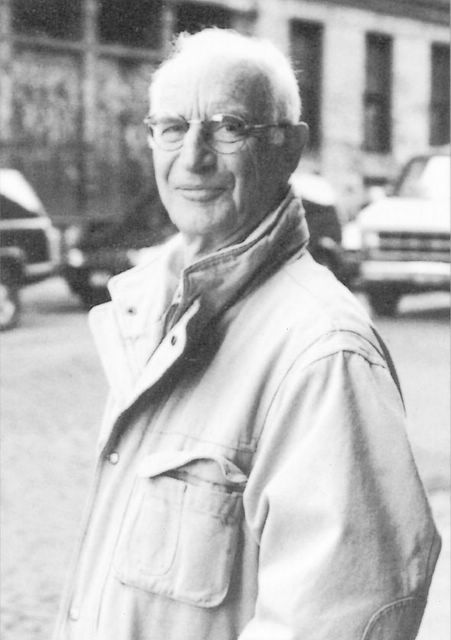
| James Hillman |
When I turned 60, my touchstones were Michael Ventura’s essay on “saying goodbye” and James Hillman’s book, The Force of Character. Saying goodbye is a continuing process, though it is saying goodbye to possibilities. I just watched a DVD about the reunion tour a few years ago by Sting and the Police. I must always be saying goodbye to the dream of enthralling an audience like that, let alone leading to their ecstasy after more than 20 years of their devotion. Not that this is a new thought, but it is renewed, with different emotions each time. Which of course is not to negate the fantasy, while playing into the silent night.
I’ve already said goodbye to much of contemporary culture, though that is a continuing and not complete process. And anyway, much of it has said goodbye to me. I have entered more fully that melancholy area where you know you have perspective to contribute, but no one cares to ask for it. I guess it’s a fairly common observation of “elders.”
I don’t know what to say goodbye to in my work. In the past year I began to say goodbye to even completing another book, but now this summer I’m not so sure. I’ve got focus and energy for a project that seems clarified.
Which leads me to my touchstone this year, and it’s James Hillman again. But this time it’s his work on Puer and Senex. I came across a moment on YouTube from a seminar he gave just last year about it. It spoke to me, so I looked up what’s available. It turns out his definitive edition of his Senex and Puer work was published in 2005, and is already out of print. The university library, notoriously buying few if any books these days, has no Hillman past his early work. There were DVDs for sale of this seminar, but they were pricey. Still, as a birthday present to myself, I ordered them.
I have some of the essays, notably in The Puer Papers from the late 60s, and a key one in Picked-Up Pieces. But I wanted to see what he had to say now, now that he is of Senex age, and he’s out of the puer paradise of the 60s.
Though the DVDs have too little of him, too much of the crowd’s questions and comments, it was worth it. He’s still vital, and though showing his 80s, his voice is strong. Puer (Latin for boy) is a particular archetype of youth, as Senex is for old one. He championed the Puer in any age, and talked about the union of puer and senex. He talked about the puer flights, the longing that is its own reward, and how that must be honored even in the senex age.
I was a pretty classic puer type, leavened with some senex (the melancholy, the seriousness, and some need to be organized, etc.) but clearly the women in my life saw the puer dominance—the impatience with ordinary life, the anxiety, the looking down on it all from an imagined height. The devotion to the dream, and to the vision that was too far, too high, too big. Plus all the wounds and failures.
The puer inflated ego is no longer a problem for me. The outside world has injected plenty of humiliation over the past 15 years especially, with little compensating affirmation or confirmation. Together with aging and the receding of dreams, the weakening and diluting of visions, and given my status and precarious and vulnerable position in the world, I’ve been humbled.
So combining my particular circumstances with the senex qualities that naturally emerge, a certain fatalism adds easier vulnerability to hopelessness. Given the human prospects as made clear in just the past year or so, the larger world of time only adds weight to that side of the scales.
Hillman offers just about the only straw to grasp, in his idea of the senex and puer union. He points out all the similarities in the two archetypes, and says (as I interpret it) that the senex qualities of organization and discipline, and even the depths of soul (the sadness and the perspective) can be applied to the puer vision, to be true to the calling.
To paraphrase Hillman: The recovery in the senex is the recovery of the puer—the freedom that was once there...the recovery of the range of thought, of imagination. But the senex can have the greatest range of all, like Beethoven’s last quartets. “He recovered something in the midst of disability by letting his imagination go. But that imagination had spent many many years working his gift...staying faithful to the original vision. That’s the important thing—it isn’t being related to your partner, or to all the things we use relationship for and drive the puer man to a frenzy of anxiety, but related to the calling, whatever that strange thing is, that wounds him and names him.”
The calling, the vocation is one article of faith I retain from my Catholic schooling. So I respond to this idea. Even if it’s more about soul-making than destiny, unless they turn out to be the same thing.
I’m monitoring my abilities and except for a sometimes unpredictable fluctuation in energy (which is perhaps different in quality from the fluctuations I’ve always experienced), I don’t have a lot of disabilities of age. I’ve kept my writing sharp through use, if only with moronic work for hire and these bolts into the nothingness on my blogs. But I don’t know how deep I can still go anymore, or how high. That’s the challenge. Even there it may not be a matter of ability as much as why put in the effort, why turn everything else upside-down (as I did often enough in my puer years to disrupt my life, leading to financial vulnerability now) to try and once again fail? And what would success be anyway? As a writer in the marketplace, I may as well be already dead.
But I’ll grasp at any straw I can find that can convince me even for part of the day, so I’ll take Hillman to heart, in my 65th year.
Being faithful to the vision is an end in itself. Whether something comes of it is not entirely up to me. Pretty much nobody accomplishes anything as difficult as writing a book (let alone publishing it) without help. Without the faith of others, there’s only a faith in the future—as part of the vision, if it is such—that motivates towards expression or completion. That, and for the fun of it. Of having done it.
Thursday, June 30, 2011
Faithful to the Calling
This piece of James Hillman's talks on the archetypes of Senex (Saturn, old age) and Puer (youth) has something very moving and apropos to say to me, that today I want to share. It's about fidelity to your calling.
Thursday, July 06, 2006
Turning 60
Act III
As I begin writing this, I am 59. When I finish it, I will be 60.
How do I think about turning 60 years old? Some look at how vital we are at this age in comparison to our parents’ generation, and say we’re still young. Or at least in middle-age. You might make a case that these days our youth lasts until 40, and middle age extends to what used to be the retirement age of 65. But as Michael Ventura points out, we’re not living to 120. Sixty isn’t the middle. We aren’t young, in Act I of our lives. We mostly aren’t in Act II anymore.
This is the start of something different. It is early old age---maybe even “young old age” if that feels better. In the theatre of our lives, it’s the curtain coming up on Act III.
This is going to be happening to a lot of people starting about now. When the battleship Missouri was steaming into Tokyo Bay to accept the surrender of Japan, my parents were marching up the aisle of the Blessed Sacrament Cathedral in Greensburg, PA. I was born the following June, making me one of the first of the postwar Baby Boomers, and so one of the first Boomers to turn 60. There will be millions more over the next decade.
Turning 60 is a hard thing to admit, even to ourselves. There is a shame attached to it in today’s world. Younger people and even our contemporaries look at us in a different way, and treat us differently. Of course, this happens anyway, whether we admit it or not, and whether or not we announce our identity in this way. Do we say we are 60? Claim the senior discount? It’s scary, maybe even depressing and demeaning.
Part of the scariness is obviously that getting older inevitably places us closer to death. More people we know or know of, people we grew up knowing or knowing about, are suddenly dead. We shudder when this includes our contemporaries, or even those slightly younger. It is hard to accept that we have fewer days ahead than behind. Maybe it’s even harmful to accept it?
Like anything important, both sides of the contradiction are true in some way, and must be embraced, reconciled. There is pain in coming to terms with Act III. But there is also freedom, and purpose.
Emphasis is a way of considering one side, before considering the other. Two texts have been important to me in the past few years in this intermittent but intense effort to figure out how to proceed. The first is an essay published in a fairly obscure journal by Michael Ventura, a columnist, essayist and novelist who was approaching 60 when he wrote it in late 2004. The second is James Hillman’s book, The Force of Character, first published in 1999. It so happens that Hillman and Ventura collaborated on an earlier book (We’ve Had A Hundred Years of Psychoanalysis and the World is Still a Mess.) So though they differ on some points, it seems to me they agree on most basic ideas. It’s mostly a difference of emphasis.
In his essay, Ventura emphasizes loss. This is natural for one approaching 60, and a necessary initiation. When I stumbled onto this essay (in a magazine I’d never seen before, called Psychotherapy Networker) I was jolted. It took me awhile to accept its premises. But in my own 59th year, I came to embrace it, guided by my own life to the truth of Ventura’s words.
The article is called “Across the Great Divide: Middle Age in the Rear-View Mirror.” It begins when Ventura realizes he must make a major change in his life. He can no longer afford to live as he had been in Los Angeles. He must find a new place to live. At the same time, he’s thinking about turning 60, and arranges to meet an old friend in Las Vegas. He drives there, taking a long and thoughtful route.
The statement that rocked me was simple: “When you’re pushing 60, the rest of your life is about saying goodbye.
“Your greatest work may yet be demanded of you (though odds are against that). You may find more true love, meet new good friends, and there’s always beauty (if you have an eye for it) and fun (if you haven the spirit)---still, no matter what, slowly, you must say goodbye, a little bit every day, to everything.”
Ventura’s examples are painfully familiar: you’re saying goodbye to your own face as it was in your youth; to how you drove a car (he mentions reflexes; I’ve noticed night-vision—my eyes don’t readjust from glare as fast as they did), to life without aches and pains, perhaps to certain strengths, and to access to your memory. “Alzheimer’s? ‘A senior moment’? You get used to it and hope for the best. Ain’t nobody can do a thing about it anyway. Goodbye.”
Yes, I know there’s advice out there on strengthening mental agility, and we can all be heartened by the research showing that brain cells continue to be born as well as die all our lives. But the basic point is sound.
Ventura is also saying goodbye to where he’d lived in the prime of his life. Though he isn’t saying goodbye to his career exactly—he writes a column these days for the Austin Chronicle--there is a sense that in some ways he’s doing that, too. Many of us at 60 are facing such a change. For those of us in a position to “retire” (leave our jobs and collect retirement benefits) it is also a time of taking stock of accomplishments, and saying goodbye to having any more, at least in that job. Financial retrenchment has its own set of goodbyes. In many ways, these all imply saying goodbye to possibilities, and perhaps to dreams unfulfilled.
[continued after photo]
As I begin writing this, I am 59. When I finish it, I will be 60.
How do I think about turning 60 years old? Some look at how vital we are at this age in comparison to our parents’ generation, and say we’re still young. Or at least in middle-age. You might make a case that these days our youth lasts until 40, and middle age extends to what used to be the retirement age of 65. But as Michael Ventura points out, we’re not living to 120. Sixty isn’t the middle. We aren’t young, in Act I of our lives. We mostly aren’t in Act II anymore.
This is the start of something different. It is early old age---maybe even “young old age” if that feels better. In the theatre of our lives, it’s the curtain coming up on Act III.
This is going to be happening to a lot of people starting about now. When the battleship Missouri was steaming into Tokyo Bay to accept the surrender of Japan, my parents were marching up the aisle of the Blessed Sacrament Cathedral in Greensburg, PA. I was born the following June, making me one of the first of the postwar Baby Boomers, and so one of the first Boomers to turn 60. There will be millions more over the next decade.
Turning 60 is a hard thing to admit, even to ourselves. There is a shame attached to it in today’s world. Younger people and even our contemporaries look at us in a different way, and treat us differently. Of course, this happens anyway, whether we admit it or not, and whether or not we announce our identity in this way. Do we say we are 60? Claim the senior discount? It’s scary, maybe even depressing and demeaning.
Part of the scariness is obviously that getting older inevitably places us closer to death. More people we know or know of, people we grew up knowing or knowing about, are suddenly dead. We shudder when this includes our contemporaries, or even those slightly younger. It is hard to accept that we have fewer days ahead than behind. Maybe it’s even harmful to accept it?
Like anything important, both sides of the contradiction are true in some way, and must be embraced, reconciled. There is pain in coming to terms with Act III. But there is also freedom, and purpose.
Emphasis is a way of considering one side, before considering the other. Two texts have been important to me in the past few years in this intermittent but intense effort to figure out how to proceed. The first is an essay published in a fairly obscure journal by Michael Ventura, a columnist, essayist and novelist who was approaching 60 when he wrote it in late 2004. The second is James Hillman’s book, The Force of Character, first published in 1999. It so happens that Hillman and Ventura collaborated on an earlier book (We’ve Had A Hundred Years of Psychoanalysis and the World is Still a Mess.) So though they differ on some points, it seems to me they agree on most basic ideas. It’s mostly a difference of emphasis.
In his essay, Ventura emphasizes loss. This is natural for one approaching 60, and a necessary initiation. When I stumbled onto this essay (in a magazine I’d never seen before, called Psychotherapy Networker) I was jolted. It took me awhile to accept its premises. But in my own 59th year, I came to embrace it, guided by my own life to the truth of Ventura’s words.
The article is called “Across the Great Divide: Middle Age in the Rear-View Mirror.” It begins when Ventura realizes he must make a major change in his life. He can no longer afford to live as he had been in Los Angeles. He must find a new place to live. At the same time, he’s thinking about turning 60, and arranges to meet an old friend in Las Vegas. He drives there, taking a long and thoughtful route.
The statement that rocked me was simple: “When you’re pushing 60, the rest of your life is about saying goodbye.
“Your greatest work may yet be demanded of you (though odds are against that). You may find more true love, meet new good friends, and there’s always beauty (if you have an eye for it) and fun (if you haven the spirit)---still, no matter what, slowly, you must say goodbye, a little bit every day, to everything.”
Ventura’s examples are painfully familiar: you’re saying goodbye to your own face as it was in your youth; to how you drove a car (he mentions reflexes; I’ve noticed night-vision—my eyes don’t readjust from glare as fast as they did), to life without aches and pains, perhaps to certain strengths, and to access to your memory. “Alzheimer’s? ‘A senior moment’? You get used to it and hope for the best. Ain’t nobody can do a thing about it anyway. Goodbye.”
Yes, I know there’s advice out there on strengthening mental agility, and we can all be heartened by the research showing that brain cells continue to be born as well as die all our lives. But the basic point is sound.
Ventura is also saying goodbye to where he’d lived in the prime of his life. Though he isn’t saying goodbye to his career exactly—he writes a column these days for the Austin Chronicle--there is a sense that in some ways he’s doing that, too. Many of us at 60 are facing such a change. For those of us in a position to “retire” (leave our jobs and collect retirement benefits) it is also a time of taking stock of accomplishments, and saying goodbye to having any more, at least in that job. Financial retrenchment has its own set of goodbyes. In many ways, these all imply saying goodbye to possibilities, and perhaps to dreams unfulfilled.
[continued after photo]
Labels:
growing older,
James Hillman,
my 1960s,
turning 60
To accept this element of turning 60, I had to come to terms with my 50s. In some ways, my 50th birthday was the best of my life. I’d been living in Pittsburgh but was preparing to leave for California with my partner, Margaret. After years of cobbling together part-time teaching and writing jobs, she’d landed a good full-time position teaching dramatic writing at Humboldt State University. I was attracted to what I learned about the place—an academic environment, in the redwoods, near the ocean, with a temperate climate year round (the increasingly hot Pittsburgh summers were making me edgy), close to indigenous Native American tribal areas, and not far from real wilderness. Yet not terribly far from San Francisco, Seattle and Vancouver, three of my favorite cities in North America.
I would be giving up my Pittsburgh life—the infrastructure that worked for me, the city and neighborhood I was fond of, and especially my apartment, the best place I had ever lived. It was a commitment to our relationship, but of course I had to think about my own life and livelihood. My local career in Pittsburgh had stalled, and I felt I could grow into a new one in California, but mostly I felt poised to come into my own on a larger stage. I felt strong and at the top of my writing game, yet with knowledge and experience I hadn’t had when my first book was published in my 30s---especially the hard-won experience of my 40s. My fifties, I felt, would be the fulfillment, the justification of everything in the past. They would also set the pattern for my future, for my culminating accomplishments and at last my proper place in the world, with access to the means to be creative and productive. My fifties would be my redemption. It seemed worth the risk.
For my family birthday, my sisters surprised me with a more personal and elaborate celebration than I expected. They assembled photographs from my childhood. And their gift was unique: an assemblage of objects under a glass dome that represented my life, in the form of a room. There was a desk and bookshelves, a computer, a guitar case on the floor, running shoes and a baseball glove, etc. But the detail was amazing and personal: for example, the tiny books included facsimiles of my book and a few others I treasured.
There was a sense of elegy to this, and of honoring, which was moving. Yet I was looking towards the future. I didn’t see anything ending, really. If I were successful, I could come back anytime.
The move to California was much more wrenching than I had ever imagined. Though I reveled in the soft air, cool until heated by sunlight, I mourned the loss of my apartment and what I had to leave behind. I also quickly discovered that while Margaret had a place in this world because of her job, I had none. The downside of the isolation became apparent. Nobody was much interested in me, as a writer or as anything else.
In some ways I was lucky in early encounters. I worked on writing a video concerning local forest issues, and worked for awhile with a Native American organization. I learned a lot from both, but neither led to anything lasting. And that became one of the characteristics of my 50s: a lot of beginnings that led nowhere.
By some measures, I was enormously productive. I researched, wrote proposals and wrote drafts of chapters on several nonfiction projects, often returning to some aspect of the one I’d been working on when I left Pittsburgh. I wrote fiction. I wrote plays, including a musical for junior high students about smoking, which included the songs: music and lyrics. I wrote and rewrote a screenplay, I wrote and rewrote a young adult novel. I used a new electronic keyboard, a 4-track tape recorder and a computer program to arrange and record songs I’d written.
I sent things out to agents, publishers, theatres, etc. I had conversations and correspondences with several agents and editors on various projects. Nothing came of any of it. The projects closest to my heart got the least response.
I got into grantwriting and picked up freelance jobs writing and editing reports, to generate income. I was already saying goodbye to writing on certain subjects (like popular music) and for some publications (I was no longer in, or in touch with, their younger demographic). But I continued to be published—in one year, my work appeared in five separate sections of the San Francisco Chronicle: the book review, Insight section, the daily and Sunday arts section and the Sunday magazine. Several of these pieces could well have led to books. None of them did. None of them led anywhere.
Thanks to digital technology, I did finally get my one book into paperback—when I did it myself. As that book’s author, I was filmed for three separate television documentaries, any one of which might have led to enough interest that I could get a contract for a new book (or so I thought.) But I never found out. Though I’d been interviewed in films before, and was very successful as a public speaker, none of my footage was used in any of these new projects.
Suddenly my fifties were three-fourths gone. I was applying for full time positions here and in the Bay Area and elsewhere for which I thought I was well-qualified. I got a few interviews, nothing more, and usually a lot less. Still, I kept trying and some cause for hope would turn up. In 2004 I got an assignment from the New York Times to write on a subject I wanted very much to write on, that was central to the book project I’d been vainly trying to put together since before I left Pittsburgh. It was a dream, and worked out very well. Everyone loved the resulting article—my editors and the people I wrote about.
But it led pretty much nowhere, not even to another assignment. I was told that the Times wasn’t taking freelance work for the arts section for awhile, and neither was the San Francisco Chronicle. My financial situation was getting desperate. There were no resources for reasonably frequent travel home, or to the wilderness, or anywhere.
For all this time I had gambled on the next step---the book contract, the book or movie sale, even a play production. Then on the good job that would set things right. Redemption.
But then, as I approached 60, I began to say goodbye to all that. In part it was now simply a matter of looking at time. I sacrificed a great deal to remain true to my dreams, even if that sacrifice wasn’t always intentional. I had already said goodbye to the possibility of having a family. That time had passed me by. Now I was saying goodbye to aspects of my dreams that would never come true, not in the time left to me. I’m not going to have a career as a novelist, a playwright, a screenwriter, an author with a flow of books. It could happen that I’ll have again what I’ve tasted before, like the speaking engagements I had as a book author, or the buzz of seeing my play performed even on an obscure stage. But it won’t be a career.
I would be giving up my Pittsburgh life—the infrastructure that worked for me, the city and neighborhood I was fond of, and especially my apartment, the best place I had ever lived. It was a commitment to our relationship, but of course I had to think about my own life and livelihood. My local career in Pittsburgh had stalled, and I felt I could grow into a new one in California, but mostly I felt poised to come into my own on a larger stage. I felt strong and at the top of my writing game, yet with knowledge and experience I hadn’t had when my first book was published in my 30s---especially the hard-won experience of my 40s. My fifties, I felt, would be the fulfillment, the justification of everything in the past. They would also set the pattern for my future, for my culminating accomplishments and at last my proper place in the world, with access to the means to be creative and productive. My fifties would be my redemption. It seemed worth the risk.
For my family birthday, my sisters surprised me with a more personal and elaborate celebration than I expected. They assembled photographs from my childhood. And their gift was unique: an assemblage of objects under a glass dome that represented my life, in the form of a room. There was a desk and bookshelves, a computer, a guitar case on the floor, running shoes and a baseball glove, etc. But the detail was amazing and personal: for example, the tiny books included facsimiles of my book and a few others I treasured.
There was a sense of elegy to this, and of honoring, which was moving. Yet I was looking towards the future. I didn’t see anything ending, really. If I were successful, I could come back anytime.
The move to California was much more wrenching than I had ever imagined. Though I reveled in the soft air, cool until heated by sunlight, I mourned the loss of my apartment and what I had to leave behind. I also quickly discovered that while Margaret had a place in this world because of her job, I had none. The downside of the isolation became apparent. Nobody was much interested in me, as a writer or as anything else.
In some ways I was lucky in early encounters. I worked on writing a video concerning local forest issues, and worked for awhile with a Native American organization. I learned a lot from both, but neither led to anything lasting. And that became one of the characteristics of my 50s: a lot of beginnings that led nowhere.
By some measures, I was enormously productive. I researched, wrote proposals and wrote drafts of chapters on several nonfiction projects, often returning to some aspect of the one I’d been working on when I left Pittsburgh. I wrote fiction. I wrote plays, including a musical for junior high students about smoking, which included the songs: music and lyrics. I wrote and rewrote a screenplay, I wrote and rewrote a young adult novel. I used a new electronic keyboard, a 4-track tape recorder and a computer program to arrange and record songs I’d written.
I sent things out to agents, publishers, theatres, etc. I had conversations and correspondences with several agents and editors on various projects. Nothing came of any of it. The projects closest to my heart got the least response.
I got into grantwriting and picked up freelance jobs writing and editing reports, to generate income. I was already saying goodbye to writing on certain subjects (like popular music) and for some publications (I was no longer in, or in touch with, their younger demographic). But I continued to be published—in one year, my work appeared in five separate sections of the San Francisco Chronicle: the book review, Insight section, the daily and Sunday arts section and the Sunday magazine. Several of these pieces could well have led to books. None of them did. None of them led anywhere.
Thanks to digital technology, I did finally get my one book into paperback—when I did it myself. As that book’s author, I was filmed for three separate television documentaries, any one of which might have led to enough interest that I could get a contract for a new book (or so I thought.) But I never found out. Though I’d been interviewed in films before, and was very successful as a public speaker, none of my footage was used in any of these new projects.
Suddenly my fifties were three-fourths gone. I was applying for full time positions here and in the Bay Area and elsewhere for which I thought I was well-qualified. I got a few interviews, nothing more, and usually a lot less. Still, I kept trying and some cause for hope would turn up. In 2004 I got an assignment from the New York Times to write on a subject I wanted very much to write on, that was central to the book project I’d been vainly trying to put together since before I left Pittsburgh. It was a dream, and worked out very well. Everyone loved the resulting article—my editors and the people I wrote about.
But it led pretty much nowhere, not even to another assignment. I was told that the Times wasn’t taking freelance work for the arts section for awhile, and neither was the San Francisco Chronicle. My financial situation was getting desperate. There were no resources for reasonably frequent travel home, or to the wilderness, or anywhere.
For all this time I had gambled on the next step---the book contract, the book or movie sale, even a play production. Then on the good job that would set things right. Redemption.
But then, as I approached 60, I began to say goodbye to all that. In part it was now simply a matter of looking at time. I sacrificed a great deal to remain true to my dreams, even if that sacrifice wasn’t always intentional. I had already said goodbye to the possibility of having a family. That time had passed me by. Now I was saying goodbye to aspects of my dreams that would never come true, not in the time left to me. I’m not going to have a career as a novelist, a playwright, a screenwriter, an author with a flow of books. It could happen that I’ll have again what I’ve tasted before, like the speaking engagements I had as a book author, or the buzz of seeing my play performed even on an obscure stage. But it won’t be a career.
Labels:
growing older,
James Hillman,
my 1960s,
turning 60
A career is about movement; movement with its oscillations but generally up and outward. It is about an identity and a livelihood created and recreated in the process. Over time. But much of that time is over.
This is sad of course, because it’s a kind of failure. But at this point, like a lot of failures or changes that come with age, it is also a relief. It is also liberating. I no longer have to look at anything I do as leading to anything else. Everything is what it is.
I don’t discount the possibility of more accomplishment, even of some kind of redemption in the eyes of others. But I’m saying goodbye to the need for it. Success and failure, what do they mean at this point? In comparison to other aspects of growing old, or to the vagaries of existence that take more control, not very much. They may cause me pain, but pain is now a regular part of life. There are famous people with great financial resources who wind up with incurable diseases. There are people with great health insurance who die as a result of bad medical practice. Having money increases your odds of having a comfortable and productive life, but it doesn’t guarantee it.
Like a lot of young writers, I used to sweat over the passing time, mapping out the years against the number of books I could write and publish, the necessary steps to the destiny I craved. Now those calculations show there isn’t enough time left. That anxiety is over. Nothing leads to anything else. But that also means that I can devote my full attention to whatever it is I manage to do in the present. That becomes its own reward. Nothing leads to nothing.
I know that few people get hired for good jobs at my age until they are already established in the higher ranks of that occupation. You either get a job as a CEO, a college president, or something much less. Maybe not only a greeter at Wal-Mart, but not a job that somebody considers part of a career. And there are occupations in fields of my interest where nobody over 50 is even seriously considered. So nothing I do is going to necessarily lead to anything like that.
Right now I have three small jobs that don’t add up to either the income or the demands of a full-time job. They require some diligence, creativity and applications of skills, but their challenges are modest, as are their results. Yet they all have their modest pleasures. So here I am. Say goodbye to redemption. Say goodbye to great expectations. Say goodbye to all that. The intense humiliation of my 50s has led to modesty. It has led back to the moment.
I think I did some good work in the past decade, including published work I can be proud of. I may remain puzzled and sad about the work that didn’t go anywhere, that was ignored or scorned, and I have to deal with the work that was never completed, that may never have a completed form, let alone a life outside the rooms of their making. But as long as I have memory, I’ll remember the excitement and experience of making them, or the struggle and yearning and the promise of their potential, however bittersweet those memories may be.
But this modesty, cooling in the release from the crucible of humiliation, is not the whole story. The dearth of time ahead, and the ashes and annihilation at the end of it, are only part of what Act III is about.
Ventura writes about more goodbyes: as older family members die, we say goodbye to family history we don’t know and now will never know, and neither will anyone else. We say goodbye to the last people who knew us as young children.
The common denominator of many goodbyes is death. He even says that the changes in our faces as we age marks the approach of death. “Call it whatever you like, but that’s what it is, that’s what we politely call “aging.” As we lose capabilities forever, we are moving towards the final loss of everything, which is death.
Some of these goodbyes aren’t too difficult to deal with gracefully, once they finally come. The anxiety over the years about losing my hair (which given my maternal grandfather, was all but inevitable) was far more intense and difficult than the acceptance of its reality (at least so far.)
But Ventura points out that the bigger losses are harder to deal with, and require a quality he calls fierceness. “It takes fierceness to grow old well. It takes a fierce devotion to the word goodbye—learning how to say it in many ways—fiercely, yes, but also gently; with laughter, with tears, but, no matter how, to say it every time so that there’s no doubt you mean it.”
This is a kind of tonic to the anxiety we’re bred with in this society to keep up, stay young, and fight off any sign or recognition of death, to the point that people never say their goodbyes at all. The denial of death—the rage against the dying of the light-- may be in some sense noble and courageous, but it can also be just plain denial.
This is sad of course, because it’s a kind of failure. But at this point, like a lot of failures or changes that come with age, it is also a relief. It is also liberating. I no longer have to look at anything I do as leading to anything else. Everything is what it is.
I don’t discount the possibility of more accomplishment, even of some kind of redemption in the eyes of others. But I’m saying goodbye to the need for it. Success and failure, what do they mean at this point? In comparison to other aspects of growing old, or to the vagaries of existence that take more control, not very much. They may cause me pain, but pain is now a regular part of life. There are famous people with great financial resources who wind up with incurable diseases. There are people with great health insurance who die as a result of bad medical practice. Having money increases your odds of having a comfortable and productive life, but it doesn’t guarantee it.
Like a lot of young writers, I used to sweat over the passing time, mapping out the years against the number of books I could write and publish, the necessary steps to the destiny I craved. Now those calculations show there isn’t enough time left. That anxiety is over. Nothing leads to anything else. But that also means that I can devote my full attention to whatever it is I manage to do in the present. That becomes its own reward. Nothing leads to nothing.
I know that few people get hired for good jobs at my age until they are already established in the higher ranks of that occupation. You either get a job as a CEO, a college president, or something much less. Maybe not only a greeter at Wal-Mart, but not a job that somebody considers part of a career. And there are occupations in fields of my interest where nobody over 50 is even seriously considered. So nothing I do is going to necessarily lead to anything like that.
Right now I have three small jobs that don’t add up to either the income or the demands of a full-time job. They require some diligence, creativity and applications of skills, but their challenges are modest, as are their results. Yet they all have their modest pleasures. So here I am. Say goodbye to redemption. Say goodbye to great expectations. Say goodbye to all that. The intense humiliation of my 50s has led to modesty. It has led back to the moment.
I think I did some good work in the past decade, including published work I can be proud of. I may remain puzzled and sad about the work that didn’t go anywhere, that was ignored or scorned, and I have to deal with the work that was never completed, that may never have a completed form, let alone a life outside the rooms of their making. But as long as I have memory, I’ll remember the excitement and experience of making them, or the struggle and yearning and the promise of their potential, however bittersweet those memories may be.
But this modesty, cooling in the release from the crucible of humiliation, is not the whole story. The dearth of time ahead, and the ashes and annihilation at the end of it, are only part of what Act III is about.
Ventura writes about more goodbyes: as older family members die, we say goodbye to family history we don’t know and now will never know, and neither will anyone else. We say goodbye to the last people who knew us as young children.
The common denominator of many goodbyes is death. He even says that the changes in our faces as we age marks the approach of death. “Call it whatever you like, but that’s what it is, that’s what we politely call “aging.” As we lose capabilities forever, we are moving towards the final loss of everything, which is death.
Some of these goodbyes aren’t too difficult to deal with gracefully, once they finally come. The anxiety over the years about losing my hair (which given my maternal grandfather, was all but inevitable) was far more intense and difficult than the acceptance of its reality (at least so far.)
But Ventura points out that the bigger losses are harder to deal with, and require a quality he calls fierceness. “It takes fierceness to grow old well. It takes a fierce devotion to the word goodbye—learning how to say it in many ways—fiercely, yes, but also gently; with laughter, with tears, but, no matter how, to say it every time so that there’s no doubt you mean it.”
This is a kind of tonic to the anxiety we’re bred with in this society to keep up, stay young, and fight off any sign or recognition of death, to the point that people never say their goodbyes at all. The denial of death—the rage against the dying of the light-- may be in some sense noble and courageous, but it can also be just plain denial.
Labels:
growing older,
James Hillman,
my 1960s,
turning 60
But death is not necessarily the only or even the primary fact of aging, according to James Hillman. He quotes Spinoza: “A free man thinks of death least of all things.” Instead he writes that a purpose of his book, The Force of Character, is to “decouple death from aging, and instead restore the ancient link between older age and the uniqueness of character.”
“To the question ‘Why am I old?’ the usual answer is ‘Because I am becoming dead.’ But the facts show that I reveal more character as I age, not more death…Far more important to look at older years as a state of being, and ‘old’ as an archetypal phenomenon with its own myths and meanings. That’s the bolder challenge: to find the value in aging without borrowing that value from the metaphysics and theologies of death. Aging itself, a thing of its own, freed from the corpse.”
Hillman was 73 when he published this book--well into his own Act III. He’s 80 now, and has published what he said was his last book in 2005. As the virtual inventor of archetypal psychology, and former director of the Jung Institute, Hillman has written about the particular characteristics of youth and age for some 35 years.
In some ways, Hillman reclaims what others deny for Act III. He quotes T.S. Eliot, that “old men ought to be explorers.” “I take this to mean: follow curiosity, inquire into important ideas, risk transgression.” He writes of old age as adventure—an adventure of the mind, of the soul.
Hillman writes approvingly of the other recently published book I consider a guide to Act III for the Boomer generation: Theodore Roszak’s America the Wise (also published in paperback under the title “Longevity Revolution”), which Hillman calls “superb.” Describing the book’s thesis of the power of the Boomer generation to transform aging and the world: “Their sheer numbers could revolutionize society, moving it from predatory capitalism and environmental exploitation to what Roszak calls “the survival of the gentlest.’ The increasing proportion of seniors in the population tips the balance in favor of values that, he believes, seniors hold dearest: alleviation of suffering, nonviolence, justice, nurturing, and maintaining ‘the health and beauty of the planet.’”
But to embark on this adventure, Hillman believes we must begin by “exorcising the morbid idea of aging that keeps older citizens immobilized by depression, narrowed by anger, and alienated from their calling as elders; second, by restoring the idea of character, which strengthens faith in individual uniqueness as an instrumental force affecting what we bring to the planet.”
Hillman is not trying to reclaim youth, but to claim the unique capacities and energies of aging. There is a fierceness to the expressions of aging, he notes. “Why do older people become moralists, sentimentalists and radicals? They chain themselves to threatened trees; they march, they shout. They lecture Walkmaned ears about the moral decline of the West. We old ones are outraged, indignant, ashamed.”
It is partly the positive energies of the cantankerous, and the persistent return to recollections of the past. It is also the ability to find patterns over time, through having lived those times. We are the embodied memory the young don’t have.
In a three act play, Act III is the resolution as well as the ending. Character is what we’ve been making with our lives. “Character traits include vices and virtues,” Hillman writes. “They do not define character. Character defines them.” Character is our uniqueness, as we express it and as it is seen in the world. “Character is presentational.”
Character is what we are (the “acorn” of our destiny he wrote about in his previous book, The Soul’s Code) plus what our lives have made. The vicissitudes of aging reveal our essential nature. But it is not completely finished—we finish it with aging, and for Hillman aging is also an activity, a kind of art.
“To the question ‘Why am I old?’ the usual answer is ‘Because I am becoming dead.’ But the facts show that I reveal more character as I age, not more death…Far more important to look at older years as a state of being, and ‘old’ as an archetypal phenomenon with its own myths and meanings. That’s the bolder challenge: to find the value in aging without borrowing that value from the metaphysics and theologies of death. Aging itself, a thing of its own, freed from the corpse.”
Hillman was 73 when he published this book--well into his own Act III. He’s 80 now, and has published what he said was his last book in 2005. As the virtual inventor of archetypal psychology, and former director of the Jung Institute, Hillman has written about the particular characteristics of youth and age for some 35 years.
In some ways, Hillman reclaims what others deny for Act III. He quotes T.S. Eliot, that “old men ought to be explorers.” “I take this to mean: follow curiosity, inquire into important ideas, risk transgression.” He writes of old age as adventure—an adventure of the mind, of the soul.
Hillman writes approvingly of the other recently published book I consider a guide to Act III for the Boomer generation: Theodore Roszak’s America the Wise (also published in paperback under the title “Longevity Revolution”), which Hillman calls “superb.” Describing the book’s thesis of the power of the Boomer generation to transform aging and the world: “Their sheer numbers could revolutionize society, moving it from predatory capitalism and environmental exploitation to what Roszak calls “the survival of the gentlest.’ The increasing proportion of seniors in the population tips the balance in favor of values that, he believes, seniors hold dearest: alleviation of suffering, nonviolence, justice, nurturing, and maintaining ‘the health and beauty of the planet.’”
But to embark on this adventure, Hillman believes we must begin by “exorcising the morbid idea of aging that keeps older citizens immobilized by depression, narrowed by anger, and alienated from their calling as elders; second, by restoring the idea of character, which strengthens faith in individual uniqueness as an instrumental force affecting what we bring to the planet.”
Hillman is not trying to reclaim youth, but to claim the unique capacities and energies of aging. There is a fierceness to the expressions of aging, he notes. “Why do older people become moralists, sentimentalists and radicals? They chain themselves to threatened trees; they march, they shout. They lecture Walkmaned ears about the moral decline of the West. We old ones are outraged, indignant, ashamed.”
It is partly the positive energies of the cantankerous, and the persistent return to recollections of the past. It is also the ability to find patterns over time, through having lived those times. We are the embodied memory the young don’t have.
In a three act play, Act III is the resolution as well as the ending. Character is what we’ve been making with our lives. “Character traits include vices and virtues,” Hillman writes. “They do not define character. Character defines them.” Character is our uniqueness, as we express it and as it is seen in the world. “Character is presentational.”
Character is what we are (the “acorn” of our destiny he wrote about in his previous book, The Soul’s Code) plus what our lives have made. The vicissitudes of aging reveal our essential nature. But it is not completely finished—we finish it with aging, and for Hillman aging is also an activity, a kind of art.
Labels:
growing older,
James Hillman,
my 1960s,
turning 60
I was present for the last months of my mother’s final illness; I was there at the moment of her death. I helped take care of my father during his last weeks. But I learned most about dying from Tess, our cat, two summers ago. There were no layers of social complication, of her dealing with the emotions of others, with nurses etc. There was just her instinctual confrontation with growing weakness and onrushing death. Some of her behavior was not according to the book. She didn’t hide herself away as cats do, she stayed near us, perhaps responding to our involvement. In the end our companionship was strong.
But some of what the cat books describe was there: the helpless insistent purring, the hovering over the water dish without drinking, and the faraway look in her eyes. Without hesitation, she did what she could of what she used to do. She went outside and surveyed her garden, taking rests. She was in the world as fully as she could be, and yet she was looking far beyond it.
Being aware of the relative nearness of death as well as new aches and pains, failing vision and so on, does focus the goodbyes. Goodbyes are present experiences, though. They include being as fully as possible in the world of now. This moment that will never come again.
Yet in early old age, at the beginning of Act III, and perhaps through it all until the final scene, there is living, and contributing from one’s unique perspective, experiences, talents and character. When we were trying to be successes, we had to emphasize one or two differences, and otherwise be (or pretend to be) the same as everyone else. Now we have no choice. All our differences are on display. They are our character.
Character is the shape of soul. Without the inflation of early ages, we are forced to accept ourselves, good and bad, with consequences pleasant and painful. We are no one’s ideal. “I walk through life oddly,” Hillman writes. “No one else walks as I do, and this is my courage, my dignity, my integrity, my morality, and my ruin.”
There are characteristics that come with becoming an elder. We must take responsibility for the past and we feel the responsibility of the future. In the role of grandparents (actual or metaphorical), we set our sights on the future we will not see.
“Before we leave,” Hillman writes, “we need to uphold our side of the compact of mutal support between human being and the being of the planet, giving back what we have taken, securing its lasting beyond our own.”
In living past the age of procreation, when physical growth is long past and physical pain is a closer companion, we feel differently about our relationship to the world. We no longer feel only one purpose in life—our own preservation, and that of our offspring. And we want to know what it’s all been about. “In later years feelings of altruism and kindness to strangers plays a larger role,” Hillman writes. “Values come under more scrutiny, and qualities such as decency and gratitude become more precious than accuracy and efficiency.”
What we say goodbye to as we age reveals some hellos: hello perhaps to some sharper memories from the distant past. Hello to insights as well as embarrassments. Hello to other worlds. "Discovery and promise do not belong solely to youth;" Hillman insists, "age is not excluded from revelation." Indeed, if the theatre is any guide, Act III is when it's more likely to happen.
But some of what the cat books describe was there: the helpless insistent purring, the hovering over the water dish without drinking, and the faraway look in her eyes. Without hesitation, she did what she could of what she used to do. She went outside and surveyed her garden, taking rests. She was in the world as fully as she could be, and yet she was looking far beyond it.
Being aware of the relative nearness of death as well as new aches and pains, failing vision and so on, does focus the goodbyes. Goodbyes are present experiences, though. They include being as fully as possible in the world of now. This moment that will never come again.
Yet in early old age, at the beginning of Act III, and perhaps through it all until the final scene, there is living, and contributing from one’s unique perspective, experiences, talents and character. When we were trying to be successes, we had to emphasize one or two differences, and otherwise be (or pretend to be) the same as everyone else. Now we have no choice. All our differences are on display. They are our character.
Character is the shape of soul. Without the inflation of early ages, we are forced to accept ourselves, good and bad, with consequences pleasant and painful. We are no one’s ideal. “I walk through life oddly,” Hillman writes. “No one else walks as I do, and this is my courage, my dignity, my integrity, my morality, and my ruin.”
There are characteristics that come with becoming an elder. We must take responsibility for the past and we feel the responsibility of the future. In the role of grandparents (actual or metaphorical), we set our sights on the future we will not see.
“Before we leave,” Hillman writes, “we need to uphold our side of the compact of mutal support between human being and the being of the planet, giving back what we have taken, securing its lasting beyond our own.”
In living past the age of procreation, when physical growth is long past and physical pain is a closer companion, we feel differently about our relationship to the world. We no longer feel only one purpose in life—our own preservation, and that of our offspring. And we want to know what it’s all been about. “In later years feelings of altruism and kindness to strangers plays a larger role,” Hillman writes. “Values come under more scrutiny, and qualities such as decency and gratitude become more precious than accuracy and efficiency.”
What we say goodbye to as we age reveals some hellos: hello perhaps to some sharper memories from the distant past. Hello to insights as well as embarrassments. Hello to other worlds. "Discovery and promise do not belong solely to youth;" Hillman insists, "age is not excluded from revelation." Indeed, if the theatre is any guide, Act III is when it's more likely to happen.
Labels:
growing older,
James Hillman,
my 1960s,
turning 60
Hillman was one of the first since Jung to introduce concepts of soul in psychology. (For Jung, “psyche” and “soul” were virtually identical.) I find the relationship of character, aging and soul most comprehensible, at least intuitively, when I think of soul as not something in the body (as we were taught in Catholic school) but the body as being enclosed in soul.
We do things to do them, we live in the moment and work for the future of what we will leave behind. Character and contribution to the future are the final adventures. "A certain kind of reasonableness is its advocate, and a certain kind of morality adds its blessings," writes Carl Jung. "But to have soul is the whole venture of life..."
Part of what this has meant for me is represented by this site and its companion, the Boomer Hall of Fame, as well as my other ongoing projects (Captain Future’s Dreaming Up Daily, Soul of Star Trek, Blue Voice etc.) Here at 60’s Now I hope to explore issues pertinent to my generation, our present, past and the future we won’t see.
That’s something else important about Act III-- the character has lived through Acts I and II. We carry our history and the history we’ve experienced, not only in the weight and reference of our words, but in ourselves. I am all that I am, including the heroes of my youth, and those that gave me the imagery of my middle years, and those that inform me now. So that is also why I hope to build a kind of database of those influences from the past in the Boomer Hall of Fame.
I expect all this to happen slowly, fitfully, cumulatively. These aren’t the text-messaging kind of blogs, lots of short items off the cuff and often. Sometimes they will be. And while they won’t often be as long as this, I will take some care with them. I hope you’ll come back. Don’t be too disappointed if there’s nothing new. Your expectations should be modest, too. But our intentions don’t have to be. My name is Captain Future. I’m here to save the world.
We do things to do them, we live in the moment and work for the future of what we will leave behind. Character and contribution to the future are the final adventures. "A certain kind of reasonableness is its advocate, and a certain kind of morality adds its blessings," writes Carl Jung. "But to have soul is the whole venture of life..."
Part of what this has meant for me is represented by this site and its companion, the Boomer Hall of Fame, as well as my other ongoing projects (Captain Future’s Dreaming Up Daily, Soul of Star Trek, Blue Voice etc.) Here at 60’s Now I hope to explore issues pertinent to my generation, our present, past and the future we won’t see.
That’s something else important about Act III-- the character has lived through Acts I and II. We carry our history and the history we’ve experienced, not only in the weight and reference of our words, but in ourselves. I am all that I am, including the heroes of my youth, and those that gave me the imagery of my middle years, and those that inform me now. So that is also why I hope to build a kind of database of those influences from the past in the Boomer Hall of Fame.
I expect all this to happen slowly, fitfully, cumulatively. These aren’t the text-messaging kind of blogs, lots of short items off the cuff and often. Sometimes they will be. And while they won’t often be as long as this, I will take some care with them. I hope you’ll come back. Don’t be too disappointed if there’s nothing new. Your expectations should be modest, too. But our intentions don’t have to be. My name is Captain Future. I’m here to save the world.
Labels:
growing older,
James Hillman,
my 1960s,
turning 60
Subscribe to:
Comments (Atom)