Saturday, April 29, 2006


These veterans marched in New York today, along with 300,000 other antiwar protestors . As Vietnam veterans did in the 1970s, they return to America knowing first hand about the war they say should end. In their case, it's happened faster and more: there are 50 or more Iraq veterans running for Congress in 2006, almost all of them as Democrats and opponents of the Iraq war. Posted by Picasa

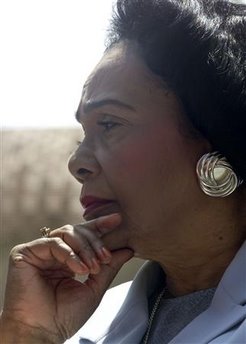
Coretta Scott King in 2002 Posted by Picasa
For Heroines of the Sixties: Statutes, Not Statues

In In These Times, Susan Douglas wrote a perceptive column about two prominent women of the 1960s who'd died earlier this year, Coretta Scott King and Betty Friedan. They both changed life dramatically for women, especially young women, of the early 21st century.

But though they were eulogized as heroes of perception (especially Friedan and "the feminine mystique"), Douglas points out another key to their achievements: But in addition to the lessons in courage the Democrats might take from these women, they might note that both women fought for concrete, systematic policies and laws—to be enacted and enforced by, yes, state and federal governments—that dramatically reduced and, in some cases, ended inequality.

Douglas reminds us of what life was like in the mid-1960s for women (gender-segregated help wanted ads in newspapers, few women doctors, lawyers or executives, no pregnancy leave, no sexual harrassment laws and lax rape enforcement; no sports for women or girls, etc. ) Women's issues were linked early on to Civil Rights legislation, and asserting independent rights for women was instrumental to improving the lives and prospects of women of color and their families.

Douglas is not just offering a history lesson, but advice to politicians today, especially Democrats: "Like Friedan and King, they need to offer concrete proposals for progress before we regress to a time when nothing seemed possible."

Sunday, April 23, 2006


John Kerry in April 2006 Posted by Picasa
Dissenter in Chief

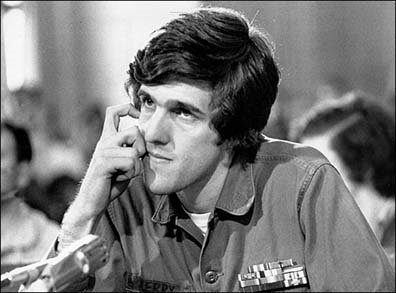
John Kerry spoke at Fanuiel Hall, an historic symbol of free speech, about the right and the responsibility to dissent, especially when dissent is necessary. It is a right and an act dear to the hearts of many veterans of the 1960s, and not just veterans of the war but of the anti-war. Some of us paid for that dissent, in large ways and small, for the rest of our lives. Here is some of what Senator John Kerry said:

Thirty-five years ago today, I testified before the Foreign Relations Committee of the United States Senate, and called for an end to the war I had returned from fighting not long before.

It was 1971 – twelve years after the first American died in what was then South Vietnam, seven years after Lyndon Johnson seized on a small and contrived incident in the Tonkin Gulf to launch a full-scale war—and three years after Richard Nixon was elected president on the promise of a secret plan for peace. We didn’t know it at the time, but four more years of the War in Vietnam still lay ahead. These were years in which the Nixon administration lied and broke the law—and claimed it was prolonging war to protect our troops as they withdrew—years that ultimately ended only when politicians in Washington decided they would settle for a “decent interval” between the departure of our forces and the inevitable fall of Saigon.

I know that some active duty service members, some veterans, and certainly some politicians scorned those of us who spoke out, suggesting our actions failed to “support the troops”—which to them meant continuing to support the war, or at least keeping our mouths shut. Indeed, some of those critics said the same thing just two years ago during the presidential campaign.

I have come here today to reaffirm that it was right to dissent in 1971 from a war that was wrong. And to affirm that it is both a right and an obligation for Americans today to disagree with a President who is wrong, a policy that is wrong, and a war in Iraq that weakens the nation.


I believed then, just as I believe now, that the best way to support the troops is to oppose a course that squanders their lives, dishonors their sacrifice, and disserves our people and our principles. When brave patriots suffer and die on the altar of stubborn pride, because of the incompetence and self-deception of mere politicians, then the only patriotic choice is to reclaim the moral authority misused by those entrusted with high office.

I believed then, just as I believe now, that it is profoundly wrong to think that fighting for your country overseas and fighting for your country’s ideals at home are contradictory or even separate duties. They are, in fact, two sides of the very same patriotic coin. And that’s certainly what I felt when I came home from Vietnam convinced that our political leaders were waging war simply to avoid responsibility for the mistakes that doomed our mission in the first place. Indeed, one of the architects of the war, Defense Secretary Robert McNamara, confessed in a recent book that he knew victory was no longer a possibility far earlier than 1971.

By then, it was clear to me that hundreds of thousands of soldiers, sailors, Marines and airmen—disproportionately poor and minority Americans—were being sent into the valley of the shadow of death for an illusion privately abandoned by the very men in Washington who kept sending them there. All the horrors of a jungle war against an invisible enemy indistinguishable from the people we were supposed to be protecting—all the questions associated with quietly sanctioned violence against entire villages and regions—all the confusion and frustration that came from defending a corrupt regime in Saigon that depended on Americans to do too much of the fighting—all that cried out for dissent, demanded truth, and could not be denied by easy slogans like “peace with honor”—or by the politics of fear and smear. It was time for the truth, and time for it all to end, and my only regret in joining the anti-war movement was that it took so long to succeed—for the truth to prevail, and for America to regain confidence in our own deepest values.

The fissures created by Vietnam have long been stubbornly resistant to closure. But I am proud it was the dissenters—and it was our veterans’ movement—and people like Judy Droz Keyes—who battled not just to end the war but to combat government secrecy and the willful amnesia of a society that did not want to remember its obligations to the soldiers who fought. We fought the forgetting and pushed our nation to confront the war’s surplus of sad legacies—Agent Orange, Amer-Asian orphans, abandoned allies, exiled and imprisoned draft dodgers, doubts about whether all our POWs had come home, and honor at last for those who returned from Vietnam and those who did not. Because we spoke out, the truth was ultimately understood that the faults in Vietnam were those of the war, not the warriors.

Then, and even now, there were many alarmed by dissent—many who thought that staying the course would eventually produce victory—or that admitting the mistake and ending it would embolden our enemies around the world. History disproved them before another decade was gone: Fourteen years elapsed between the first major American commitment of helicopters and pilots to Vietnam and the fall of Saigon. Fourteen years later, the Berlin Wall fell, and with it the Communist threat. You cannot tell me that withdrawing from Vietnam earlier would have changed that outcome.

The lesson here is not that some of us were right about Vietnam, and some of us were wrong. The lesson is that true patriots must defend the right of dissent, and hear the voices of dissenters, especially now, when our leaders have committed us to a pre-emptive “war of choice” that does not involve the defense of our people or our territory against aggressors. The patriotic obligation to speak out becomes even more urgent when politicians refuse to debate their policies or disclose the facts. And even more urgent when they seek, perversely, to use their own military blunders to deflect opposition and answer their own failures with more of the same. Presidents and politicians may worry about losing face, or votes, or legacy; it is time to think about young Americans and innocent civilians who are losing their lives.

The rest of the speech is published at Raw Story here.

John Kerry in April 1971 Posted by Picasa

Monday, April 17, 2006


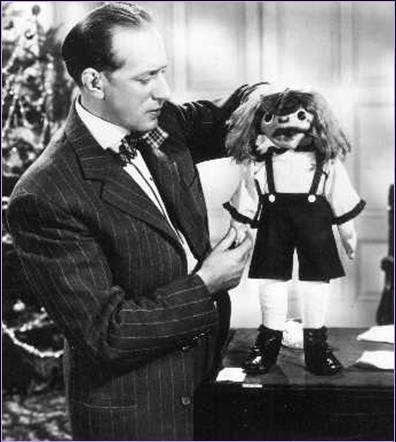
Born on this date: Nikita Khruschev, Lindsay Anderson
(directed "If...",) Olivia Hussey (actress, Romeo & Juliet movie)
and Senor Wences, pictured above, frequent guest
on the Ed Sullivan show. Posted by Picasa

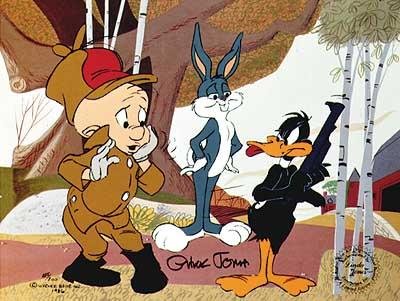
Also "born" on this date: Daffy Duck and Elmer Fudd. Posted by Picasa

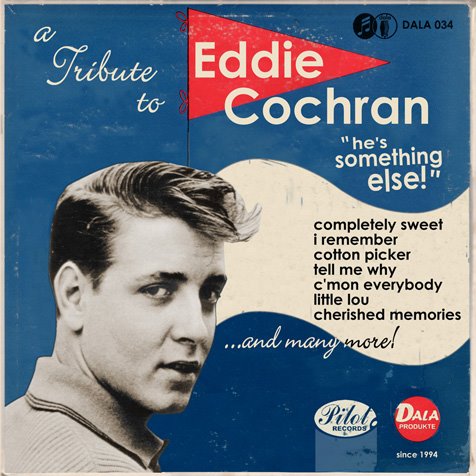
Died on this date: Felix Pappalardi (Cream), Vinnie Taylor
(Canned Heat, overdose) and Eddie Cochran (car crash, age 21.) Posted by Picasa

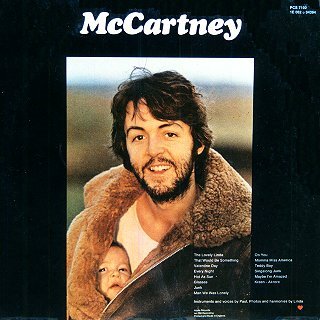
Released on this date in 1970: the first solo
album by one of the Beatles: McCartney. Posted by Picasa

Today in Baby Boomer History

1945: Allied bombing of Dresden ( central event in Slaughterhouse Five by Kurt Vonnegut)
1947: Jackie Robinson's first major league hit.
1961: first day of the Bay of Pigs aborted invasion of Cuba.
1964: Ford Mustang is introduced.
1967: Surveyor 3 launched; will land on the moon in 3 days.
1969: Sirhan Sirhan convicted of the murder of Robert Kennedy.
1970: Apollo 13 limps back to Earth.
1970: The first solo album by one of the Beatles is released: "McCartney."
1976: Mike Schmidt hits four consecutive homers in the N.L.'s greatest comeback victory: down 12-1, the Phillies win 18-16 in 10 innings.
1978: Carl Sagan wins Pulitzer Prize for Dragons of Eden.

Sunday, April 16, 2006

Getting the 60s Right

We're hitting the 40th anniversary of various 1960s phenomena, so maybe it shouldn't be surprising that a certain kind of uninformed nostalgia pervades the culture these days. I've seen two plays recently that adopt a 60s theme, one worse than the other. The worst one was a thematic production of As You Like It, my favorite of Shakespeare's comedies. Transporting it to the 60s might have worked, if they had any idea of what the 60s were actually like. They didn't even get the clothes right. It makes me wonder if the Roaring Twenties themes have always been as reductionist and inaccurate as the Swinging Sixties.

It's odd that few novels have portrayed that decade well, and even the better movies usually leave out significant elements. More modest recollections have more of the ring of truth, as this one in the San Francisco Chronicle today by Gerald FitzGerald.

Tuesday, April 04, 2006

Civilized Health Care

Massachusetts Enacts Universal Health Care

We're not going to spend a lot of time comparing operations around here. But the health care crisis in America is going to be a persistent topic on this blog. First, because in our sixites we enter an especially vulnerable part of our lives. And second, because all the ideals and the now forgotten knowledge of the 1960s tells us that universal health care makes sense, is possible and is right. It's civilized health care.

I'd planned to begin with a rationale for why we need universal health care, particularly a single-payer system. But there's startling news from Massachusetts: both houses of the legislature have passed an innovative plan for universal health care coverage, and the governor is going to sign it. It isn't a single payer plan. It is untested but looks like it might work, and it certainly is the best any state has passed so far. According to Reuters, here are its major features:

The state's poorest — single adults making $9,500 or less a year — will have access to health coverage with no premiums or deductibles.

Those living at up to 300 percent of the federal poverty level, or about $48,000 for a family of three, will be able to get health coverage on a sliding scale, also with no deductibles.

The vast majority of Massachusetts residents who are already insured could see a modest easing of their premiums.

Individuals deemed able but unwilling to purchase health care could face fines of more than $1,000 a year by the state if they don't get insurance.

The plan requires no new taxes.

The devil may be in the details, but the law has bipartisan support: business and a "health care for all" advocacy groups favor it, both houses passed it by lopsided margins, and the Republican governor supports it. "It's only fitting that Massachusetts would set forward and produce the most comprehensive, all-encompassing health care reform bill in the country," said House Speaker Salvatore DiMasi, a Democrat. "Do we know whether this is perfect or not? No, because it's never been done before."

We'll be watching. But if it encourages other states to pass their plans (California has a universal plan inching its way through the legislature every year), then the logjam of opposition and indifference may be broken. That alone makes it progress.

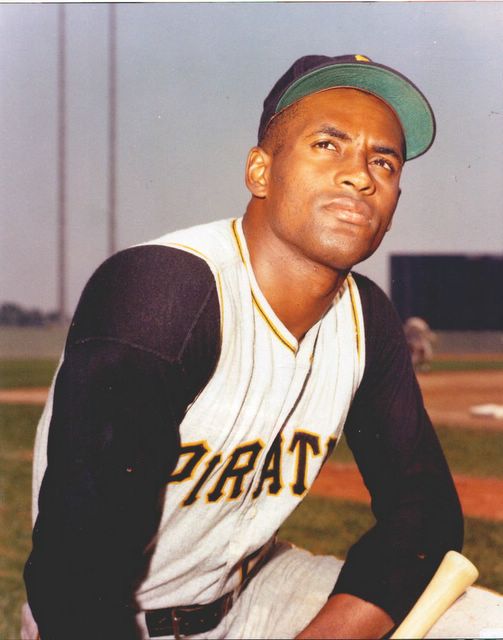
Roberto Clemente,60s hero Posted by Picasa
Enduring 60's Hero: Roberto Clemente

An article by Dave Maraniss in the Washington Post Sunday, taken from his book on Roberto Clemente that will be published later this month, is called The Last Hero. It was about Clemente as an enduring hero throughout Latin America. It's a very moving piece, not only for what it says Clemente continues to represent, some 34 years after his death, but what he had to endure as a Latino in major league baseball in the 1950s until 1972, when his small plane was lost as he tried to deliver relief supplies to earthquake victims in Nicaragua.

But even though I am not Latino, Roberto Clemente was a hero to me. He played his entire major league career for the Pittsburgh Pirates, and I grew up about 35 miles from the city. I saw him play at Forbes Field several times, watched the televised games and listened to many, many games on the radio, in the late 50s and early 60s.

MORE at Boomer Hall of Fame

Monday, April 03, 2006

Book Note

A review of World, Beware! by Theodore Roszak, author of The Making of a Counter Culture.

Sounds Familiar

Echoes of a 60s President

"Last month, in a memorandum ... the Justice Department claimed the inherent right to bug or wiretap-without court orders-any time it felt that the "national security" was in jeopardy."

Sound familiar? There have been Bush administration memos claiming this inherent right, but this quote happens to be from a 1969 TIME magazine story on the administration of Richard Nixon. (It's quoted by the Unclaimed Territory blog, with a link to a reprint of the article.)

The justification was explained: As authority for this broad power, the Government cited the President's oath to "preserve, protect and defend the Constitution" from domestic subversion as well as foreign enemies. Contending that every President since Franklin Roosevelt had permitted such wiretaps, the Government went on to imply that they were even more important now because of the growing violence and rioting in the nation's cities and on its campuses.

The memo justified spying in connection with the trial of the Chicago 8, accused of conspiring to disrupt the Democratic National Convention in 1968. Among the defendants were Abbie Hoffman, Jerry Rubin, Tom Hayden and Bobby Seales. It is now a trial that lives in infamy.

Sunday, April 02, 2006


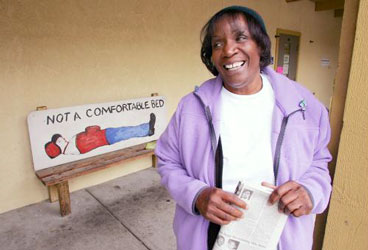
Rosie Kreidler Posted by Picasa

Civilized Health Care

The Bonds of Generations

She would be just another nameless victim, a true elder who inspired everyone who met her, but reduced to homelessness through no fault of her own. She has a name, of course--it's Rosie Kreidler, age 62. And she had a past. An Olympic athlete. A nurse, who had applied to join Doctors Without Borders and go to the Congo. Until an automobile accident started her on a journey that many Americans have taken, particularly older Americans. And many more will take in the coming decade, as baby boomers age into vulnerability.

No one outside of the people she met might ever have known her story. Except that somehow, someone found out that her nephew is Barry Bonds, one of the most famous men in America. Not even he knew of her plight.

But her story is the story of many others, and will be the story of countless others, until this country fixes its disreputable health care system, and puts human health and human dignity above the greed of a powerful few.

She was known as Rosie Bonds when an automobile accident left her badly injured. She might have eventually become well enough to resume her career, but her insurance company denied her the treatments she needed.

Having been released from a hospital into physical therapy, she battled with insurers to cover her treatment. About $50,000 in coverage ran out fast, as did her savings; her 18 months of physical therapy ended when the money did, not because she had recovered. Her Social Security Disability Insurance application was rejected; she challenged the rejection in court and lost.

Eager to go back to work because she loved nursing and was desperate to pay her mounting bills, she returned to the Bay Area in 2005. But constant pain made bending or lifting impossible, and numbness in her hands prevented her from drawing blood or inserting an IV.
Her career as she had known it was finished. Destitute and unable to work, too proud to turn to her family or friends for help, she soon was sleeping in her car.


Read this story, of a woman of rare courage and accomplishment, who nevertheless was reduced to poverty and indignity, and consigned to needless pain, because this country will not take care of its people.

Barry Bonds was born in 1964, the last year of the postwar baby boom as designated by demographers. Rosie Bonds was born just 20 years before, in 1944. Let's hope he sees this not only as a family tragedy but as a cause for his own generation. America needs to join the civilized world, with a health care system that works.

Saturday, April 01, 2006


You're getting nowhere, are you, jeweler? Posted by Picasa

This Day in Boomer History

April Lennon Day


Not too surprisingly, April 1 and John Lennon met in the news on several occasions.

On April 1, 1970, John and Yoko announced they were both having sex change operations. No indication of how many reporters took them seriously before the April Fools Day joke was discovered.

In a different kind of foolishness, more classical in terms of the court jester tradition, John and Yoko announced on April 1, 1973, the formation of a new nation, which they called Nutopia. Nutopia had no laws and no borders. It's national anthem was silence.

There were two April 1s of a different nature involving John Lennon and his father, Freddie Lennon, who had abandoned his family when John was a baby. John and Freddie met again for the first time on April 1, 1964. They didn't see each other much after that. And on April 1, 1976, Freddie Lennon died.

Friday, March 31, 2006


There's something happening here...
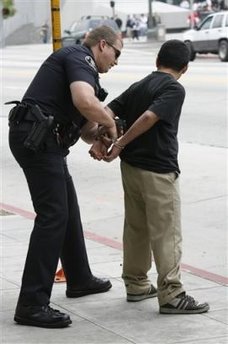
High school student protestor arrested in L.A. Posted by Picasa

1960s Now

New Protests in L.A.: "This is How They Did It in the 60s"

Antiwar demonstrations have become all too familiar since the 1960s, thanks to so many awful wars to demonstrate against. But the recent protests by Latinos against certain proposed legislation on immigration in the 2006 Congress have other direct roots to the 1960s: to the Civil Rights era, and to the Cesar Chavez marches and boycotts. In California, March 31 is a state holiday in honor of Chavez.

According to this article in the L.A. Times, high school students are looking to the 60s for some of their models for non-violent protest, in particular to Los Angeles school demonstrations in 1968 as depicted in the recently shown HBO film, "Walkout."

"It hearkens back to 1968," said Andres Jimenez, director of the California Policy Research Center at the University of California. "There was a sense of frustration that they saw with their parents in terms of the tenor of the immigration debate. This group is being singled out as a 'problem group.' And they wanted to seek an avenue to respond to that, to show that on the contrary, this group is very much a part of the broader society."

To be sure, students revealed both their youth and their naivete at times. When thousands of Los Angeles students descended on City Hall on Monday, for example, one student said she remembered something about civil rights protesters in the 1960s sitting down during demonstrations. It was a reference to the "sit-in," but it wasn't entirely clear whether the students recognized the pedigree of their decision to plop down on the steps.

"That was the idea of a girl from Belmont" High School, said Tabares. "In the '60s, the way they did it was sitting down. So we told everybody to sit down."

The story goes on to say that some students were also quite savvy about protesting, and had good instincts for how to be effective. They also use new tools, like the Internet, in particular Myspace.com, which became an information clearinghouse that every teenager knew but few adults did. The result in one school:

It didn't take long before most of Garden Grove High's roughly 2,200 students knew what was coming, without the knowledge or involvement of teachers or parents.

Soon, the bulletin crossed over an invisible but critical line between teens who were friends but attended different schools. Students began posting their telephone numbers, and soon dozens more pledges to participate were obtained through phone calls and instant text messages.

Still, when the tardy bell rang Monday morning, Muniz had no idea what to expect. Teenagers can talk a big game. But would they follow through?

She waited in front of the school. Soon, the doors opened, and scores of students — most of them Latino, but a handful of whites, African Americans and Asian Americans too — joined her. They marched through Garden Grove and Anaheim, picking up students at several other schools as planned through MySpace bulletins. By 1 p.m., they had covered 10 miles. An estimated 1,500 students had walked out. Muniz was a truant — and, to her friends, a hero.

Thursday, January 26, 2006

Intro to the Alpha version (work in progress)

As the battleship Missouri was sailing into Tokyo Bay to accept the Japanese surrender that ended World War II, my parents were walking up the aisle for their marriage ceremony at the Most Blessed Sacrament Cathedral. I was born the following June, as one of the first of the postwar baby boomers.

The baby boom generation, which demographers mark as beginning in 1946 and ending with babies born in 1964, was a major influence on institutions, culture, politics, business---just about everything. That influence was conspicuous from our infancy through childhood, early adulthood and maturity.

This year the first of us will turn 60. If life is a three-act play--with Act I as youth, and Act II as middle age, then early baby boomers are entering the last Act.

These days we often find ourselves vilified, both for our past and for the imagined costs to society of our projected dependence. Economically and culturally, we are increasingly isolated. Though we are in some ways still a huge market, and collectively we hold a lot of private wealth, we are no longer the obsessive target of advertisers, and therefore of the media supported by advertising.

That’s largely because advertisers don’t believe that can sway us anymore. Either because of our fixed habits or hard-earned skepticism or both, we can’t be so easily convinced to buy something or switch brands, after seeing a commercial that dramatizes how we will be instantly more attractive and successful if we do. We are kind of past a lot of that.

But that also means that news media are less likely to cover our concerns or activities. We may be the subject of cover stories this year, but there are few publications devoted to our interests.

This site—together with its companion site, The Boomer Hall of Fame --- is one small attempt to remedy that.

This site is about baby boomers and their interests and concerns, primarily for baby boomers, and by at least one baby boomer (though I hope many more will participate through comments.)