Showing posts with label Beatles. Show all posts
Showing posts with label Beatles. Show all posts
Sunday, February 15, 2015
Appreciate
Paul McCartney takes the subversive power of rock and roll into the post-human future, but with a poignancy at the end that speaks for all human music. Watch it, you'll appreciate.


Friday, February 21, 2014
The Miracle of '64

Though I saw that Sullivan show and liked them well enough, I personally didn't have my Beatles satori moment until 1965, when I sat in a near-empty movie theater in Manhattan (behind either Bob Dylan or one of many lookalikes) and watched their second film, Help! Now I still score pretty high on the Beatles quizzes that were floating around this month.

But from the January Rolling Stone cover story I learned that I wasn't alone in initially missing the Beatles significance--neither did his record company. (Of course, I was in high school and this was supposedly their professional expertise.)
Here's a few key graphs from that story (this is the link but not all of it is online.)
The story quotes Jonathan Gould in the book Can't Buy Me Love concerning the clueless executives of Capitol Records, who owned the U.S. rights to release Beatles records but didn't think it was worth their while. Then one of their executives read an article in Variety:
"...Variety reported that the Beatles' most recent single, "I Want To Hold Your Hand," had become the first British record to sell a million copies before its release. The band's previous single, "She Loves You"--which had been rejected by Dexter on behalf of Capitol--had also surpassed a million sales, and the group's second album, With the Beatles, sold 500,000 copies a week after its release.
'This meant,' writes Gould, 'that in a market one-third the size of the United States, the Beatles had released as many million-selling singles in 1963 as the entire American recording industry.'"

So Capitol decided to release some Beatles tunes, but in due time. But people took matters into their own hands. From the RS story (by Mikal Gilmore):
"On December 10th, Marsha Albert, a 15-year-old in Silver Spring, Maryland, saw a rebroadcast of the CBS Morning News report from November 22nd disparaging the Beatles and the frenzy they inspired in England. Albert wanted to hear more of the music. She wrote to a local station, WWDC; the disc jockey there, Carroll James, located a flight attendant for a British airline, who brought a copy of the 45 rpm "I Want to Hold Your Hand" on her flight to Washington, D.C.
After the record arrived, James invited Albert to WWDC's studio. In the early evening of December 17th, Albert announced, "Ladies and gentlemen, for the first time in America, here are the Beatles, singing 'I Want to Hold Your Hand.' " "The switchboard just went totally wild," James later told Bob Spitz in The Beatles: The Biography. Callers – apparently not all of them teenagers, since WWDC was an MOR station – wanted to hear the song again, and again."
And 50 years later, again and again.
The Beatles were a phenomenon throughout 1963 in the UK but America discovered them just over two months after the unspeakable trauma of the assassination of President Kennedy, who symbolized hope and the future. The Beatles did not replace that exactly. But they did offer another kind of hope for a future with a different kind of joy in it. Especially for those who were young then--the early and middle boomers--it was a Way.

Wednesday, March 09, 2011
Return of the Boomers

Box office of what used to be the Manos Theatre in Greensburg, PA, where I was a regular at Saturday cartoon show/double creature feature matinee marathons. It's now called the Palace Theatre, and does live shows--which in fact is how it started, before it became a movie theatre. But that ticket booth is the same as in my 50s childhood.
Taking the pulse of the motion picture industry in the run-up to the Oscars, the New York Times announced that a number of surprise box office hits could be explained only by the fact that older people were going to the movies.
Zounds! You mean the demographic that no self-respecting advertiser pays attention to, except to make fun of in the hopes of currying favor with the disposable income rich youth market? But they respect the numbers--older moviegoers up 67% since the mid 90s, and..."And the first of the 78 million baby boomers are hitting retirement age with some leisure hours to fill and a long-dormant love affair with movies." Yes, you can hear Hollywood salivating, and it ain't because of the popcorn.
It seems that kids are into all these other choices, like watching movies on their phones, apparently. Meanwhile, the 60s Now generation grew up in movie theatres. They lured us away from Saturday morning TV shows to Saturday matinees--a score or so of cartoons at noon, some old short comedies and serials and a newsreel, and then a double feature. This is how we saw everything from westerns and war movies, comedies (Francis the Talking Mule to Martin & Lewis), Disney animated classics and new films, westerns (silver bullet giveaways crisscrossing the screen during The Lone Ranger movie, waves of coonskin caps for Davy Crockett, but also John Ford's Rio Bravo) to science fiction and creature features (War of the Worlds, Forbidden Planet, This Island Earth, Creature From the Black Lagoon, The Space Children, Them!)
Those afternoons in the movie palace--in this ruined temple, which was the largest and most ornate public space in our town outside the Court House and the First National Bank, a place at once linked to boundless fantasy, a suggested past and for years the most modern place (the only one with air conditioning)--linked us to several generations past, to the very people making those movies who grew up in just this same way, with movie-crazy Saturday afternoons.
And with the summer drive-ins factored in (falling asleep during the second dull love and adultery feature on family night to teenage forays), it was the movie theatre we returned to, for models of young love (Jane Fonda and Anthony Perkins in Tall Story), for rock and roll movies and movies of rebellion--Rebel Without A Cause.
Once the film buff enthusiasm from France came to the rest of us via Manhattan and it was cinema, and it was art, we may have seen Godard and Truffaut poorly projected in the college theatre presented by the Cinema Club, but it was the theatre experience. And for most of our lives, apart from the films sliced and diced on television, the theatre was the only movie experience. If you wanted to see a movie again, you had to find out where it was playing and when, and go there. Thus did I see Help! and A Hard Days Night 16 times, in at least four different states. When I wanted to see all the Truffaut films in one week, I had to go to the film festival showing them. (This had the added advantage of meeting Truffaut, but that's another story.)
I admit I was one who went a bit overboard, having virtually lived for several years in the Orson Welles Complex in Cambridge, which ran two films in each of three theatres simultaneously. I routinely saw 20 movies a week, and once saw 10 in one day (and immediately became deathly ill.) But I doubt I was alone in finding solace and support in the movie theatre, particularly when I was back in PA working very much alone on writing, some of which became a book. By then I had to drive out to the mall theatres, but it was pretty important to me to see movies like Annie Hall, the French Lieutenant's Woman, the American Film Theatre movies of A Delicate Balance etc., or Sting's Bring on the Night. Or even going to the county art museum series, which is where I first saw Olivier's Henry V.
Well, I do go on, but you get the point. When there are movies good enough for us to want to see them, the natural place for us to want to see them is the movie theatre. Except...
The Times story continues with the as usual lame ideas the movie exhibitors have for catering to older viewers: seat-side food and cocktail service, fancy sandwiches. They never get it. Never.
What do older viewers want in a movie theatre besides good movies? Good popcorn helps, and I've always been fond of good coffee and red licorice. But they always miss the absolute basics and it drives me crazy. Here they are: adequate restrooms (old movie theatres were usually great at this), comfortable seats, and above all--well-projected movies. Forget trying to save money by dimming the light behind the image! Give us movies we can see!
This is a big reason I haven't been part of this march back to theatres. My viewing experience is much better at home, via DVD. I venture out occasionally for a movie "event," like the latest Harry Potter. But our early evening theatrical experience at the latest one was a disaster--not only was the theatre bone-chillingly cold, but the picture was so dim as to be barely watchable. It's a dark movie, granted, but it's not supposed to be under an invisibility cloak!
Sight is especially an issue in the older demographics. And crisp sound helps--not booming into insensibility, but clear, and big, as we remember sound in movie theatres. The rest is bonus, like film series and discussions that speak to our experience. And you know, we can still probably do a double feature! But since the average age of movie execs these days is about 10, probably nobody in the movie business even knows what that is.
Saturday, January 01, 2011
When We're 65--whoo!

It's 1/1/11 and the first official baby boomers turn 65 this year, including me. There's a wearily and maddeningly cliched piece on the subject on the front page of the New York Times. Here's the online link, but don't bother unless you click on to the comments as well. There you will see the hostility behind the supposed irony of the piece expressed directly as generational resentment, with the promise of generational war. But more often you'll also see booming self-defense, a lot wittier and more trenchant than the piece itself.
One would have to be a fool not to note the practical considerations of this milestone--the relationship to Medicare and Social Security being paramount for many. Whatever the historical circumstances of our generation, we have lived these lives in these times, and it's everybody's right once they actually reach this age to think about every possible aspect of this past and our lives, as well as our relationship to the present and future.
We feared getting old as young people do. That illustration above comes from about 1969, purporting to show the Beatles as old men. It scared the hell out of me, but I put it up on the inside door of my room at the University of Iowa the semester I was at the Writers Workshop there, though I was mostly trying not to be sent off to kill or/and be killed. I suppose it was to scare myself into making good use of my time then, to not wait to accomplish something. Time's winged chariot sort of thing.
(But being disappointed that we didn't accomplish more in our lives is according to the Times piece another characteristic of our "self-absorbed" generation. Maybe this guy should have been in the car with me when I was 20, listening to an older farmer in Illinois talk about how little he'd done with his life. Regret--or as Richard Ford put it, "searing regret"-- is not exactly a boomer invention.)
Today of course this image means other things. First, most obviously, is that two of the Beatles didn't live to get that old. A second might be that the surviving two don't actually look like that. We do have a different sort of 60s (the age, not the decade), and gauging that is part of our task now.
Still, we are acutely aware that we're not here for all that much longer. And of what we may face between here and there. This image of the boomer generation holding all the cards is less than laughable, it looks like part of the problem. We're watching pensions disappear for those who predicated their lives on earning them. We're watching medical care costs skyrocket and insurance falter. And that generational resentment added to a more general callousness. A resentment that seems to hold a lot of projection. No, we probably can't expect much, not even what used to be called decency. We're dealing with the luck of the draw at each significant moment.
And the idiocy of our drug-dependent, for-profit and perversely regulated health and care systems puts us in the way of cruelty masked as care. Another Times piece today--the one with the most hits--is about "new" approaches to caring for Alzheimer's patients. Care that is little more than common sense: well-lit rooms are more cheerful, especially when they allow old eyes to see. Instead of drugs and feeding tubes, give them food they like, with good feelings attached. Chocolate works better than Xanax.
Care along the lines of Beatitudes--what a great name, too--is proving more effective and also costs less. It helps patients and caregivers. And it's loving. I'm sure everybody who reads this piece sees its wisdom. But when chocolate is substituted for Xanax, drug companies don't make outrageous profits. Thoughtful and courageous administrators and caregivers may cost more than minimum wage workers--although rules (by for-profits as well as government) probably prevent even badly paid caregivers from doing what they know is better. So while the Beatitudes approach may spread, there's a lot of power likely to be marshaled against it.
While it did take a certain creativity to discover that emotional memory may last even in those whose cognitive memory is eroded or short-circuited, it also takes the kind of close attention that family members give, as well as formed the basis for many of the insights of early psychology--Jung for instance. Today psychology is all about drugs and administering clever little tests to undergraduates and making big claims for the findings.
Paying close attention to others is not the opposite of paying close attention to yourself. It can be part of the same process. For example, a writer who doesn't precisely divulge her age--and how could you, at Salon--offers an observation that older people are nicer to each other, and she offers an opinion as to why that is, which is, if I might summarize it thus, we know to what extent we're all bullshit.
To which I'd add, we know to what extent we're all vulnerable. But there's another reason, an additionally heartening one. I saw my uncle at my niece's wedding last month. He's now in his late 70s, and he told me (as he did the last time I saw him, more than a year before) that he thinks about my mother a lot. She was his oldest sister, there was about 14 years difference in their ages. He says he doesn't remember a lot anymore, but he remembers her acts of kindness. It reminded me of the last conversation I had with his other older sister, my aunt, who was the middle child. In talking about her father, she remarked on how kind he was.
So kindness is remembered. And we can all accomplish kindness, and so be remembered for that.
Wednesday, December 15, 2010
The Long and Winding Road
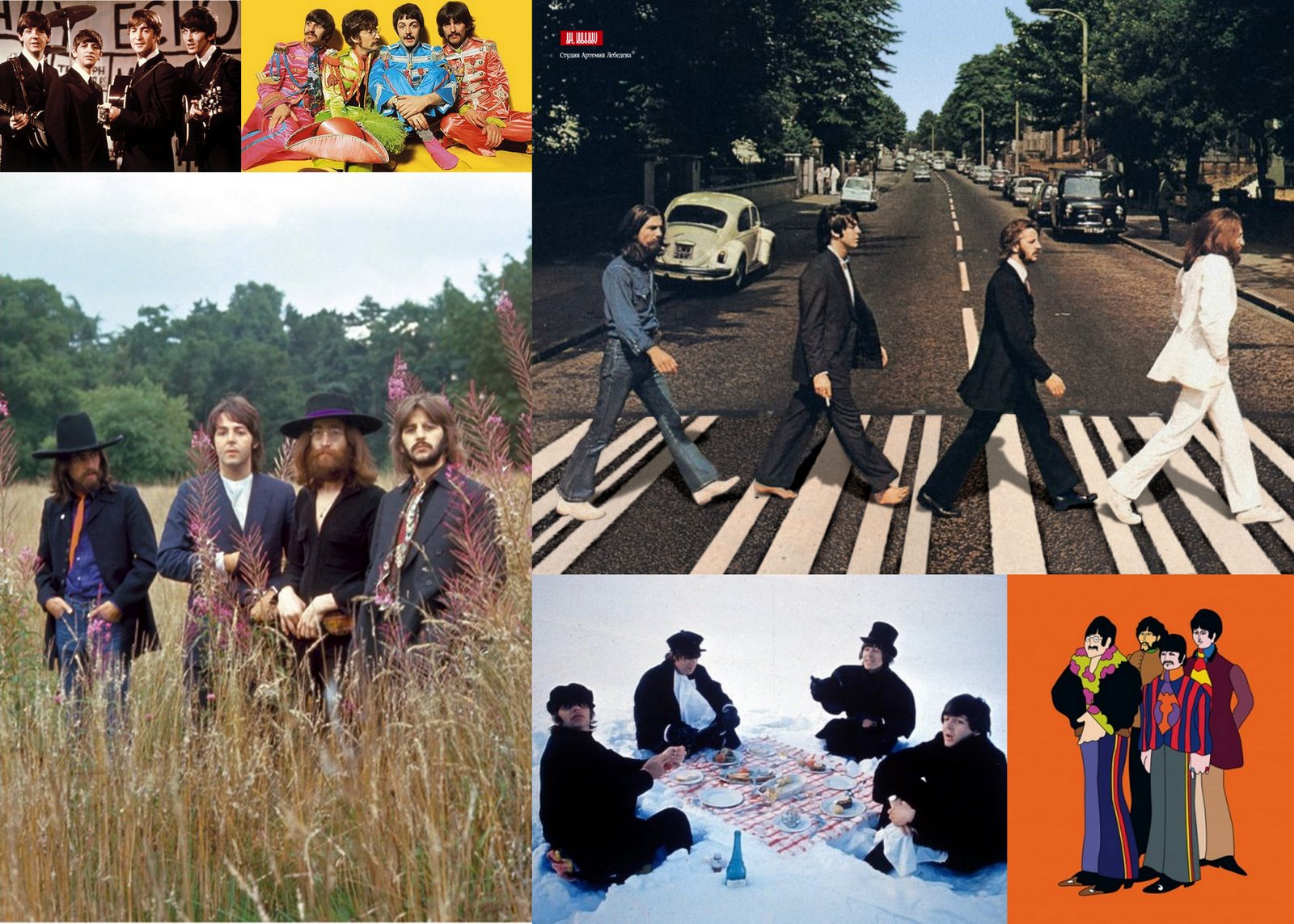
Amidst a few months of significant John Lennon anniversaries, there's this melancholy one for the Beatles as a whole: it was forty years ago this month that the band officially broke up. Dan Charness has a piece on this at the Atlantic in which he says that the breakup was well on the way to happening as early as the recording of the White Album:
"With more time and experience in the studio, each of the Beatles had developed a stronger opinion of how a certain song should be produced. Quarreling became so commonplace—and heated—that at one point drummer Ringo Starr abruptly left the studio during the recording of "Back in the U.S.S.R." Paul McCartney is credited for the drumming on that track. At another point, George Harrison brought guitarist Eric Clapton into the studio, in part to record the solo for "While My Guitar Gently Weeps," but also to help temper the band's intense fighting. Many of EMI's engineers and studio workers, professionals who had worked alongside the Beatles since the earliest days in the studio, began to resign, stating that they could no longer tolerate the band's infighting. Can you imagine what it would take to make you walk out of a Beatles recording session?"
I haven't read elsewhere of that kind of conflict in these sessions, although these songs were written soon after Brian Epstein died, which some (including John I think) dated as the point the band fell apart. If memory serves, Paul dated it even earlier, at when they stopped touring. Certainly the conflict was evident in the Let It Be sessions (captured in that seldom seen movie,) but as Lennon pointed out (and Charness does not), their actual last days together in the studio were making arguably their greatest album: Abbey Road.
But Charness certainly has a point here: "As we commemorate the 40th anniversary of the Beatles' breakup, don't dwell too long on its cause. Rather, consider the simple miracle that a band like this, with two-and arguably three-of the greatest and most unique songwriters of the 20th century, could have co-existed as long as they did."
And I'm not even sure it's arguable: George Harrison belongs in the conversation as one of the greatest and unique songwriters of the 20th century. (Frank Sinatra thought that "Something" was the greatest song of the century.) That the Beatles broke up--that there was a period of anger and hostility, followed by a period of silence--makes human sense.
The tragedy of course is John Lennon's death in 1980. When I crossposted my piece here on Lennon at 70, a commenter at Daily Kos questioned why I would say, "Undoubtedly we would have more Beatles music"if Lennon had lived. It's because there were plenty of signs that they would get back together to at least record. John and Paul were hanging out with each other again. Everyone was speaking. And it was only a few years later that the Beatles Anthology project prompted the then three remaining members to collaborate on songs that Lennon had written but left unfinished. It would have been as natural for them to get back together in their 40s as it was for them to separate in 1970.
For the boomers who grew up with them, they charted our young lives with their music. We miss the companionship of the music that might have expressed more of the later lives we would have shared.
Saturday, October 09, 2010
John Lennon at 70

"How terribly strange to be seventy," sang Simon and Garfunkel in 1968, when they were 27 (Paul will turn 69 on the 13th of this month, and Art on the fifth of November) and John Lennon was 28. It's hard to imagine John Lennon at 70. But that's what he would be today--October 9-- had he not been shot and killed in 1980, a couple of months past his 40th birthday.
But maybe it's not so hard to imagine the writer of "Imagine" at 70. If he continued to master his demons as he seemed to be in the last years of his life, the decades since might have been quite different. Apart from the flash of the 60s and the tumult of the 70s, John Lennon was that rare combination of an inspiring idealist and an inspired ironist, who wrote lines like this: "sitting in an English garden waiting for the sun/If the sun don't come you get a tan from standing in the English rain." In the middle of the surreal "I Am the Walrus," those are lines they could be teaching in poetry courses.
It's tempting to think of him as the spokesperson and lightning rod for causes, the role he sought at times, and which got him shadowed and harassed by the Nixon police. That's a role that's difficult if not nearly impossible to sustain, especially with the increasingly low boredom threshold and the ageist attitudes that survive virtually unchallenged. But he was able to break so many rules, so who knows? He might have been the champion for Climate Crisis awareness say, and Lennon Saves would be a legacy instead of a fondly recalled button from the 60s. Although Lennon, first among equals, saved many a rainy day, English and otherwise in those years.
We would undoubtedly have more Beatles music, and now that we know that you can still rock when you're supposed to be in your rocking chair, we might still be hearing from Lennon. His absence did create room for his former band mates to shine in their own light--Paul McCartney is a global figure, Ringo Starr has found peace on the road, and it took George Harrison's death to reveal so clearly that his talent and accomplishments were major and lasting, and that at his best his song-writing was equal to Lennon and McCartney.
But I have to say that in the last Paul McCartney tour video I saw, the lack of any reference to the other Beatles, particularly Lennon, began to stand out ever more prominently as it went on. And the lack of any Lennon representative at the wonderful memorial concert for George Harrison (which featured McCartney and Starr) was eerie and sad.
It would have been very interesting to observe Lennon as he aged. The anger that seemed to have fueled that incredible energy--and together with his wit and high spirits, made him the model of charming insolence-- seemed almost to destroy him, but in his late 30s he seemed to have come to a different place. The energy was different, but it was there in those last songs. What would have come next? There's only 30 empty years to contemplate.
But in those 40 years he left us music to express almost everything, from the vision of "Imagine" and "All You Need is Love," and the social vision of "Working Class Hero," to the bitter ironies of his version of "Nobody Loves You"; the involvement of "Give Peace a Chance," and the detachment of "Watching the Wheels"; the surrealism of "Lucy in the Sky With Diamonds" to the raw pain of "I'm So Tired." He wrote and sang about being a son and a father, and all the emotions of relationship from young passions to Starting Over.
For those of us who were just a few years behind him, our aging was unaccompanied by new tunes and insights from him, and this absence, this void, was felt, though as one among others. But we always had what we still have, the songs, the images, the words he produced in what amounts to less than 20 years. That's more than most get, but it's a lot less than we wanted, or that we could have used.

Friday, June 04, 2010
Fantasy Fulfilled

The presidency comes with more horrors than perks, but there are a few: like joining in when Paul McCartney sings "Michelle" to your wife, and getting up on stage to sing along on "Hey Jude." Boomer fantasies fulfilled.
Monday, February 15, 2010

Age Discrimation
For boomers not quite ready for Beatles-themed retirement homes--or more relevantly, who will never be able to afford to retire--there's some news about the job market: about age-based discrimination and how the discriminations gained by age can prove value even in a "new media" job.
The statistics on age-based discrimination (up nearly a third in 2008, and double the claims for all other reasons, including race and gender) won't be too surprising to boomers. I spent almost ten years wondering why I didn't get jobs or assignments for which I was more than fully qualified, before I caught on. Then the Supreme Court made winning age discrimination suits harder, and then Congress tried to make it easier.
Maybe some successful suits will help, but it's hard to fight cultural bias. I was sure employers would see that I had the optimum blend of experience and skill in my fifties, but turning 50 turned out to be the effective end for anything but jobs that don't pay enough to tempt any but entry level youngsters.
In publishing it's worse, and apparently in television it's even worse than that. This weekend I got a notice of a class action suit against television companies for discrimination against writers older than 40.
But some boomers who manage to get reasonably good positions are proving the worth of the particular contributions they can make. Jim Gaines was much more of a big muckedy muck than I ever was in print media, and he got a chance to work for a new media company with much younger writers and editors. They had to teach him the technology, and I'm sure there are new habits of mind that he'll never learn. The experience he brings comes into play in perhaps unexpected ways. Since he's gone through highs and lows, triumphs and the agony of defeat, he keeps his head. He comforts the afflicted.
He also has a clear idea of the mission. He can discriminate between the wheat and the chaff, and cut to the essential: "Media will change as radically as technology allows, and right now the Internet is moving over the media landscape like a tsunami. But the job I learned to love when young was to tell stories, and the story has lost nothing in this transition."
Although anyone who has that kind of focus from the beginning and can keep it will likely be pretty successful, that's the kind of discrimination that can come with experience. It's worth having around, if that's what the people in charge care about. Most places don't. Most places are caught up in other agendas. The kind of place--the company, industry, agency, office, etc.--where those in charge really value diversity, and the insurance that different perspectives, points of view, experiences provide, will see the value of boomer participation. And maybe even pay them decently.
Otherwise we'll get the assignments we get now: stuff that for one reason or another nobody else can or will do, at least not at what it pays.
The statistics on age-based discrimination (up nearly a third in 2008, and double the claims for all other reasons, including race and gender) won't be too surprising to boomers. I spent almost ten years wondering why I didn't get jobs or assignments for which I was more than fully qualified, before I caught on. Then the Supreme Court made winning age discrimination suits harder, and then Congress tried to make it easier.
Maybe some successful suits will help, but it's hard to fight cultural bias. I was sure employers would see that I had the optimum blend of experience and skill in my fifties, but turning 50 turned out to be the effective end for anything but jobs that don't pay enough to tempt any but entry level youngsters.
In publishing it's worse, and apparently in television it's even worse than that. This weekend I got a notice of a class action suit against television companies for discrimination against writers older than 40.
But some boomers who manage to get reasonably good positions are proving the worth of the particular contributions they can make. Jim Gaines was much more of a big muckedy muck than I ever was in print media, and he got a chance to work for a new media company with much younger writers and editors. They had to teach him the technology, and I'm sure there are new habits of mind that he'll never learn. The experience he brings comes into play in perhaps unexpected ways. Since he's gone through highs and lows, triumphs and the agony of defeat, he keeps his head. He comforts the afflicted.
He also has a clear idea of the mission. He can discriminate between the wheat and the chaff, and cut to the essential: "Media will change as radically as technology allows, and right now the Internet is moving over the media landscape like a tsunami. But the job I learned to love when young was to tell stories, and the story has lost nothing in this transition."
Although anyone who has that kind of focus from the beginning and can keep it will likely be pretty successful, that's the kind of discrimination that can come with experience. It's worth having around, if that's what the people in charge care about. Most places don't. Most places are caught up in other agendas. The kind of place--the company, industry, agency, office, etc.--where those in charge really value diversity, and the insurance that different perspectives, points of view, experiences provide, will see the value of boomer participation. And maybe even pay them decently.
Otherwise we'll get the assignments we get now: stuff that for one reason or another nobody else can or will do, at least not at what it pays.
Monday, April 13, 2009
Change Begins Within

Here are two guys in their 60s staying faithful to something they learned in the 60s, besides rock and roll. Paul McCartney and Ringo Starr performed together for the first time since the memorial Concert for George, along with Donovan, Mike Love of the Beach Boys and younger, lesser stars, in a benefit concert for the David Lynch Foundation called "Change Begins Within." The purpose was to support teaching Transcendental Meditation in schools. The Beatles of course made TM famous by going to India (with Donovan and Mike Love) to learn it from the Maharshi (who died just recently) in 1967. The idea is not really so far out--a school in Oakland, CA taught mindfulness meditation to students and showed great results in conflict resolution, attentiveness, study habits and peace of mind. Various kinds of meditation have proven to help in pain management and stress reduction, since those crazy days of wild ideas in the 60s. Yeah, yeah, yeah.
Subscribe to:
Posts (Atom)