To Make A Better World
This spring , Yale University Press has published summary works by two distinguished Americans in different fields that address attitudes and actions forming our common world : the famed psychologist and writer Jerome Kagan, and the veteran expert on public opinion and social values research, Daniel Yankelovich. Both books are of special interest to their disciplines but in this era of boundlessly bounded expertise, both are of immense value to a wider readership. This relevance reflects the careers and lifelong concerns of both authors to relate their work to the general welfare, and to the major public dialogues of their times.
continued here at Books In Heat.
Monday, June 12, 2006


Tuesday, May 23, 2006


Nuking Iran II: The Geopolitics of American Suicide
In an interview with CNN, Israeli Prime Minister Ehud Olmert said that Iran is months away from developing a nuclear weapon, not the five to ten years that most experts estimate. He said that while Israel is not comtemplating unilateral military action, he “expressed confidence” that President Bush “will lead other nations in taking the necessary measures to stop Iran from becoming a nuclear power.”
We don’t know if Olmert urged military action when he met with Bush Tuesday, or even if this is a message already coordinated with the White House, but the spectre of U.S. bombing of Iran in the near future must again be faced.
Presumably, planners are anticipating possible military and geopolitical responses to bombing targets in Iraq. But is anyone thinking about the geopolitical consequences of one possible aspect of such an attack: the use of nuclear weapons?
Because this act is in itself highly consequential. If it were to happen, it could well mark the beginning of the end of the U.S. as a world power, and certainly change how this country is viewed in the world, forever. The reasons are found in history, and in the intensity of the response to nuclear weapons.
In a previous essay, I wrote about the realities of radiation, and the policy of secrecy and lies that masked these realities. Today the subject just isn’t talked about. Nor is the subject of this essay: the moral and geopolitical dimensions of the specific act of using nukes, even the so-called bunker-busters of relatively small yield (though they may be far larger than the Hiroshima bomb.)
The atomic bomb was “invented” by the same person who invented the armored tank, trench warfare, the bombing of cities from the air, suburban sprawl, the Blitz, television news and the Time Machine. Though the first such Bomb would not be built and exploded until 1945, H.G. Wells foresaw-—and named—the atomic bomb in 1913, in a novel called “The World Set Free.”
This novel, written before World War I, was not just remarkably prescient. It actually affected the real development of the atomic bomb.
[text continues after illustrations]
In an interview with CNN, Israeli Prime Minister Ehud Olmert said that Iran is months away from developing a nuclear weapon, not the five to ten years that most experts estimate. He said that while Israel is not comtemplating unilateral military action, he “expressed confidence” that President Bush “will lead other nations in taking the necessary measures to stop Iran from becoming a nuclear power.”
We don’t know if Olmert urged military action when he met with Bush Tuesday, or even if this is a message already coordinated with the White House, but the spectre of U.S. bombing of Iran in the near future must again be faced.
Presumably, planners are anticipating possible military and geopolitical responses to bombing targets in Iraq. But is anyone thinking about the geopolitical consequences of one possible aspect of such an attack: the use of nuclear weapons?
Because this act is in itself highly consequential. If it were to happen, it could well mark the beginning of the end of the U.S. as a world power, and certainly change how this country is viewed in the world, forever. The reasons are found in history, and in the intensity of the response to nuclear weapons.
In a previous essay, I wrote about the realities of radiation, and the policy of secrecy and lies that masked these realities. Today the subject just isn’t talked about. Nor is the subject of this essay: the moral and geopolitical dimensions of the specific act of using nukes, even the so-called bunker-busters of relatively small yield (though they may be far larger than the Hiroshima bomb.)
The atomic bomb was “invented” by the same person who invented the armored tank, trench warfare, the bombing of cities from the air, suburban sprawl, the Blitz, television news and the Time Machine. Though the first such Bomb would not be built and exploded until 1945, H.G. Wells foresaw-—and named—the atomic bomb in 1913, in a novel called “The World Set Free.”
This novel, written before World War I, was not just remarkably prescient. It actually affected the real development of the atomic bomb.
[text continues after illustrations]
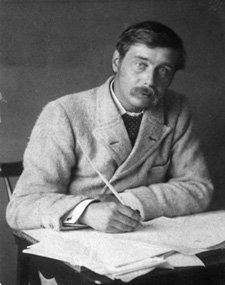
Physicist Leo Szilard read “The World Set Free” in Berlin in 1932. Its story—of the discovery of atomic power, of the ensuing atomic war that destroyed the world’s major cities, and that war’s outcome—deeply impressed him. About five years later, a number of puzzling experimental outcomes were beginning to suggest the reality of what Wells had proposed (based on his intuition of what Einstein’s 1905 theory of relativity and Frederick Soddy’s work on radiation implied): splitting the atom to release immense energy.
In 1938, when Szilard realized how to create a chain reaction, he remembered Wells’ tale of a disastrous nuclear war. Until Hitler took over in Germany and even for awhile afterwards, discoveries in physics were freely shared internationally. But warned by Wells’ novel to the danger of his discovery, Szilard decided to keep it secret.
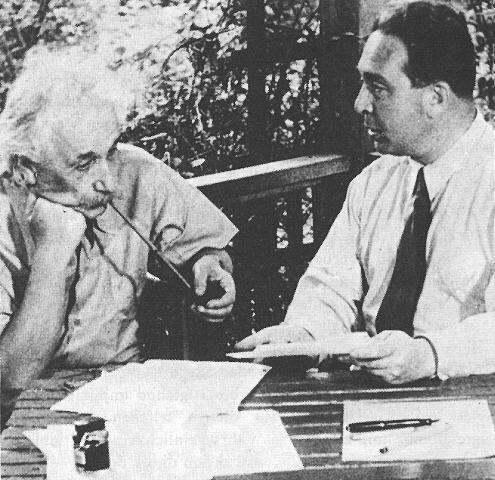
Szilard left for America, where he worked with Enrico Fermi, who had emigrated from Italy with his Jewish wife when Mussolini began to adopt Hitler’s persecution of Jews. When Szilard was sure an atomic bomb was theoretically possible, he discussed it with Einstein, who had also recently fled to America from Berlin. As a result of their discussion, they wrote the famous letter to FDR that Einstein signed, warning of the Bomb and the likelihood that Germany would pursue it, and urging the U.S. to develop it first.
Szilard eventually worked on the Manhattan Project, but when Germany was defeated and no German Bomb had been built, he got Einstein to write another letter to FDR, urging that the U.S. Bomb not be used in the war. After FDR’s death, he also led 69 other Manhattan Project scientists to write and sign a similar letter. He argued that using the Bomb against people would undermine the moral authority of the U.S. after the war, especially its ability to bring “the unloosened forces of destruction under control.”
Szilard realized two things that he might also have learned from Wells’ novel: because it was so immensely destructive, the atomic bomb was going to be the center of the largest moral questions the world had ever faced, and the geopolitical reality of the world had changed, because warfare with atomic weapons could destroy civilization and perhaps humankind itself.
These two areas—the moral and the geopolitical—were fused together by the first atomic explosion. They are fused together still. But for the purposes of analysis, let’s look at them separately.
In 1938, when Szilard realized how to create a chain reaction, he remembered Wells’ tale of a disastrous nuclear war. Until Hitler took over in Germany and even for awhile afterwards, discoveries in physics were freely shared internationally. But warned by Wells’ novel to the danger of his discovery, Szilard decided to keep it secret.
Szilard left for America, where he worked with Enrico Fermi, who had emigrated from Italy with his Jewish wife when Mussolini began to adopt Hitler’s persecution of Jews. When Szilard was sure an atomic bomb was theoretically possible, he discussed it with Einstein, who had also recently fled to America from Berlin. As a result of their discussion, they wrote the famous letter to FDR that Einstein signed, warning of the Bomb and the likelihood that Germany would pursue it, and urging the U.S. to develop it first.
Szilard eventually worked on the Manhattan Project, but when Germany was defeated and no German Bomb had been built, he got Einstein to write another letter to FDR, urging that the U.S. Bomb not be used in the war. After FDR’s death, he also led 69 other Manhattan Project scientists to write and sign a similar letter. He argued that using the Bomb against people would undermine the moral authority of the U.S. after the war, especially its ability to bring “the unloosened forces of destruction under control.”
Szilard realized two things that he might also have learned from Wells’ novel: because it was so immensely destructive, the atomic bomb was going to be the center of the largest moral questions the world had ever faced, and the geopolitical reality of the world had changed, because warfare with atomic weapons could destroy civilization and perhaps humankind itself.
These two areas—the moral and the geopolitical—were fused together by the first atomic explosion. They are fused together still. But for the purposes of analysis, let’s look at them separately.
Morality, War and the Bomb
When Islamic armies were the most powerful in the world, conquerors of Asia Minor and North Africa, and poised at the gates of Europe in the 8th century, Abu Hanifa, founder of a school of law in the city of Baghdad, proposed that the killing, maiming and raping of civilian noncombatants in war be forbidden. It was one of the first attempts to codify some kind of moral and legal restraints on civilized societies engaged in the dangerously uncivilized practice of warfare.
Though from its inception, the intent of bombing was to terrorize people rather than to destroy military targets, there was still widespread moral opposition to the bombing of civilians and cities, until World War II. The moral outrage expressed in probably the most famous work of art depicting warfare, Picasso’s “Guernica,” immortalized the horror of the first terror bombing of a civilian population in Europe, by German bombers aiding the Franco forces in Spain.
While Americans remember the bombing of Pearl Harbor (a sneak attack, but on a very military target) and the British remember the Blitz, Germans may be justified in recalling the years of nightly bombing by British planes, culminating in the firebombing of Dresden, and Japanese the incessant bombing of practically every city in Japan by Americans.
By the time of Hiroshima, bombing cities with the express purpose of destroying them and killing people was a regular feature of the war on all sides.
But people were still troubled by the morality of killing the innocent, even when they half-believed the half-truths of their governments about the purpose and necessity of the bombing. The atomic bomb was so destructive over so large an area, that any pretence that it was a strategic weapon was impossible to maintain. “In 1945, when we ceased worrying about what the Germans would do to us,” said Leo Szilard, “we began to worry about what the United States might do to other countries.”
When the world began to find out what really had happened in Hiroshima, moral revulsion became attached to the Bomb and its future. After “Hiroshima,” John Hershey’s account of the aftermath was published, this revulsion was particularly acute. Even American military leaders, including General Dwight Eisenhower, Admiral William Halsey and General Curtis LeMay condemned the dropping of the bomb on Hiroshima and Nagasaki. General Omar Bradley referred to “nuclear giants and ethical infants.“
Leo Szilard asked people to imagine what the feeling would be if Germany had dropped an atomic bomb on an Allied city, but still lost the war. Would not that act be added to other war crimes at Nuremberg?
Though some of these figures became nuclear weapons supporters, moral revulsion became a widely and deeply felt reason for why the Bomb had to be controlled, and why it must never again be used.
When Islamic armies were the most powerful in the world, conquerors of Asia Minor and North Africa, and poised at the gates of Europe in the 8th century, Abu Hanifa, founder of a school of law in the city of Baghdad, proposed that the killing, maiming and raping of civilian noncombatants in war be forbidden. It was one of the first attempts to codify some kind of moral and legal restraints on civilized societies engaged in the dangerously uncivilized practice of warfare.
Though from its inception, the intent of bombing was to terrorize people rather than to destroy military targets, there was still widespread moral opposition to the bombing of civilians and cities, until World War II. The moral outrage expressed in probably the most famous work of art depicting warfare, Picasso’s “Guernica,” immortalized the horror of the first terror bombing of a civilian population in Europe, by German bombers aiding the Franco forces in Spain.
While Americans remember the bombing of Pearl Harbor (a sneak attack, but on a very military target) and the British remember the Blitz, Germans may be justified in recalling the years of nightly bombing by British planes, culminating in the firebombing of Dresden, and Japanese the incessant bombing of practically every city in Japan by Americans.
By the time of Hiroshima, bombing cities with the express purpose of destroying them and killing people was a regular feature of the war on all sides.
But people were still troubled by the morality of killing the innocent, even when they half-believed the half-truths of their governments about the purpose and necessity of the bombing. The atomic bomb was so destructive over so large an area, that any pretence that it was a strategic weapon was impossible to maintain. “In 1945, when we ceased worrying about what the Germans would do to us,” said Leo Szilard, “we began to worry about what the United States might do to other countries.”
When the world began to find out what really had happened in Hiroshima, moral revulsion became attached to the Bomb and its future. After “Hiroshima,” John Hershey’s account of the aftermath was published, this revulsion was particularly acute. Even American military leaders, including General Dwight Eisenhower, Admiral William Halsey and General Curtis LeMay condemned the dropping of the bomb on Hiroshima and Nagasaki. General Omar Bradley referred to “nuclear giants and ethical infants.“
Leo Szilard asked people to imagine what the feeling would be if Germany had dropped an atomic bomb on an Allied city, but still lost the war. Would not that act be added to other war crimes at Nuremberg?
Though some of these figures became nuclear weapons supporters, moral revulsion became a widely and deeply felt reason for why the Bomb had to be controlled, and why it must never again be used.

The Geopolitics of Apocalypse
In Wells’ 1913 novel, The World Set Free, the atomic war leads to the inevitable conclusion that the world must unite in a single World State, or destroy itself forever. In the novel, the world does unite---something else that Leo Szilard may have learned from it.
After Hiroshima, many others quickly came to a similar conclusion. Not only scientists like Szilard and Einstein, but writers like Norman Cousins’ whose essay published immediately after Hiroshima, expanded into a best-selling book, suggested that humankind now faced extinction in an atomic war, and only a new world order could prevent it. The main test humanity faced, Cousins wrote, is the “will to change rather than [the] ability to change…That is why the power of total destruction as potentially represented by modern science must be dramatized and kept in the forefront of public opinion.”
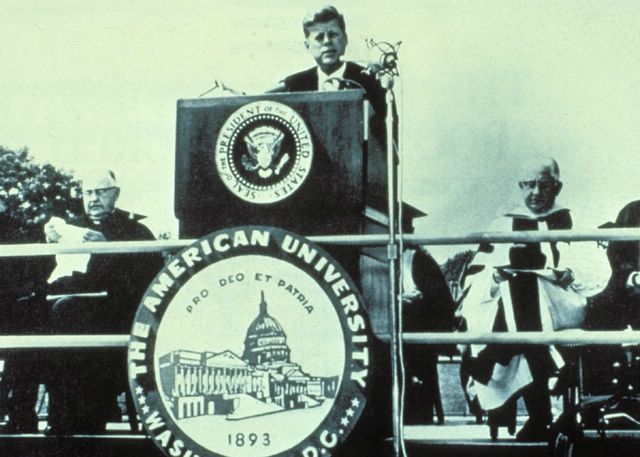
Cousins supported world federalism, and a United World Federalist movement arose in 1947. Though many people considered world government as too idealistic, there was widespread support for the United Nations as it was being formed, and something amounting to almost a consensus that nuclear weapons must be brought under international control. Even President Truman, who never regretted using the Bomb, believed that international control of atomic weapons was the correct goal.
But nothing close to world government or even international control of nuclear weapons ever materialized. Instead there was an arms race, principally between the U.S. and the Soviet Union. As nuclear weapons grew in power and number, the basic sanity of humanity was called into question. But as close as the world was to total assured destruction, it did not happen.
In Wells’ 1913 novel, The World Set Free, the atomic war leads to the inevitable conclusion that the world must unite in a single World State, or destroy itself forever. In the novel, the world does unite---something else that Leo Szilard may have learned from it.
After Hiroshima, many others quickly came to a similar conclusion. Not only scientists like Szilard and Einstein, but writers like Norman Cousins’ whose essay published immediately after Hiroshima, expanded into a best-selling book, suggested that humankind now faced extinction in an atomic war, and only a new world order could prevent it. The main test humanity faced, Cousins wrote, is the “will to change rather than [the] ability to change…That is why the power of total destruction as potentially represented by modern science must be dramatized and kept in the forefront of public opinion.”
Cousins supported world federalism, and a United World Federalist movement arose in 1947. Though many people considered world government as too idealistic, there was widespread support for the United Nations as it was being formed, and something amounting to almost a consensus that nuclear weapons must be brought under international control. Even President Truman, who never regretted using the Bomb, believed that international control of atomic weapons was the correct goal.
But nothing close to world government or even international control of nuclear weapons ever materialized. Instead there was an arms race, principally between the U.S. and the Soviet Union. As nuclear weapons grew in power and number, the basic sanity of humanity was called into question. But as close as the world was to total assured destruction, it did not happen.
How the World Saved Itself
What did happen was something few could have imagined, because it seemed so contrary to human nature and human history. Without the restraint of world government, the nations possessing nuclear weapons engaged in warfare and the undercover violence called the Cold War. But for sixty years and counting, no nation ever used a nuclear weapon against another.
Why they didn’t is not as important right now than the fact that they didn’t. The world was saved by forbearance. It was saved by the common knowledge that if one nation used a nuclear weapon, the restraint on their use by other nations would be broken. It was saved by a combination of moral revulsion and geopolitical realities.
Despite such pipedreams as fallout shelters and Star Wars, it was commonly known that there is no defense against nuclear weapons, and immense destruction was assured. Eventually there were international agreements that limited the proliferation of nuclear weapons, and allowed the major nuclear powers to limit and then reduce their weapons. But forbearance was the key to it all.
The U.S. under Bush has largely repudiated or violated many international nuclear weapons agreements. It has attempted to aid another nation (India) in expanding its nuclear capabilities. It has planned to add to its nuclear arsenal. And now, under Bush, the first and only nation to use a nuclear weapon against an enemy population of men, women and children, is said to be contemplating the first use of such a weapon since Nagasaki in 1945.
The consequences of thermonuclear war between the US and the USSR were studied repeatedly, and in outline were well known: basically the annihilation of civilization. The consequences are not widely known of nuclear devices becoming acceptable weapons in warfare at a time when many nations have some. But it can hardly be doubted that this is an avenue to widespread catastrophe that may have the same eventual result.
If the U.S. uses even one “small” nuclear device, the forbearance will be broken. The moral revulsion and geopolitical realism could be cast aside, and nuclear warfare of an unpredictable kind could begin, with no way to end it.
What did happen was something few could have imagined, because it seemed so contrary to human nature and human history. Without the restraint of world government, the nations possessing nuclear weapons engaged in warfare and the undercover violence called the Cold War. But for sixty years and counting, no nation ever used a nuclear weapon against another.
Why they didn’t is not as important right now than the fact that they didn’t. The world was saved by forbearance. It was saved by the common knowledge that if one nation used a nuclear weapon, the restraint on their use by other nations would be broken. It was saved by a combination of moral revulsion and geopolitical realities.
Despite such pipedreams as fallout shelters and Star Wars, it was commonly known that there is no defense against nuclear weapons, and immense destruction was assured. Eventually there were international agreements that limited the proliferation of nuclear weapons, and allowed the major nuclear powers to limit and then reduce their weapons. But forbearance was the key to it all.
The U.S. under Bush has largely repudiated or violated many international nuclear weapons agreements. It has attempted to aid another nation (India) in expanding its nuclear capabilities. It has planned to add to its nuclear arsenal. And now, under Bush, the first and only nation to use a nuclear weapon against an enemy population of men, women and children, is said to be contemplating the first use of such a weapon since Nagasaki in 1945.
The consequences of thermonuclear war between the US and the USSR were studied repeatedly, and in outline were well known: basically the annihilation of civilization. The consequences are not widely known of nuclear devices becoming acceptable weapons in warfare at a time when many nations have some. But it can hardly be doubted that this is an avenue to widespread catastrophe that may have the same eventual result.
If the U.S. uses even one “small” nuclear device, the forbearance will be broken. The moral revulsion and geopolitical realism could be cast aside, and nuclear warfare of an unpredictable kind could begin, with no way to end it.
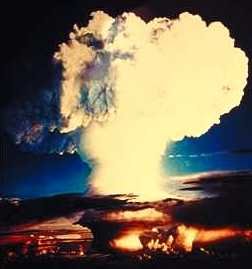
But what if moral revulsion and geopolitical realism holds? What if the only nukes that are used turn out to be the ones the U.S. uses on Iran, at least in the immediate aftermath? The consequences for the U.S. could well be severe and lasting. Much of the world is already troubled if not disgusted with recent U.S. international behavior. (See for example the dKos diary by NBBooks that outlines several growing alliances that don’t include the U.S.) The use of any nuke could unleash a tide of sentiment and action that could devastate the U.S. politically and economically. Nuclear weapons still have potent symbolic as well as physical power.
The U.S. could become an outcast giant overnight, drummed out of the international community, treated with contempt. Real penalties could be exacted through the UN and other international bodies. Now that other nations are economically strong and America makes little of what the world needs, there is less incentive for allowing this violation—this most violent single act since World War II-- to be forgiven and forgotten. As our debts are called in, America may find that its chief exports—Hollywood, weapons and garbage—are no longer sufficient to balance its offenses.
Even if nations are cowed into silence by the U.S. willingness to use its greatest remaining source of world power—its nuclear arsenal—terrorism against the U.S. would undoubtedly increase, but the rest of the world will turn a blind eye.
To break the nuclear peace is potentially the most consequential single act possible. For it is only the remarkable shared forbearance on the use of nuclear weapons, a forbearance unique in human history, that has allowed civilization to continue. No matter how I look at it, it’s hard to see this any other way: the day that America uses a nuclear weapon against Iran will be the darkest day in American history.
The U.S. could become an outcast giant overnight, drummed out of the international community, treated with contempt. Real penalties could be exacted through the UN and other international bodies. Now that other nations are economically strong and America makes little of what the world needs, there is less incentive for allowing this violation—this most violent single act since World War II-- to be forgiven and forgotten. As our debts are called in, America may find that its chief exports—Hollywood, weapons and garbage—are no longer sufficient to balance its offenses.
Even if nations are cowed into silence by the U.S. willingness to use its greatest remaining source of world power—its nuclear arsenal—terrorism against the U.S. would undoubtedly increase, but the rest of the world will turn a blind eye.
To break the nuclear peace is potentially the most consequential single act possible. For it is only the remarkable shared forbearance on the use of nuclear weapons, a forbearance unique in human history, that has allowed civilization to continue. No matter how I look at it, it’s hard to see this any other way: the day that America uses a nuclear weapon against Iran will be the darkest day in American history.
Thursday, May 11, 2006
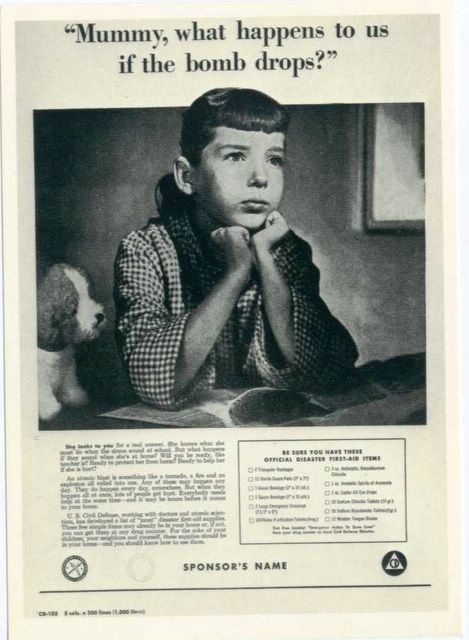
Nuking Iran: Radiation
Secrets and lies have driven the history of the Bomb. We see this pattern repeated today, in an effort to make nuclear weapons seem no different from other explosives. But with continuing signs that the Bush administration may be heading for war on Iran, with reports of U.S. officials considering using nuclear weapons in Iran, these lies become even more dangerous.
The most important secrets and lies concerned radiation, the distinguishing effect of the Bomb, beyond its sheer power. The effects of radiation were denied, dismissed and minimized for decades. Today they are not even mentioned. It is especially important to revisit this history because, according to the the Physicians for Social Responsibility, a nuclear earth penetrating weapon “would actually create more fallout than a ground-burst or airburst weapon, due to the increased distribution of radioactive debris from detonation at a shallow depth in soil or rock."
Those of us who are early Baby Boomers particularly, but any of us who lived through the Cold War, will have lived through these cycles of fear and denial before. I was born as the first postwar atomic bomb test was happening in Bikini, during Operations Crossroads. My first actual political memory was of wearing an Adlai Stevenson button in 1956, partly because I didn't want radioactive fallout in my chocolate milk. We are in a unique position to know what nuclear warfare might mean, and we need to spread that knowledge.
Radiation and the history of denying it and confronting it is the subject of this essay.
[text continues after photos]
Secrets and lies have driven the history of the Bomb. We see this pattern repeated today, in an effort to make nuclear weapons seem no different from other explosives. But with continuing signs that the Bush administration may be heading for war on Iran, with reports of U.S. officials considering using nuclear weapons in Iran, these lies become even more dangerous.
The most important secrets and lies concerned radiation, the distinguishing effect of the Bomb, beyond its sheer power. The effects of radiation were denied, dismissed and minimized for decades. Today they are not even mentioned. It is especially important to revisit this history because, according to the the Physicians for Social Responsibility, a nuclear earth penetrating weapon “would actually create more fallout than a ground-burst or airburst weapon, due to the increased distribution of radioactive debris from detonation at a shallow depth in soil or rock."
Those of us who are early Baby Boomers particularly, but any of us who lived through the Cold War, will have lived through these cycles of fear and denial before. I was born as the first postwar atomic bomb test was happening in Bikini, during Operations Crossroads. My first actual political memory was of wearing an Adlai Stevenson button in 1956, partly because I didn't want radioactive fallout in my chocolate milk. We are in a unique position to know what nuclear warfare might mean, and we need to spread that knowledge.
Radiation and the history of denying it and confronting it is the subject of this essay.
[text continues after photos]

From its very beginnings, the atomic bomb has been mysterious. Even the physicists who lived together in Los Alamos to develop it did not know what they had invented. They didn’t know how powerful the first Bomb would be—they had a betting pool on the yield, and many seriously underestimated and overestimated the result. About half the scientists didn't think the device would explode at all. Enrico Fermi was taking bets on whether it would burn off the Earth's atmosphere.
But most of the mystery was deliberate. The Bomb was developed in complete secrecy so as not to tip off the Nazis, who were believed to be working on their own Bomb project. Even after Germany’s defeat, the Bomb was kept secret from the remaining enemy of Japan, but also from America’s war allies. Then after the war, as the truth of what the Bomb’s effects became clear to scientists, the American military and Washington policymakers tried to keep some of those effects secret from U.S. citizens, even to the point of outright lies.
The Bomb produces three effects: blast, heat and radioactivity (commonly called radiation.) The blast is immensely more powerful, and the heat is immensely more intense, than any other manmade device can produce. Together they resulted, in the Bomb’s first test, in killing every living thing within a mile, including insects. A single Bomb each virtually leveled the cities of Hiroshima and Nagasaki. Human beings were vaporized. Nothing was left of some but their shadows burnt into concrete. Others were seared to a small pile of ashes. The remains of some were fused with metal doors and other objects.
Those effects were immediately apparent. But it took some time for the effects of radiation to be understood, and even longer to be acknowledged.
But most of the mystery was deliberate. The Bomb was developed in complete secrecy so as not to tip off the Nazis, who were believed to be working on their own Bomb project. Even after Germany’s defeat, the Bomb was kept secret from the remaining enemy of Japan, but also from America’s war allies. Then after the war, as the truth of what the Bomb’s effects became clear to scientists, the American military and Washington policymakers tried to keep some of those effects secret from U.S. citizens, even to the point of outright lies.
The Bomb produces three effects: blast, heat and radioactivity (commonly called radiation.) The blast is immensely more powerful, and the heat is immensely more intense, than any other manmade device can produce. Together they resulted, in the Bomb’s first test, in killing every living thing within a mile, including insects. A single Bomb each virtually leveled the cities of Hiroshima and Nagasaki. Human beings were vaporized. Nothing was left of some but their shadows burnt into concrete. Others were seared to a small pile of ashes. The remains of some were fused with metal doors and other objects.
Those effects were immediately apparent. But it took some time for the effects of radiation to be understood, and even longer to be acknowledged.
What We Know Now
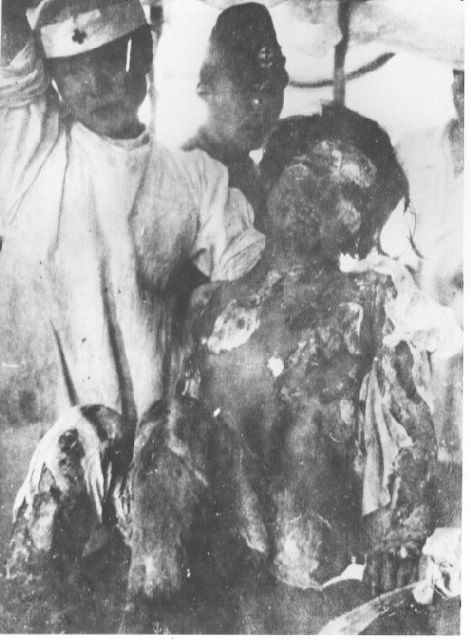
The first humans exposed to an atomic bomb blast were those living in Hiroshima and Nagasaki in the summer of 1945. These included some American children of parents who were Japanese or of Japanese ancestry or origin living in the U.S. who were sent to internment camps. These children were sent to “safe” areas in Japan, such as Hiroshima.
Some of those who survived the initial blast and heat but were heavily exposed to radiation began to develop radiation poisoning symptoms after about twenty-four hours: severe nausea, fever and vomiting. In his 2005 book, The Bomb: a Life, scholar Gerard DeGroot writes: “The damage to cells was so widespread that recovery was impossible. Death occurred after about a week, before doctors had any inkling of what was wrong.”
For others, symptoms didn’t begin for ten to fifteen days. They suffered from bloody diarrhea, “a loss of appetite, general malaise, persistent fever and hair loss.” The symptoms were delayed because gamma rays attack bone marrow where new blood cells are formed, and begin to produce defective cells.
“In the worst cases of radiation poisoning, the gamma rays virtually destroy the entire bone marrow.. The cessation of red cell formation leads to progressive anemia. Deficiency of platelet formation causes thin blood to hemorrhage into the skin and the retina of the eye, and sometimes into the intestines and kidneys. The fall in the number of white cells lowers the victim’s resistance to infections. When infections occurred among Hiroshima and Nagasaki victims, it usually spread from the mouth and was accompanied by gangrene of the lips, tongue and throat. Patients often emitted a terrible smell---they had effectively started to decay from the inside.”[pages 107-08]
The first humans exposed to an atomic bomb blast were those living in Hiroshima and Nagasaki in the summer of 1945. These included some American children of parents who were Japanese or of Japanese ancestry or origin living in the U.S. who were sent to internment camps. These children were sent to “safe” areas in Japan, such as Hiroshima.
Some of those who survived the initial blast and heat but were heavily exposed to radiation began to develop radiation poisoning symptoms after about twenty-four hours: severe nausea, fever and vomiting. In his 2005 book, The Bomb: a Life, scholar Gerard DeGroot writes: “The damage to cells was so widespread that recovery was impossible. Death occurred after about a week, before doctors had any inkling of what was wrong.”
For others, symptoms didn’t begin for ten to fifteen days. They suffered from bloody diarrhea, “a loss of appetite, general malaise, persistent fever and hair loss.” The symptoms were delayed because gamma rays attack bone marrow where new blood cells are formed, and begin to produce defective cells.
“In the worst cases of radiation poisoning, the gamma rays virtually destroy the entire bone marrow.. The cessation of red cell formation leads to progressive anemia. Deficiency of platelet formation causes thin blood to hemorrhage into the skin and the retina of the eye, and sometimes into the intestines and kidneys. The fall in the number of white cells lowers the victim’s resistance to infections. When infections occurred among Hiroshima and Nagasaki victims, it usually spread from the mouth and was accompanied by gangrene of the lips, tongue and throat. Patients often emitted a terrible smell---they had effectively started to decay from the inside.”[pages 107-08]
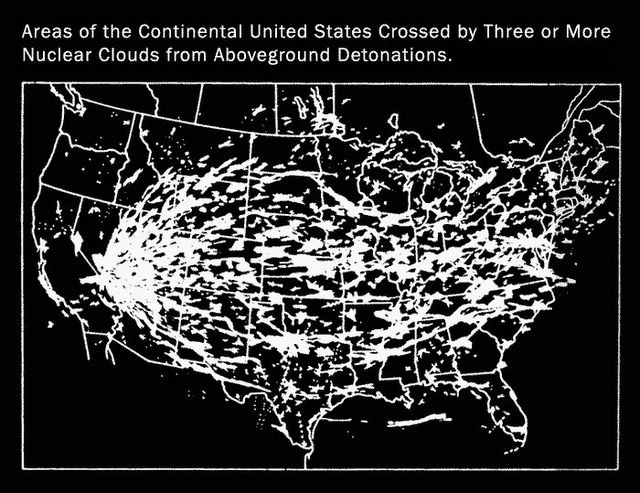
Those who escape this severe radiation poisoning, who may be farther from the blast, will not know for years, and perhaps will never know, the extent of the damage caused by radiation. “Ionizing radiation released in a nuclear explosion passes through the skin without causing external damage. It interacts immediately with tissues within the body, causing an irregular pattern of cell damage. ” Those who survive the attack on high turnover tissues, such as those involved in blood formation, may suffer effects on tissues with slower turnover, in the brain, liver or thyroid gland. In these, “…the effects of radiation damage may not become apparent for months or years, and can eventually manifest themselves as cancers.”
Then there is danger to the unborn. Damaged or destroyed cells in a fetus may impair the development of organs and parts of the body. “Radiation can also damage DNA in the reproductive system, causing mutation in future generations. While scientists once thought that a ‘safe’ level of exposure existed, current medical opinion olds that there is no threshold dose below which an effect is not produced.” [emphasis added.]
These effects were caused by the Bomb dropped on Hiroshima (approximately 20 kilotons) and Nagasaki (about 15 kilotons.) The nuclear bunker-busters that could be used in Iran may have a yield up to 10 kilotons, but most believe the yield goes up to 340 kilotons, more than 22 times more powerful than the Bomb that destroyed Hiroshima.
More than half of those who died from the effects of that Bomb within the first five years after it was dropped, and more than two-thirds of those who died within five years after Nagasaki, had survived the blast and fire.
Then there is danger to the unborn. Damaged or destroyed cells in a fetus may impair the development of organs and parts of the body. “Radiation can also damage DNA in the reproductive system, causing mutation in future generations. While scientists once thought that a ‘safe’ level of exposure existed, current medical opinion olds that there is no threshold dose below which an effect is not produced.” [emphasis added.]
These effects were caused by the Bomb dropped on Hiroshima (approximately 20 kilotons) and Nagasaki (about 15 kilotons.) The nuclear bunker-busters that could be used in Iran may have a yield up to 10 kilotons, but most believe the yield goes up to 340 kilotons, more than 22 times more powerful than the Bomb that destroyed Hiroshima.
More than half of those who died from the effects of that Bomb within the first five years after it was dropped, and more than two-thirds of those who died within five years after Nagasaki, had survived the blast and fire.

A Generation of Lies
Although radioactive fallout from the first Bomb test in 1945 contaminated cattle, the effects were kept secret, along with everything else about the test. But even after the war, the secrecy continued. In Bombs in the Backyard, a self-described balanced account of nuclear testing, A. Costandina Titus writes that “Even Congress has been denied access to information.”
General Leslie Groves had ridden herd over the Manhattan Project that developed the Bomb, and he continued the policy of secrecy, which soon became a policy of denial. When the first reports of radiation sickness in Hiroshima surfaced, he dismissed them as “Japanese propaganda.” William Laurence, the only reporter permitted to follow the Bomb’s development, echoed the charge.
Later, when radioactive fallout entered the news, American officials insisted that radiation exposure was painless to humans and test animals. General Groves testified to Congress that radiation poisoning was "a very pleasant way to die."
Few precautions were taken for service personnel involved in the first postwar Bomb tests in the South Pacific in 1946, nor for many subsequent tests there and in Nevada. When military personnel and others exposed to test fallout either deliberately or accidentally later became ill, the government refused to consider that the nuclear explosions were related or responsible, and they maintained this heartless lie for decades.
But one of the doctors involved in monitoring radiation and physical effects from those 1946 tests would be among the first to sound a public alarm. David Bradley’s book, No Place to Hide, was published in 1948 and became an immediate best seller. He later revised it to include further information as well as medical studies from later atomic and hydrogen bomb tests in the Pacific. He reported for example that after 406 Pacific islanders were exposed to H-bomb fallout in 1954, nine children were born retarded, ten more with other abnormalities, and three were stillborn, including one reported to be "not recognizable as human."
But the first writing to bring some of the reality of radiation to Americans was John Hershey’s Hiroshima, published in the New Yorker in August 1946, and soon after as a best-selling book. The stories of six Hiroshima survivors ended with riveting accounts of the ongoing effects of radiation. This was the occasion for more stories (and more denials) about the effects of radioactivity.
Still, Bomb testing went on, as necessary to the national defense, particularly when the Soviet Union unexpectedly exploded their first atomic Bomb in 1951. The U.S. returned to exploding atomic Bombs within its borders that same year, and radiation from a Nevada test was detected in the snow that fell on Rochester, New York. By early 1953, there had been 20 tests in Nevada. A seven year old boy 70 miles from Ground Zero in Nevada who died of leukemia “became possibly the first baby boom casualty of the atomic age.” (Great Expectations by Landon Y. Jones, p59.)
Although radioactive fallout from the first Bomb test in 1945 contaminated cattle, the effects were kept secret, along with everything else about the test. But even after the war, the secrecy continued. In Bombs in the Backyard, a self-described balanced account of nuclear testing, A. Costandina Titus writes that “Even Congress has been denied access to information.”
General Leslie Groves had ridden herd over the Manhattan Project that developed the Bomb, and he continued the policy of secrecy, which soon became a policy of denial. When the first reports of radiation sickness in Hiroshima surfaced, he dismissed them as “Japanese propaganda.” William Laurence, the only reporter permitted to follow the Bomb’s development, echoed the charge.
Later, when radioactive fallout entered the news, American officials insisted that radiation exposure was painless to humans and test animals. General Groves testified to Congress that radiation poisoning was "a very pleasant way to die."
Few precautions were taken for service personnel involved in the first postwar Bomb tests in the South Pacific in 1946, nor for many subsequent tests there and in Nevada. When military personnel and others exposed to test fallout either deliberately or accidentally later became ill, the government refused to consider that the nuclear explosions were related or responsible, and they maintained this heartless lie for decades.
But one of the doctors involved in monitoring radiation and physical effects from those 1946 tests would be among the first to sound a public alarm. David Bradley’s book, No Place to Hide, was published in 1948 and became an immediate best seller. He later revised it to include further information as well as medical studies from later atomic and hydrogen bomb tests in the Pacific. He reported for example that after 406 Pacific islanders were exposed to H-bomb fallout in 1954, nine children were born retarded, ten more with other abnormalities, and three were stillborn, including one reported to be "not recognizable as human."
But the first writing to bring some of the reality of radiation to Americans was John Hershey’s Hiroshima, published in the New Yorker in August 1946, and soon after as a best-selling book. The stories of six Hiroshima survivors ended with riveting accounts of the ongoing effects of radiation. This was the occasion for more stories (and more denials) about the effects of radioactivity.
Still, Bomb testing went on, as necessary to the national defense, particularly when the Soviet Union unexpectedly exploded their first atomic Bomb in 1951. The U.S. returned to exploding atomic Bombs within its borders that same year, and radiation from a Nevada test was detected in the snow that fell on Rochester, New York. By early 1953, there had been 20 tests in Nevada. A seven year old boy 70 miles from Ground Zero in Nevada who died of leukemia “became possibly the first baby boom casualty of the atomic age.” (Great Expectations by Landon Y. Jones, p59.)
Them!
The undercurrent of news about radiation’s effects continued throughout the 1950s, as the U.S. and Soviet Union exploded hundreds of atomic bombs, including hydrogen bombs (which some say are to atom bombs what atom bombs are to conventional explosives.) Testing and its effects became a campaign issue in the 1956 presidential election. Strontium 90, a radioactive isotope that lodges in bones and causes cancer, was discovered in cow’s milk across America. Still, the official word was there was nothing to worry about.
The likelihood (since proven) that U.S. nuclear secrets were passed to the Russians, added fuel to what became McCarthyism in the 1950s. Now dissent concerning the Bomb could be criminal treason as well as unpatriotic. So much of the fear Americans had about nuclear radiation and the Bomb itself was driven underground, into the collective unconscious, and to the popular expression of that unconscious: the movies.
Monsters created or unleashed by nuclear explosions became the decade’s B-movie cliché. But one of the first remained one of the best: “Them!” released in 1954. The film is fascinating today partly because several relatively unknown actors became stars, mostly in the new medium of television: James Arness in “Gunsmoke,” James Whitmore in “The Law and Mr. Jones,” Leonard Nimoy (with a very small part) in “Star Trek,” and Fess Parker, a young actor Walt Disney saw in this movie and cast as Davy Crockett, the first TV hero to be a national phenomenon.
But the fact that these actors were unknowns in 1954 led credibility to the story, which was mostly a step by step investigation into a horrific phenomenon---radiation from atomic testing mutated a colony of ordinary ants into a race of giant ants, killing, breeding and preparing to swarm on Los Angeles and other cities, where they could begin their conquest of humanity.
The movie dealt with a number of themes related to the Cold War and the Bomb, but it was remarkably forthright about the source of the fears it symbolized. "If these monsters got started as a result of the first atomic bomb tests in 1945, what about all the others that have been exploded since then?" asks James Arness, the FBI man of action. "I don't know," says the beautiful woman scientist. "Nobody knows," says her father, the elder scientist. "When man entered the atomic age, he opened the door into a new world. What we eventually find in that new world nobody can predict."
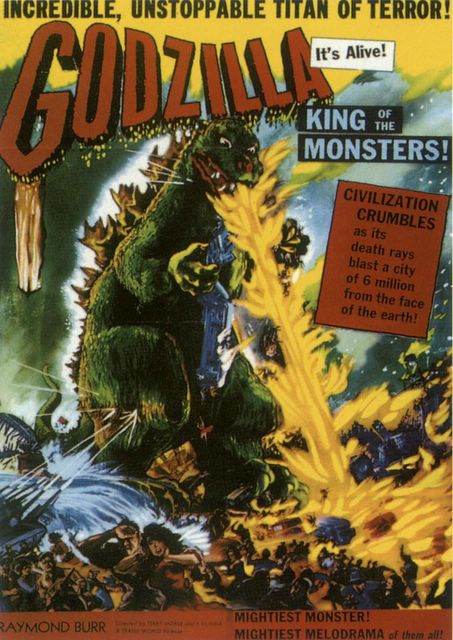
There would be many more Bomb-themed films (including the original Japanese version of Godzilla, which dealt more forthrightly with Bomb themes than the version Americans saw. The original will be available on DVD for the first time in September.) In his book, Apocalypse Movies, Kim Newman makes the valuable point that the B movie divisions of major studios tended to glorify the military in their Bomb-theme movies, while independent films were more questioning, and revealed more of the real horror. They also tended to extend mutations to human beings, as in “The Incredible Shrinking Man.”
The undercurrent of news about radiation’s effects continued throughout the 1950s, as the U.S. and Soviet Union exploded hundreds of atomic bombs, including hydrogen bombs (which some say are to atom bombs what atom bombs are to conventional explosives.) Testing and its effects became a campaign issue in the 1956 presidential election. Strontium 90, a radioactive isotope that lodges in bones and causes cancer, was discovered in cow’s milk across America. Still, the official word was there was nothing to worry about.
The likelihood (since proven) that U.S. nuclear secrets were passed to the Russians, added fuel to what became McCarthyism in the 1950s. Now dissent concerning the Bomb could be criminal treason as well as unpatriotic. So much of the fear Americans had about nuclear radiation and the Bomb itself was driven underground, into the collective unconscious, and to the popular expression of that unconscious: the movies.
Monsters created or unleashed by nuclear explosions became the decade’s B-movie cliché. But one of the first remained one of the best: “Them!” released in 1954. The film is fascinating today partly because several relatively unknown actors became stars, mostly in the new medium of television: James Arness in “Gunsmoke,” James Whitmore in “The Law and Mr. Jones,” Leonard Nimoy (with a very small part) in “Star Trek,” and Fess Parker, a young actor Walt Disney saw in this movie and cast as Davy Crockett, the first TV hero to be a national phenomenon.
But the fact that these actors were unknowns in 1954 led credibility to the story, which was mostly a step by step investigation into a horrific phenomenon---radiation from atomic testing mutated a colony of ordinary ants into a race of giant ants, killing, breeding and preparing to swarm on Los Angeles and other cities, where they could begin their conquest of humanity.
The movie dealt with a number of themes related to the Cold War and the Bomb, but it was remarkably forthright about the source of the fears it symbolized. "If these monsters got started as a result of the first atomic bomb tests in 1945, what about all the others that have been exploded since then?" asks James Arness, the FBI man of action. "I don't know," says the beautiful woman scientist. "Nobody knows," says her father, the elder scientist. "When man entered the atomic age, he opened the door into a new world. What we eventually find in that new world nobody can predict."
There would be many more Bomb-themed films (including the original Japanese version of Godzilla, which dealt more forthrightly with Bomb themes than the version Americans saw. The original will be available on DVD for the first time in September.) In his book, Apocalypse Movies, Kim Newman makes the valuable point that the B movie divisions of major studios tended to glorify the military in their Bomb-theme movies, while independent films were more questioning, and revealed more of the real horror. They also tended to extend mutations to human beings, as in “The Incredible Shrinking Man.”

But as these eruptions from the unconscious became formulaic “bug-eyed monster” movies, a few filmmakers began to deal openly with the effects of nuclear war. The most influential of the 1950s, and the one that dealt most directly with mass death by radioactive fallout as the ultimate outcome of nuclear war, was Stanley Kramer’s On the Beach, starring Gregory Peck, Ava Gardner and Fred Astaire. Set in Australia after the U.S. and the Soviet Union have destroyed each other, the characters learn they are doomed from the fallout heading their way. There are no explosions, no monsters, no gruesome deaths. Yet Nobel Laureate and anti-Bomb activist Linus Pauling said, “It may be that some years from now can look back and say that ‘On the Beach’ is the movie that saved the world.”
Throughout the Cold War and the nuclear arms race, there were films and TV movies that tried to bring the horror into public consciousness. The War Game by Peter Watkins, a docudrama about the effects of a nuclear war in one English village, was made for BBC-TV in 1965 but the BBC refused to show it until 1985. It was seen in art houses in the U.S. and elsewhere as a feature in the 60s and 70s. Also on British TV in the 1980s was Threads, which carried the effects of radiation past one generation. While a survivor society struggles in a burnt-out and irradiated world, a 12 year old giving birth screams at the sight of her deformed stillborn baby. It was a harrowing ending to a truly horrifying film.
There were two prominent TV films in the U.S in the 80s, which also showed survivors of nuclear war struggling valiantly and hopelessly. The better known was The Day After directed by Nicholas Meyer, starring Jason Robards and JoBeth Williams. Set in Lawrence, Kansas, it centers on a doctor (Robards) who deals with an impossible emergency over days and weeks as he and everyone else gradually succumbs to radiation poisoning. The TV movie ends with the warning that as fatalistic as the story seemed, a full-scale nuclear war would have far worse effects.
The Day After had an effect on American consciousness in the 1980s similar to On the Beach in the late 1950s. But another TV film brought the effects home. Testament by Lynne Littman, starring Jane Alexander, followed events in an isolated northern California town. Without graphic images, it simply shows a family and a town living to the end of the world, as radiation poisons everyone and everything.
Radiation from hundreds of thermonuclear bombs is enough to destroy civilization. But radiation from a single Bomb of relatively low yield killed hundreds of thousands in Japan. It could happen in Iran and perhaps the surrounding region, with some dying in days, some in weeks, and some in years or even decades. Yet no one is talking about this. It is time to start.
------
This essay in one version or another is on the recommended list at Booman Tribune and on the front page of E Pluribus Media. Promoted to Booman Trib front page on 5/11.
Throughout the Cold War and the nuclear arms race, there were films and TV movies that tried to bring the horror into public consciousness. The War Game by Peter Watkins, a docudrama about the effects of a nuclear war in one English village, was made for BBC-TV in 1965 but the BBC refused to show it until 1985. It was seen in art houses in the U.S. and elsewhere as a feature in the 60s and 70s. Also on British TV in the 1980s was Threads, which carried the effects of radiation past one generation. While a survivor society struggles in a burnt-out and irradiated world, a 12 year old giving birth screams at the sight of her deformed stillborn baby. It was a harrowing ending to a truly horrifying film.
There were two prominent TV films in the U.S in the 80s, which also showed survivors of nuclear war struggling valiantly and hopelessly. The better known was The Day After directed by Nicholas Meyer, starring Jason Robards and JoBeth Williams. Set in Lawrence, Kansas, it centers on a doctor (Robards) who deals with an impossible emergency over days and weeks as he and everyone else gradually succumbs to radiation poisoning. The TV movie ends with the warning that as fatalistic as the story seemed, a full-scale nuclear war would have far worse effects.
The Day After had an effect on American consciousness in the 1980s similar to On the Beach in the late 1950s. But another TV film brought the effects home. Testament by Lynne Littman, starring Jane Alexander, followed events in an isolated northern California town. Without graphic images, it simply shows a family and a town living to the end of the world, as radiation poisons everyone and everything.
Radiation from hundreds of thermonuclear bombs is enough to destroy civilization. But radiation from a single Bomb of relatively low yield killed hundreds of thousands in Japan. It could happen in Iran and perhaps the surrounding region, with some dying in days, some in weeks, and some in years or even decades. Yet no one is talking about this. It is time to start.
------
This essay in one version or another is on the recommended list at Booman Tribune and on the front page of E Pluribus Media. Promoted to Booman Trib front page on 5/11.
Wednesday, May 10, 2006

Butterflies Are Free No Longer
When I was a boy growing up in western Pennsylvania in the 1950s, just outside a small town, we had a neighboring field (known to adults as the "vacant lots") and several lots worth of trees across the street (which my mother called "the weeds.") So my childhood was filled with dandelions and violets, robins and cardinals, goldfinches, blue jays and bluebirds, and with butterflies. An enormous variety of butterflies--oranges, yellows, whites, blues, black and whites, all sizes and patterns.
I've never seen that profusion of butterflies again. The past few years here in far northern California, we've been blessed with some. Clusters of small white butterflies for awhile, and the occasional monarch-mimic orange and black patterned ones.
But this year, according to the San Francisco Chronicle, we may not see them. And possibly we may not see them ever again.
Wild fluctuations in California's winter and spring weather have hurt fragile butterfly populations, causing numbers to fall to the lowest in more than three decades and increasing the concerns of scientists about long-term declines linked to climate change and habitat loss.
UC Davis Professor Arthur Shapiro, considered one of the most prominent butterfly trackers in North America, said Monday he has found fewer butterflies this year than at anytime since he came to California 35 years ago. "We have a severe depression of butterfly numbers at the lower elevations in Northern California, particularly in the Central Valley. We don't know if local populations are extinct or have dropped to low levels that we're unlikely to detect,'' he said.
The very possibility of extinction is chilling. This is a dramatic illustration of one of the many complex effects of the Climate Crisis. Call it a cascade effect, call it a tear in the web of life, but global heating together with other phenomena, mostly due to human abuse of nature but some of it the ordinary cycles and variations, can have drastic consequences.
When I was a boy growing up in western Pennsylvania in the 1950s, just outside a small town, we had a neighboring field (known to adults as the "vacant lots") and several lots worth of trees across the street (which my mother called "the weeds.") So my childhood was filled with dandelions and violets, robins and cardinals, goldfinches, blue jays and bluebirds, and with butterflies. An enormous variety of butterflies--oranges, yellows, whites, blues, black and whites, all sizes and patterns.
I've never seen that profusion of butterflies again. The past few years here in far northern California, we've been blessed with some. Clusters of small white butterflies for awhile, and the occasional monarch-mimic orange and black patterned ones.
But this year, according to the San Francisco Chronicle, we may not see them. And possibly we may not see them ever again.
Wild fluctuations in California's winter and spring weather have hurt fragile butterfly populations, causing numbers to fall to the lowest in more than three decades and increasing the concerns of scientists about long-term declines linked to climate change and habitat loss.
UC Davis Professor Arthur Shapiro, considered one of the most prominent butterfly trackers in North America, said Monday he has found fewer butterflies this year than at anytime since he came to California 35 years ago. "We have a severe depression of butterfly numbers at the lower elevations in Northern California, particularly in the Central Valley. We don't know if local populations are extinct or have dropped to low levels that we're unlikely to detect,'' he said.
The very possibility of extinction is chilling. This is a dramatic illustration of one of the many complex effects of the Climate Crisis. Call it a cascade effect, call it a tear in the web of life, but global heating together with other phenomena, mostly due to human abuse of nature but some of it the ordinary cycles and variations, can have drastic consequences.
Monday, May 08, 2006
Subscribe to:
Posts (Atom)