Thursday, May 11, 2006


General Leslie Groves Posted by Picasa
A Generation of Lies

Although radioactive fallout from the first Bomb test in 1945 contaminated cattle, the effects were kept secret, along with everything else about the test. But even after the war, the secrecy continued. In Bombs in the Backyard, a self-described balanced account of nuclear testing, A. Costandina Titus writes that “Even Congress has been denied access to information.”

General Leslie Groves had ridden herd over the Manhattan Project that developed the Bomb, and he continued the policy of secrecy, which soon became a policy of denial. When the first reports of radiation sickness in Hiroshima surfaced, he dismissed them as “Japanese propaganda.” William Laurence, the only reporter permitted to follow the Bomb’s development, echoed the charge.

Later, when radioactive fallout entered the news, American officials insisted that radiation exposure was painless to humans and test animals. General Groves testified to Congress that radiation poisoning was "a very pleasant way to die."

Few precautions were taken for service personnel involved in the first postwar Bomb tests in the South Pacific in 1946, nor for many subsequent tests there and in Nevada. When military personnel and others exposed to test fallout either deliberately or accidentally later became ill, the government refused to consider that the nuclear explosions were related or responsible, and they maintained this heartless lie for decades.

But one of the doctors involved in monitoring radiation and physical effects from those 1946 tests would be among the first to sound a public alarm. David Bradley’s book, No Place to Hide, was published in 1948 and became an immediate best seller. He later revised it to include further information as well as medical studies from later atomic and hydrogen bomb tests in the Pacific. He reported for example that after 406 Pacific islanders were exposed to H-bomb fallout in 1954, nine children were born retarded, ten more with other abnormalities, and three were stillborn, including one reported to be "not recognizable as human."

But the first writing to bring some of the reality of radiation to Americans was John Hershey’s Hiroshima, published in the New Yorker in August 1946, and soon after as a best-selling book. The stories of six Hiroshima survivors ended with riveting accounts of the ongoing effects of radiation. This was the occasion for more stories (and more denials) about the effects of radioactivity.

Still, Bomb testing went on, as necessary to the national defense, particularly when the Soviet Union unexpectedly exploded their first atomic Bomb in 1951. The U.S. returned to exploding atomic Bombs within its borders that same year, and radiation from a Nevada test was detected in the snow that fell on Rochester, New York. By early 1953, there had been 20 tests in Nevada. A seven year old boy 70 miles from Ground Zero in Nevada who died of leukemia “became possibly the first baby boom casualty of the atomic age.” (Great Expectations by Landon Y. Jones, p59.)

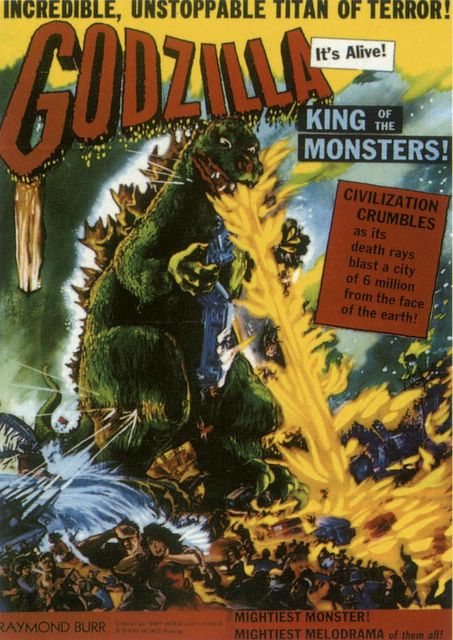
1955 poster for the American version of "Godzilla" Posted by Picasa
Them!

The undercurrent of news about radiation’s effects continued throughout the 1950s, as the U.S. and Soviet Union exploded hundreds of atomic bombs, including hydrogen bombs (which some say are to atom bombs what atom bombs are to conventional explosives.) Testing and its effects became a campaign issue in the 1956 presidential election. Strontium 90, a radioactive isotope that lodges in bones and causes cancer, was discovered in cow’s milk across America. Still, the official word was there was nothing to worry about.

The likelihood (since proven) that U.S. nuclear secrets were passed to the Russians, added fuel to what became McCarthyism in the 1950s. Now dissent concerning the Bomb could be criminal treason as well as unpatriotic. So much of the fear Americans had about nuclear radiation and the Bomb itself was driven underground, into the collective unconscious, and to the popular expression of that unconscious: the movies.

Monsters created or unleashed by nuclear explosions became the decade’s B-movie cliché. But one of the first remained one of the best: “Them!” released in 1954. The film is fascinating today partly because several relatively unknown actors became stars, mostly in the new medium of television: James Arness in “Gunsmoke,” James Whitmore in “The Law and Mr. Jones,” Leonard Nimoy (with a very small part) in “Star Trek,” and Fess Parker, a young actor Walt Disney saw in this movie and cast as Davy Crockett, the first TV hero to be a national phenomenon.

But the fact that these actors were unknowns in 1954 led credibility to the story, which was mostly a step by step investigation into a horrific phenomenon---radiation from atomic testing mutated a colony of ordinary ants into a race of giant ants, killing, breeding and preparing to swarm on Los Angeles and other cities, where they could begin their conquest of humanity.

The movie dealt with a number of themes related to the Cold War and the Bomb, but it was remarkably forthright about the source of the fears it symbolized. "If these monsters got started as a result of the first atomic bomb tests in 1945, what about all the others that have been exploded since then?" asks James Arness, the FBI man of action. "I don't know," says the beautiful woman scientist. "Nobody knows," says her father, the elder scientist. "When man entered the atomic age, he opened the door into a new world. What we eventually find in that new world nobody can predict."

There would be many more Bomb-themed films (including the original Japanese version of Godzilla, which dealt more forthrightly with Bomb themes than the version Americans saw. The original will be available on DVD for the first time in September.) In his book, Apocalypse Movies, Kim Newman makes the valuable point that the B movie divisions of major studios tended to glorify the military in their Bomb-theme movies, while independent films were more questioning, and revealed more of the real horror. They also tended to extend mutations to human beings, as in “The Incredible Shrinking Man.”

Publicity collage for "The Day After" Posted by Picasa
But as these eruptions from the unconscious became formulaic “bug-eyed monster” movies, a few filmmakers began to deal openly with the effects of nuclear war. The most influential of the 1950s, and the one that dealt most directly with mass death by radioactive fallout as the ultimate outcome of nuclear war, was Stanley Kramer’s On the Beach, starring Gregory Peck, Ava Gardner and Fred Astaire. Set in Australia after the U.S. and the Soviet Union have destroyed each other, the characters learn they are doomed from the fallout heading their way. There are no explosions, no monsters, no gruesome deaths. Yet Nobel Laureate and anti-Bomb activist Linus Pauling said, “It may be that some years from now can look back and say that ‘On the Beach’ is the movie that saved the world.”

Throughout the Cold War and the nuclear arms race, there were films and TV movies that tried to bring the horror into public consciousness. The War Game by Peter Watkins, a docudrama about the effects of a nuclear war in one English village, was made for BBC-TV in 1965 but the BBC refused to show it until 1985. It was seen in art houses in the U.S. and elsewhere as a feature in the 60s and 70s. Also on British TV in the 1980s was Threads, which carried the effects of radiation past one generation. While a survivor society struggles in a burnt-out and irradiated world, a 12 year old giving birth screams at the sight of her deformed stillborn baby. It was a harrowing ending to a truly horrifying film.

There were two prominent TV films in the U.S in the 80s, which also showed survivors of nuclear war struggling valiantly and hopelessly. The better known was The Day After directed by Nicholas Meyer, starring Jason Robards and JoBeth Williams. Set in Lawrence, Kansas, it centers on a doctor (Robards) who deals with an impossible emergency over days and weeks as he and everyone else gradually succumbs to radiation poisoning. The TV movie ends with the warning that as fatalistic as the story seemed, a full-scale nuclear war would have far worse effects.

The Day After had an effect on American consciousness in the 1980s similar to On the Beach in the late 1950s. But another TV film brought the effects home. Testament by Lynne Littman, starring Jane Alexander, followed events in an isolated northern California town. Without graphic images, it simply shows a family and a town living to the end of the world, as radiation poisons everyone and everything.

Radiation from hundreds of thermonuclear bombs is enough to destroy civilization. But radiation from a single Bomb of relatively low yield killed hundreds of thousands in Japan. It could happen in Iran and perhaps the surrounding region, with some dying in days, some in weeks, and some in years or even decades. Yet no one is talking about this. It is time to start.

------
This essay in one version or another is on the recommended list at Booman Tribune and on the front page of E Pluribus Media. Promoted to Booman Trib front page on 5/11.

Wednesday, May 10, 2006


Blue arctic butterfly photographed in Fresno, CA in 2001. Rlephoto.com. Posted by Picasa
Butterflies Are Free No Longer

When I was a boy growing up in western Pennsylvania in the 1950s, just outside a small town, we had a neighboring field (known to adults as the "vacant lots") and several lots worth of trees across the street (which my mother called "the weeds.") So my childhood was filled with dandelions and violets, robins and cardinals, goldfinches, blue jays and bluebirds, and with butterflies. An enormous variety of butterflies--oranges, yellows, whites, blues, black and whites, all sizes and patterns.

I've never seen that profusion of butterflies again. The past few years here in far northern California, we've been blessed with some. Clusters of small white butterflies for awhile, and the occasional monarch-mimic orange and black patterned ones.

But this year, according to the San Francisco Chronicle, we may not see them. And possibly we may not see them ever again.

Wild fluctuations in California's winter and spring weather have hurt fragile butterfly populations, causing numbers to fall to the lowest in more than three decades and increasing the concerns of scientists about long-term declines linked to climate change and habitat loss.

UC Davis Professor Arthur Shapiro, considered one of the most prominent butterfly trackers in North America, said Monday he has found fewer butterflies this year than at anytime since he came to California 35 years ago. "We have a severe depression of butterfly numbers at the lower elevations in Northern California, particularly in the Central Valley. We don't know if local populations are extinct or have dropped to low levels that we're unlikely to detect,'' he said.

The very possibility of extinction is chilling. This is a dramatic illustration of one of the many complex effects of the Climate Crisis. Call it a cascade effect, call it a tear in the web of life, but global heating together with other phenomena, mostly due to human abuse of nature but some of it the ordinary cycles and variations, can have drastic consequences.

Monday, May 08, 2006

Program Note

This Day in Boomer History has moved to The Boomer Hall of Fame, every Monday.
Here's today's.

Thursday, May 04, 2006


May 4, 1970 Posted by Picasa
Kent State Now

For those who don't know much about what happened at Kent State on May 4, 1970, Kainah has posted a series of diaries at daily kos, the most recent being a report on the day itself. I can't endorse everything he writes because I haven't researched it in that kind of detail, but it seems credible based on what I do know.

For those who do remember, it means many things (and the Dkos post has hundreds of comments, including those from people who do remember.) Allison Krause (one of the 4 who was killed) was from Pittsburgh, PA, where I was from, and though I was in Illinois that day--having crossed through Ohio just a couple of days before--I identified most with her. She was only slightly younger than me.

In the 90s I was back in Pittsburgh, and her father was still alive, still sorrowful, and still trying to get answers. He had been transformed politically by what happened. He was a much beloved man among peace activists there.

This reminds me of what a watershed event it was, in many unclassifiable ways. The generation gap became very close to a generation war in those weeks and months immediately before and after Kent State and the forgotten killing of black students at Jackson State a few days later.

Neil Young's song that he wrote, recorded and released that spring, became an anthem. But the next summer we didn't hear the drumming. The revolution that seemed to be starting on campuses never materialized. Older America was starting to turn against the war, young people were starting their lives, and families were starting to turn towards the middle where they could meet.

The young felt specifically targeted by the Vietnam war because, of course, they were. The draft was there to force all of us to channel our lives the way the Nixonian Democracy wanted us to, aside from offering up our bodies as weapons of the war. So we feel the brunt of the hostility and attempted stifling of dissent.

These days where students are agitating and demonstrating, this repression has returned. But absent the draft and youth-led protest, it is much more widespread in terms of age and place. Terrorism has brought fear home, so that the government can terrorize everyone into accepting wiretaps, spying of all kinds on any citizens for any reason, No Fly Lists with no accountability, indefinite imprisoning with trial, and the kind of openly practiced, systematic physical torture and official lawlessness that seemed unthinkable for the past century. Congress is so quiescent that one of its senior members suggests that it may simply fade out of existence.

The extent of the abrogation of rights, the torture and the excuses for it that seem to be accepted, the growing intolerance of dissent and difference, is arguably worse today than when bullets flew on a midwestern college campus in 1970. Unless you have that historical perspective, this might not be so clear.

Saturday, April 29, 2006


These veterans marched in New York today, along with 300,000 other antiwar protestors . As Vietnam veterans did in the 1970s, they return to America knowing first hand about the war they say should end. In their case, it's happened faster and more: there are 50 or more Iraq veterans running for Congress in 2006, almost all of them as Democrats and opponents of the Iraq war. Posted by Picasa

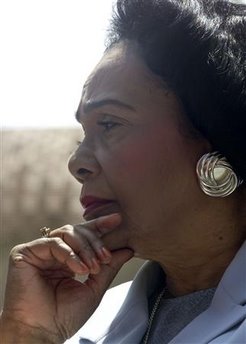
Coretta Scott King in 2002 Posted by Picasa
For Heroines of the Sixties: Statutes, Not Statues

In In These Times, Susan Douglas wrote a perceptive column about two prominent women of the 1960s who'd died earlier this year, Coretta Scott King and Betty Friedan. They both changed life dramatically for women, especially young women, of the early 21st century.

But though they were eulogized as heroes of perception (especially Friedan and "the feminine mystique"), Douglas points out another key to their achievements: But in addition to the lessons in courage the Democrats might take from these women, they might note that both women fought for concrete, systematic policies and laws—to be enacted and enforced by, yes, state and federal governments—that dramatically reduced and, in some cases, ended inequality.

Douglas reminds us of what life was like in the mid-1960s for women (gender-segregated help wanted ads in newspapers, few women doctors, lawyers or executives, no pregnancy leave, no sexual harrassment laws and lax rape enforcement; no sports for women or girls, etc. ) Women's issues were linked early on to Civil Rights legislation, and asserting independent rights for women was instrumental to improving the lives and prospects of women of color and their families.

Douglas is not just offering a history lesson, but advice to politicians today, especially Democrats: "Like Friedan and King, they need to offer concrete proposals for progress before we regress to a time when nothing seemed possible."

Sunday, April 23, 2006


John Kerry in April 2006 Posted by Picasa
Dissenter in Chief

John Kerry spoke at Fanuiel Hall, an historic symbol of free speech, about the right and the responsibility to dissent, especially when dissent is necessary. It is a right and an act dear to the hearts of many veterans of the 1960s, and not just veterans of the war but of the anti-war. Some of us paid for that dissent, in large ways and small, for the rest of our lives. Here is some of what Senator John Kerry said:

Thirty-five years ago today, I testified before the Foreign Relations Committee of the United States Senate, and called for an end to the war I had returned from fighting not long before.

It was 1971 – twelve years after the first American died in what was then South Vietnam, seven years after Lyndon Johnson seized on a small and contrived incident in the Tonkin Gulf to launch a full-scale war—and three years after Richard Nixon was elected president on the promise of a secret plan for peace. We didn’t know it at the time, but four more years of the War in Vietnam still lay ahead. These were years in which the Nixon administration lied and broke the law—and claimed it was prolonging war to protect our troops as they withdrew—years that ultimately ended only when politicians in Washington decided they would settle for a “decent interval” between the departure of our forces and the inevitable fall of Saigon.

I know that some active duty service members, some veterans, and certainly some politicians scorned those of us who spoke out, suggesting our actions failed to “support the troops”—which to them meant continuing to support the war, or at least keeping our mouths shut. Indeed, some of those critics said the same thing just two years ago during the presidential campaign.

I have come here today to reaffirm that it was right to dissent in 1971 from a war that was wrong. And to affirm that it is both a right and an obligation for Americans today to disagree with a President who is wrong, a policy that is wrong, and a war in Iraq that weakens the nation.


I believed then, just as I believe now, that the best way to support the troops is to oppose a course that squanders their lives, dishonors their sacrifice, and disserves our people and our principles. When brave patriots suffer and die on the altar of stubborn pride, because of the incompetence and self-deception of mere politicians, then the only patriotic choice is to reclaim the moral authority misused by those entrusted with high office.

I believed then, just as I believe now, that it is profoundly wrong to think that fighting for your country overseas and fighting for your country’s ideals at home are contradictory or even separate duties. They are, in fact, two sides of the very same patriotic coin. And that’s certainly what I felt when I came home from Vietnam convinced that our political leaders were waging war simply to avoid responsibility for the mistakes that doomed our mission in the first place. Indeed, one of the architects of the war, Defense Secretary Robert McNamara, confessed in a recent book that he knew victory was no longer a possibility far earlier than 1971.

By then, it was clear to me that hundreds of thousands of soldiers, sailors, Marines and airmen—disproportionately poor and minority Americans—were being sent into the valley of the shadow of death for an illusion privately abandoned by the very men in Washington who kept sending them there. All the horrors of a jungle war against an invisible enemy indistinguishable from the people we were supposed to be protecting—all the questions associated with quietly sanctioned violence against entire villages and regions—all the confusion and frustration that came from defending a corrupt regime in Saigon that depended on Americans to do too much of the fighting—all that cried out for dissent, demanded truth, and could not be denied by easy slogans like “peace with honor”—or by the politics of fear and smear. It was time for the truth, and time for it all to end, and my only regret in joining the anti-war movement was that it took so long to succeed—for the truth to prevail, and for America to regain confidence in our own deepest values.

The fissures created by Vietnam have long been stubbornly resistant to closure. But I am proud it was the dissenters—and it was our veterans’ movement—and people like Judy Droz Keyes—who battled not just to end the war but to combat government secrecy and the willful amnesia of a society that did not want to remember its obligations to the soldiers who fought. We fought the forgetting and pushed our nation to confront the war’s surplus of sad legacies—Agent Orange, Amer-Asian orphans, abandoned allies, exiled and imprisoned draft dodgers, doubts about whether all our POWs had come home, and honor at last for those who returned from Vietnam and those who did not. Because we spoke out, the truth was ultimately understood that the faults in Vietnam were those of the war, not the warriors.

Then, and even now, there were many alarmed by dissent—many who thought that staying the course would eventually produce victory—or that admitting the mistake and ending it would embolden our enemies around the world. History disproved them before another decade was gone: Fourteen years elapsed between the first major American commitment of helicopters and pilots to Vietnam and the fall of Saigon. Fourteen years later, the Berlin Wall fell, and with it the Communist threat. You cannot tell me that withdrawing from Vietnam earlier would have changed that outcome.

The lesson here is not that some of us were right about Vietnam, and some of us were wrong. The lesson is that true patriots must defend the right of dissent, and hear the voices of dissenters, especially now, when our leaders have committed us to a pre-emptive “war of choice” that does not involve the defense of our people or our territory against aggressors. The patriotic obligation to speak out becomes even more urgent when politicians refuse to debate their policies or disclose the facts. And even more urgent when they seek, perversely, to use their own military blunders to deflect opposition and answer their own failures with more of the same. Presidents and politicians may worry about losing face, or votes, or legacy; it is time to think about young Americans and innocent civilians who are losing their lives.

The rest of the speech is published at Raw Story here.

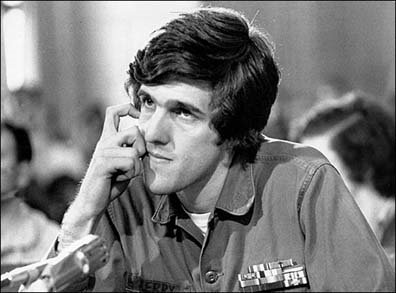
John Kerry in April 1971 Posted by Picasa

Monday, April 17, 2006


Born on this date: Nikita Khruschev, Lindsay Anderson
(directed "If...",) Olivia Hussey (actress, Romeo & Juliet movie)
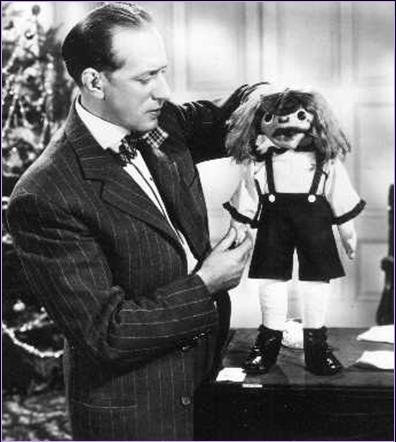
and Senor Wences, pictured above, frequent guest
on the Ed Sullivan show. Posted by Picasa

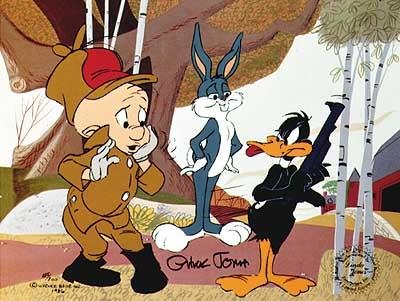
Also "born" on this date: Daffy Duck and Elmer Fudd. Posted by Picasa

Died on this date: Felix Pappalardi (Cream), Vinnie Taylor
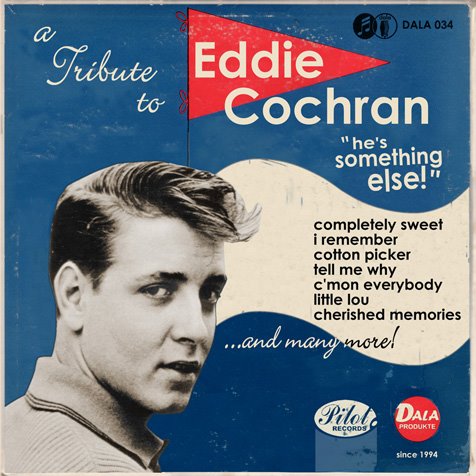
(Canned Heat, overdose) and Eddie Cochran (car crash, age 21.) Posted by Picasa

Released on this date in 1970: the first solo
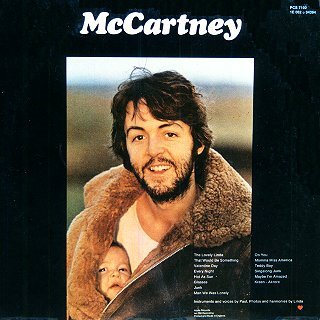
album by one of the Beatles: McCartney. Posted by Picasa

Today in Baby Boomer History

1945: Allied bombing of Dresden ( central event in Slaughterhouse Five by Kurt Vonnegut)
1947: Jackie Robinson's first major league hit.
1961: first day of the Bay of Pigs aborted invasion of Cuba.
1964: Ford Mustang is introduced.
1967: Surveyor 3 launched; will land on the moon in 3 days.
1969: Sirhan Sirhan convicted of the murder of Robert Kennedy.
1970: Apollo 13 limps back to Earth.
1970: The first solo album by one of the Beatles is released: "McCartney."
1976: Mike Schmidt hits four consecutive homers in the N.L.'s greatest comeback victory: down 12-1, the Phillies win 18-16 in 10 innings.
1978: Carl Sagan wins Pulitzer Prize for Dragons of Eden.

Sunday, April 16, 2006

Getting the 60s Right

We're hitting the 40th anniversary of various 1960s phenomena, so maybe it shouldn't be surprising that a certain kind of uninformed nostalgia pervades the culture these days. I've seen two plays recently that adopt a 60s theme, one worse than the other. The worst one was a thematic production of As You Like It, my favorite of Shakespeare's comedies. Transporting it to the 60s might have worked, if they had any idea of what the 60s were actually like. They didn't even get the clothes right. It makes me wonder if the Roaring Twenties themes have always been as reductionist and inaccurate as the Swinging Sixties.

It's odd that few novels have portrayed that decade well, and even the better movies usually leave out significant elements. More modest recollections have more of the ring of truth, as this one in the San Francisco Chronicle today by Gerald FitzGerald.

Tuesday, April 04, 2006

Civilized Health Care

Massachusetts Enacts Universal Health Care

We're not going to spend a lot of time comparing operations around here. But the health care crisis in America is going to be a persistent topic on this blog. First, because in our sixites we enter an especially vulnerable part of our lives. And second, because all the ideals and the now forgotten knowledge of the 1960s tells us that universal health care makes sense, is possible and is right. It's civilized health care.

I'd planned to begin with a rationale for why we need universal health care, particularly a single-payer system. But there's startling news from Massachusetts: both houses of the legislature have passed an innovative plan for universal health care coverage, and the governor is going to sign it. It isn't a single payer plan. It is untested but looks like it might work, and it certainly is the best any state has passed so far. According to Reuters, here are its major features:

The state's poorest — single adults making $9,500 or less a year — will have access to health coverage with no premiums or deductibles.

Those living at up to 300 percent of the federal poverty level, or about $48,000 for a family of three, will be able to get health coverage on a sliding scale, also with no deductibles.

The vast majority of Massachusetts residents who are already insured could see a modest easing of their premiums.

Individuals deemed able but unwilling to purchase health care could face fines of more than $1,000 a year by the state if they don't get insurance.

The plan requires no new taxes.

The devil may be in the details, but the law has bipartisan support: business and a "health care for all" advocacy groups favor it, both houses passed it by lopsided margins, and the Republican governor supports it. "It's only fitting that Massachusetts would set forward and produce the most comprehensive, all-encompassing health care reform bill in the country," said House Speaker Salvatore DiMasi, a Democrat. "Do we know whether this is perfect or not? No, because it's never been done before."

We'll be watching. But if it encourages other states to pass their plans (California has a universal plan inching its way through the legislature every year), then the logjam of opposition and indifference may be broken. That alone makes it progress.

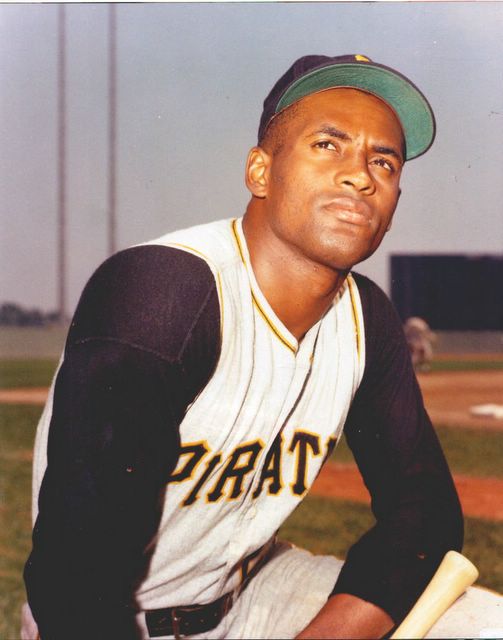
Roberto Clemente,60s hero Posted by Picasa
Enduring 60's Hero: Roberto Clemente

An article by Dave Maraniss in the Washington Post Sunday, taken from his book on Roberto Clemente that will be published later this month, is called The Last Hero. It was about Clemente as an enduring hero throughout Latin America. It's a very moving piece, not only for what it says Clemente continues to represent, some 34 years after his death, but what he had to endure as a Latino in major league baseball in the 1950s until 1972, when his small plane was lost as he tried to deliver relief supplies to earthquake victims in Nicaragua.

But even though I am not Latino, Roberto Clemente was a hero to me. He played his entire major league career for the Pittsburgh Pirates, and I grew up about 35 miles from the city. I saw him play at Forbes Field several times, watched the televised games and listened to many, many games on the radio, in the late 50s and early 60s.

MORE at Boomer Hall of Fame

Monday, April 03, 2006

Book Note

A review of World, Beware! by Theodore Roszak, author of The Making of a Counter Culture.

Sounds Familiar

Echoes of a 60s President

"Last month, in a memorandum ... the Justice Department claimed the inherent right to bug or wiretap-without court orders-any time it felt that the "national security" was in jeopardy."

Sound familiar? There have been Bush administration memos claiming this inherent right, but this quote happens to be from a 1969 TIME magazine story on the administration of Richard Nixon. (It's quoted by the Unclaimed Territory blog, with a link to a reprint of the article.)

The justification was explained: As authority for this broad power, the Government cited the President's oath to "preserve, protect and defend the Constitution" from domestic subversion as well as foreign enemies. Contending that every President since Franklin Roosevelt had permitted such wiretaps, the Government went on to imply that they were even more important now because of the growing violence and rioting in the nation's cities and on its campuses.

The memo justified spying in connection with the trial of the Chicago 8, accused of conspiring to disrupt the Democratic National Convention in 1968. Among the defendants were Abbie Hoffman, Jerry Rubin, Tom Hayden and Bobby Seales. It is now a trial that lives in infamy.

Sunday, April 02, 2006


Rosie Kreidler Posted by Picasa

Civilized Health Care

The Bonds of Generations

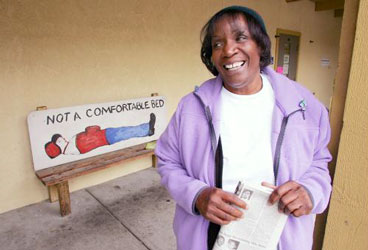
She would be just another nameless victim, a true elder who inspired everyone who met her, but reduced to homelessness through no fault of her own. She has a name, of course--it's Rosie Kreidler, age 62. And she had a past. An Olympic athlete. A nurse, who had applied to join Doctors Without Borders and go to the Congo. Until an automobile accident started her on a journey that many Americans have taken, particularly older Americans. And many more will take in the coming decade, as baby boomers age into vulnerability.

No one outside of the people she met might ever have known her story. Except that somehow, someone found out that her nephew is Barry Bonds, one of the most famous men in America. Not even he knew of her plight.

But her story is the story of many others, and will be the story of countless others, until this country fixes its disreputable health care system, and puts human health and human dignity above the greed of a powerful few.

She was known as Rosie Bonds when an automobile accident left her badly injured. She might have eventually become well enough to resume her career, but her insurance company denied her the treatments she needed.

Having been released from a hospital into physical therapy, she battled with insurers to cover her treatment. About $50,000 in coverage ran out fast, as did her savings; her 18 months of physical therapy ended when the money did, not because she had recovered. Her Social Security Disability Insurance application was rejected; she challenged the rejection in court and lost.

Eager to go back to work because she loved nursing and was desperate to pay her mounting bills, she returned to the Bay Area in 2005. But constant pain made bending or lifting impossible, and numbness in her hands prevented her from drawing blood or inserting an IV.
Her career as she had known it was finished. Destitute and unable to work, too proud to turn to her family or friends for help, she soon was sleeping in her car.


Read this story, of a woman of rare courage and accomplishment, who nevertheless was reduced to poverty and indignity, and consigned to needless pain, because this country will not take care of its people.

Barry Bonds was born in 1964, the last year of the postwar baby boom as designated by demographers. Rosie Bonds was born just 20 years before, in 1944. Let's hope he sees this not only as a family tragedy but as a cause for his own generation. America needs to join the civilized world, with a health care system that works.